The Radical Alternative of the Gospel of Peace
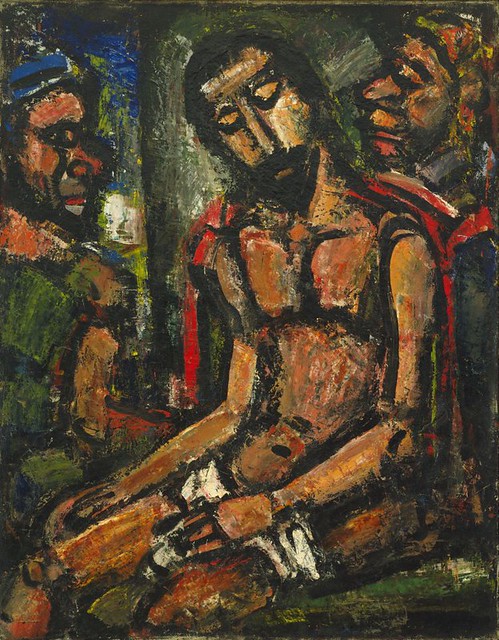
Christ Mocked by Soldiers

The Radical Alternative of the Gospel of Peace
by Brian Zahnd

Christians call Jesus the “Prince of Peace.” But what does that mean? Is it just a Christmas card cliché? Does it merely mean some peace of mind in an anxiety-ridden world? Or might it mean something more substantial? Perhaps much more substantial. Might it mean that Jesus offers the world an alternative arrangement that could best be described as peace? This is what I have come to believe. Jesus is the savior of the world in a real, wonderful, and urgent way — the Prince of Peace who can lead humanity out of the madness of arranging our world around power, violence and war.

I have my own story of how I moved beyond a misguided allegiance to that tired paradigm of violence by discovering the radical alternative of the gospel of peace. This was not an easy move, but it was worth it. And it’s a story worth telling.

But I’m most interested in telling the story of Jesus of Nazareth and the revolutionary ideas he preached — especially his ideas about peace. This first century Jew from whose birth we date our common era, this one who became the heir of Isaiah’s ancient moniker of “Prince of Peace,” preached a new way of being human and an alternative arrangement of society that he called the reign or kingdom of God. It was (and is!) a peaceable kingdom. My claim, which I’m told is audacious by some and naïve by others is simply this: Jesus Christ and his peaceable kingdom are the hope of the world.

So let me declare: I believe in Jesus Christ! I believe what the gospels report and what the creeds confess concerning the crucified and risen Christ. That’s what makes me an orthodox Christian. But I also believe in Jesus’ ideas — the ideas he preached about the peaceable kingdom of God. That’s what makes me a radical Christian. Believing in the divinity of Jesus is the heart of Christian orthodoxy. But it’s believing in the viability of Jesus’ ideas that makes Christianity truly radical.

Divorcing Jesus from his ideas — especially his political ideas — has been a scandal plaguing the church for seventeen centuries. The problem is this: When we separate Jesus from his ideas for an alternative social structure, we inevitably succumb to the temptation to harness Jesus to our own ideas — thus conferring upon our power-based political constructs an assumed divine endorsement.

With little or no awareness of what we are doing we find ourselves in collusion with the principalities and powers to keep the world in lock-step with the ancient choreography of violence, war, and death. We do this mostly unconsciously, but we do it. I’ve done it. And the result is that we reduce Jesus to being a savior who guarantees our reservation in heaven while using him to endorse our own ideas about how to run the world. This feeds into a nationalized narrative of the gospel and leads to a state-owned Jesus. Thus our understanding of Christ has mutated through the centuries from Roman-Jesus to Byzantine-Jesus to Russian-Jesus to Anglo-Jesus to German-Jesus to American-Jesus and so on.

Conscripting Jesus to a nationalistic agenda creates a grotesque caricature of Christ that the church must reject — now more than ever! Understanding Jesus as the Prince of Peace who transcends idolatrous nationalism and overcomes the archaic ways of war is an imperative the church must at last begin to take seriously.

If we think the ideas of Jesus about peace are irrelevant in the age of genocide and nuclear weapons, we have invented an utterly irrelevant Christianity!
Question: Can humanity possess the capacity for self-destruction and not resort to it? The jury is still out. But this much is certain — if we think the ideas of Jesus about peace are irrelevant in the age of genocide and nuclear weapons, we have invented an utterly irrelevant Christianity!

Because the stakes are now so intolerably high, people with a modicum of common sense have come to realize we must at last talk seriously about how to live together peaceably on our little blue planet. Our capacity for self-destruction demands this.

Yet here’s the problem. People committed to the idea of peace as a real alternative to the paradigms of power and violence often see Jesus and his followers as peripheral to the cause of peace. They don’t see the need to get the serious business of peacemaking mixed up with a religious figure — especially when the religion he inspired has so often been associated with violence and war.

On the other hand it seems that too often those most committed to the person of Jesus Christ see little need to get Jesus mixed up in the real-world work of peacemaking (which they somehow view as slightly suspicious). Certainly the evangelical view of real-world peacemaking has been something like this: “Doesn’t Jesus have more important work to do?” According to this view Christianity is mostly about the “spiritual” work of “saving souls” for an afterlife in heaven, and Jesus’ ideas about peace can be put on hold until the age to come. Or so the argument goes. But I think otherwise. Jesus Christ and the historical events of his crucifixion and resurrection are not to be separated from the ideas he preached about a kingdom of peace.

To be continued…

(In a full-length book.)

Peace.

BZ

(The artwork is Christ Mocked by Solider by Georges Rouault)

  • Protest-ant Paulinist

    Yes, the jury is still out. I do believe that ” Conscripting Jesus to a nationalistic agenda creates a grotesque caricature of Christ that the church must reject — now more than ever!”, however, Peter had a sword and was in fact instructed to have one. It is true that to live by the sword, one almost certainly will die by it as well, I believe that’s a fancy way of saying,”Don’t go picking fights”. It was indeed the spiritual nature of Christ, that leads to ” peacemaking” and true freedom, that wisely informed Peter to put his sword down. Global disarmament, idolatrous nationalism and the archaic ways of war is an imperative the church must at last begin to take seriously, but for me, Christianity IS mostly about the “spiritual” work, not simply for an afterlife in heaven, but equally for Jesus’ ideas about peace to become mainstream today. Understanding Jesus as the Prince of Peace and the historical events of his crucifixion and resurrection are not to be separated from the ideas he preached about a kingdom of peace, but until everyone agrees and evil is no more, I’m keeping my swords, my children made need a little help.

  • Chris

    Wonderful writing. I love the reference to radical Christianity. Isn’t it amazing how the truth remains radical?

    What are your thoughts on Jesus turning over the tables in the temple? Or when he says he came to divide households?
    What are your thoughts on the necessity to protect the innocent with violence? I think you bring up an important discussion on the nature of violence, and if it is ever justified?

  • Phil Ebersole

    The centrality of Jesus is noted in evangelical circles, and yet the teaching of Jesus, what he did, and what he embodied- these things are glossed over or dismissed. What you have stated is not a political ideology but something much deeper- something in the very person of Jesus, in the very nature of God. You say this, e.g. what you (and I am totally with you) about the crucified and risen Jesus.

    I’m grateful for the growing number of voices that are in “orthodox” Christianity that are putting these two aspects of Jesus together. My own experience, as a person/pastor in his 50s, is that many younger adults have dismissed Christianity because the message, life and teachings of Jesus have been dismissed by so many preachers and teachers. Thanks for stating this clearly. I’ll look forward to more posts and a book.

  • http://brianzahnd.com Brian Zahnd

    Thank you, Phil

  • Terry Glenn

    In response to Protest-ant Paulinist, I just wanted to bring up a point that seems worth noting. I don’t believe Pastor Zahnd was saying that the “spiritual work” should be miniscule in comparison to a peace campaign (correct me if I’m wrong). You stated that the entire reason that you believe “Christianity IS mostly about the spiritual work” is because it will spread this idea of peace that Pastor Zahnd is talking about, right? The problem is that if the gospel that we’re spreading today is missing this peaceable part of Jesus that is so part of His core, then why are we bent on getting this crippled gospel out there as fast as we can? Quality over quantity. I would rather tell 10 about a deeper, truer understanding of Jesus than tell 10,000 people about a Jesus who happens to agree with all of my personal political agendas, essentially telling the world about a deity version of myself. This made up character I’ve named Jesus.

  • http://brianzahnd.com Brian Zahnd

    Thank you, Phil.

  • http://brianzahnd.com Brian Zahnd

    You have read me correctly, Terry.

  • David

    I have a section in my book which also promotes a radical alternative to normal notions of the gospel of peace. If you’d like a copy I’ll likely send you a free one, no strings attached. https://www.createspace.com/3892962 From page 326, un-formatted. ”

    The
    bride is one, who has become, in the eyes of the Groom, as one who
    found peace

    The
    Shulamite

    “I
    am
    a wall,

    ​​And
    my breasts like towers;

    ​​Then
    I became in his eyes

    ​​As
    one who found peace.

    Solomon
    had a vineyard at Baal Hamon;

    ​​He
    leased the vineyard to keepers;

    ​​Everyone
    was to bring for its fruit

    ​​A
    thousand silver coins.”
    SOS 8:10-11.

    Here, the bride is speaking to the intent expressed from the prior verse, I paraphrase, “we will fix up our young sister real nice so she will be attractive”. The bride corrects them, and she says that while she is likewise of human kind and therefore also limited, she was also desirable outwardly by a certain beauty. But, what it all came down to was not the attributes that are commonly linked to attractiveness. What the Groom found attractive in the bride was something else. Something greater. Peace. Peace? Yes! The bride is one, who has become, in the eyes of the Groom, as one who found peace.

    Let’s unfold the verse in question to try to be clear. “Then I became in his eyes, As one who found peace.” The bride “then became” so as to say she was not something and then she became something. She became one who found peace. If she is a picture of us believers, she is likely saying that she repented, turned from being one not having this peace to having it. Okay. The Groom knows that she has found this peace, because “His eyes” see everything. He knows what is in our hearts and minds. And this is exactly what He was looking for, “one who found peace”. So, what peace was found? Peace of mind? Peace of heart? A peaceful spirit? The fruit of the Spirit kind of peace? What?

    Consider this please. Peace is what we believers enter into when the rebellion stops between us and God. The rebellion stops when we surrender, to Him. Doesn’t seem like such a big deal? God already knows just how bad we humans can be? Continue to consider. What if I were to tell you that you and I were once part of a war against Almighty God? Not a great position to be in, we would certainly loose, everything, even our soul.

    What war you might ask? The war we as mankind became involved in back in the garden. We chose to follow the enemy of God, and obeyed the serpent. The enemy of God, the first rebel, became our master, and we continued to obey him, joining in the war, foot solders for his fodder. Now, God did not have to, but He by His great mercy did, promise mankind a savior who would offer us peace, peace with God. A peace plan, a peace process. God did not offer the peace plan to the enemy. God’s plan includes destroying the enemy, and everything, fallen angel, evil spirit, or human soul connected to the enemy, but sending us (all human kind) a Savior, an offer bought with His blood, a peace plan from God.

    “And I will put enmity between thee and the woman, and between thy seed and her seed; it shall bruise thy head, and thou shalt bruise his heel.” Genesis 3:15.

    We see now that The Seed, Christ Jesus, has come to us, and was “bruised”, but has “bruised” the head of the enemy. When you consider a scorpion, coming into contact with a stomping human heel, the physics of the whole thing assures you that even if the scorpion succeeds in stinging the heel and bruising it, the stomping heel will crush the troublesome insect. So too, can we be certain that Jesus while “bruised” has much more than “bruised” the enemy. The end has been declared for the enemy, even if he is still squirming. This is a war, a struggle, a rebellion by the enemy against God. The end is sure to culminate in the judgment of the enemy in the lake of fire. Meanwhile, there is a peace plan promised for mankind.

    The
    plan begins to unfold and can be seen in the names of the righteous
    line from Adam to Noah. As I wrote above “Using just the names
    listed in Genesis 5 (Adam, Seth, Enosh, Kenan, Mahalalel, Jared,
    Enoch, Methuselah, Lamech, Noah) and the meanings of these names,
    Chuck Missler helps reveal for us the coded message. This message is
    found in the meanings of each name, then those meanings are
    constructed in order, in a sentence. Man, appointed, mortal sorrow.
    The Blessed God shall come down, teaching. His death shall bring, the
    despairing, rest.

    Can
    you see that “rest” (the meaning of Noah) is synonymous with
    peace? This is a peace plan for mankind.

    Fast forward to the time of the Blessed One Christ Jesus, God’s Son, God’s Anointed One, The Seed, The Savior. In this next verse, the father of John the Baptist introduces everyone, prophetically, to The coming Dayspring, i.e., Christ Jesus, God’s Son, God’s Annotated One, The Seed, The Savior. Pay attention to what the Dayspring comes to do.

    “Through the tender mercy of our God; whereby the dayspring from on high hath visited us, To give light to them that sit in darkness and [in] the shadow of death, to guide our feet into the way of peace.” Luke 1:78-79

    Did you catch it? The Dayspring comes to give light and guide us all into the way of “peace”. Another announcement about the Savior Jesus comes from angels. Again, pay attention to “peace” and to whom this peace is intended.

    “And the angel said unto them, Fear not: for, behold, I bring you good tidings of great joy, which shall be to all people.” Luke 2:10.

    So, the yet unspoken “good tidings” are intended for “all people”. And what is the tiding?

    “And suddenly there was with the angel a multitude of the heavenly host praising God, and saying, Glory to God in the highest, and on earth peace, good will toward men.” Luke 2:13-14, KJV.

    God is glorified, peace is offered, and it is offered to mankind. And the angels foretell God’s pleasure towards us who will choose HIm. Try it from the NASB also.

    “Glory to God in the highest, And on earth peace among men with whom He is pleased.” Luke 2:14.

    We normally hear this verse, during the Christmass season (you remember how I feel about this event) and it is often twisted into “peace on earth”. But, making “peace on earth” is not why Jesus the Savior came to earth. He says as much during His time on earth.

    “Think not that I am come to send peace on earth: I came not to send peace, but a sword.” Matthew 10:34.

    The word “send” here is ballō in the Greek and means “to throw”. So, He came not to throw peace like a big warm blanket onto the earth and make everything peaceful. If He had, by now we would be saying that was a failure. He did however come to throw a sword onto the earth. This sword is not war, it is His word, from which the gospel message is delivered to mankind from the Kingdom of God Almighty by the One Anointed for the task. The word is a peace plan, and we are expected to get on one or the other side of it. What He came to do was pay for and offer a peace plan to mankind.

    Remember I said that God did not have to offer us a peace plan, but that in His great grace He did? Consider this story from Jesus.

    “Or what king, going to make war against another king, sitteth not down first, and consulteth whether he be able with ten thousand to meet him that cometh against him with twenty thousand? Or else, while the other is yet a great way off, he sendeth an ambassage, and desireth conditions of peace. So likewise, whosoever he be of you that forsaketh not all that he hath, he cannot be my disciple.” Luke 14:31-33.

    It is the stubborn indeed who loses out by not desiring peace with God and the conditions that come with the offer. In the story above, the one lesser prepared should seek peace from the greater, or face annihilation. But in the delivery of the gospel of peace to us, God Who is the greater, bends low and send us the lesser, “conditions of peace”. That is grace, my friend, grace. Him sending us a peace plan, is grace.

    Now, you have read how I say the Gospel is a peace plan, graciously sent from the Kingdom of God to us. What do His apostles write about the message of and from our Prince of Peace? Look for the word peace being connected to the gospel.

    “And how shall they preach, except they be sent? as it is written, How beautiful are the feet of them that preach the gospel of peace, and bring glad tidings of good things!” Romans 10:15.

    “And your feet shod with the preparation of the gospel of peace;” Ephesians 6:15.

    “The word which [God] sent unto the children of Israel, preaching peace by Jesus Christ: (he is Lord of all:) “ Acts 10:36.

    “Therefore being justified by faith, we have peace with God through our Lord Jesus Christ:” Romans 5:1.

    “That at that time ye were without Christ, being aliens from the commonwealth of Israel, and strangers from the covenants of promise, having no hope, and without God in the world: But now in Christ Jesus ye who sometimes were far off are made nigh by the blood of Christ. For he is our peace, who hath made both one, and hath broken down the middle wall of partition [between us]; Having abolished in his flesh the enmity, [even] the law of commandments [contained] in ordinances; for to make in himself of twain one new man, [so] making peace; And that he might reconcile both unto God in one body by the cross, having slain the enmity thereby: And came and preached peace to you which were afar off, and to them that were nigh. For through him we both have access by one Spirit unto the Father.” Ephesians 2:12-18.

    “And, having made peace through the blood of his cross, by him to reconcile all things unto himself; by him, [I say], whether [they be] things in earth, or things in heaven.” Colossians 1:20.

    And now, on your own go read the several salutations that speak of peace from God. Do you think the salutations of peace are meant to send a good feeling or are they speaking of the peace plan? You decide. It is not that the feeling, presence, or state of peace is not mentioned in the new testament, it is that we might have somewhat missed the fact that there is a peace from God which is not a feeling but a plan for us to get on board with, a plan to save us from the certain wrath to come. Here is the list of salutations that caught my eye. Do you think the salutations of peace are meant to send a good feeling or are they speaking of the peace plan?

    Romans 1:7, 1 Corinthians 1:3, 2 Corinthians 1:2, Galatians 1:3, Ephesians 1:2, Philippians 1:2, Colossians 1:2, 1 Thessalonians 1:1, 2 Thessalonians 1:2, 1 Timothy 1:2, 2 Timothy 1:2, Titus 1:4, Philemon 1:2, Hebrew 13:20, 2 Peter 1:2, 2 John 1:3, 3 John 1:14, Jude 1:2, and Revelation 1:4.

    On the flip side, it is interesting to note, antichrist wants to act like he is an emissary of peace. The enemy always tries to copy the truth, and corrupt it. Not to be taking the antichrist actions as a proof of truth, then being corrupted, yet consider his actions.

    “And through his policy also he shall cause craft to prosper in his hand; and he shall magnify [himself] in his heart, and by peace shall destroy many: he shall also stand up against the Prince of princes; but he shall be broken without hand.“ Daniel 8:25.

    Finally, Jesus said this to His disciples before the crucifixion, speaking of the soon separation between Him and them.

    “Peace I leave with you, my peace I give unto you: not as the world giveth, give I unto you. Let not your heart be troubled, neither let it be afraid.” John 14:27.

    If He were speaking of a feeling, presence, or state of peace, it did not last long for the disciples.

    And after the resurrection He says three times to the same folks.

    “Peace [be] unto you.” John 20:19, 21, and 26.

    Do you think He was sending them a warm feeling? Or was He declaring to His followers that He has accomplished the peace with God according to plan, having been to heaven, presenting to His Father His work, His sacrifice, His blood?

    Anyway, the bride in The Song is one who found this peace with God, from the true gospel of peace. And, the Groom is attracted to this because He paid for this peace, it was the plan of the Groom’s Father.