• The Mark of the Beast

    Eye_Of_Sauron_by_SonicSyndrome

    “I will give him a new NAME.” -Jesus (Revelation 2:17)

    “It causes all to be marked with the NUMBER.” -Revelation 13

    The Lamb gives you a NAME.
    The Beast gives you a NUMBER.

    Is the Lamb analog and the Beast is digital?

    The Lamb is personal
    The Beast is impersonal.

    The Lamb is all about persons.
    The Beast is all about numbers.

    (One of the few direct mentions of the satan in the Old Testament is when the satan moved King David to number the people.)

    Be suspicious of things that are too obsessed with numbers.

    Be nervous when churches are too obsessed with numbers.

    Be wary of dehumanized forms of communication that turn everything into 1′s and 0′s.

    (Is this why it’s so easy to behave beastly on Facebook and Twitter?)

    A “virtual” world is a Gnostic world — not the good Creation of God.

    I use digital communication. A lot. Obviously.

    But I’m also suspicious of it. I think it’s inherently dangerous.

    Turning names into numbers. It’s a kind of mark of the Beast.

    Calling things by their names is the way of the Lamb and the first vocation of man. (Genesis 2:19)

    So go for a walk. Outdoors. See some birds and trees. Learn their names.

    Have a conversation. With a human being. Face to face.

    We are names, not numbers.

    The Beast gives us a NUMBER.
    But the Lamb gives us a NAME.

    BZ
    Read more

  • The Divine Conspirator: My Dallas Willard Story

    DSC00191

    Dallas Willard
    (September 4, 1935 — May 8, 2013)

    In another lifetime, before I became the man I am today, I was searching…searching for I didn’t quite know what. I was utterly weary of a paper-thin Christianity propped up by cheap certitude recycling tired clichés. I was yearning for something deeper, richer, fuller. Yes, I was searching, but I hardly knew where to look. I was embarrassingly ignorant of “the good stuff.” With nowhere else to turn I began reading the Early Church Fathers, philosophy, and classic literature. Maximus the Confessor, Søren Kierkegaard, and Fyodor Dostoevsky were a big help, but I needed something contemporary — I needed a well dug in my own time.

    One afternoon I was in my library. I was deliberately looking for a book that would “give me a breakthrough.” I couldn’t settle on anything. So I prayed: “God, show me what to read.” And I sensed…nothing. I went downstairs feeling a bit agitated and slumped into a chair. Within a minute or two Peri walked into the room, handed me a book and said, “I think you should read this.” She knew nothing of my moments ago prayer, but she had just handed me a book, and told me to read it. This was my Augustine-like “take and read” moment. It sent chills down my spine. The book was Dallas Willard’s The Divine Conspiracy. The strange thing was Peri had not read it and had no more idea who Dallas Willard was than I did. Neither of us were sure how the book had even made its way into our house. But, oh my, was it ever an answer to prayer!
    Read more

  • Belong (Antidote for Gnosticism)

    Saturday Morning 04.30.12.16x20_2642

    Belong
    (Antidote for Gnosticism)

    Let Christ inform all of life
    Don’t be a religious cliché
    Be a real human being
    Belong to the human race
    Belong to the woods
    Belong to the city
    Go for long walks
    Learn to appreciate art
    Take up the violin
    Cultivate culinary skills
    Read War and Peace
    Laugh more than you do
    Weep now and then
    Listen to live jazz
    Pray
    Eat a peach
    Do something ridiculous
    Go dancing
    Stop judging
    Start loving
    Plant a garden
    Climb a mountain
    Memorize a long poem
    Learn some astronomy
    Become a bee-keeper
    Go back to college
    Take up a new hobby
    Make some new friends
    Read the Bible
    In a new translation
    Get rid of bumper stickers
    Learn a foreign language
    Watch a foreign film
    Change your mind
    Drink only good coffee
    Trust the sommelier
    Talk to your neighbor
    Not about religion
    Go to church
    Go to the circus
    Don’t confuse them
    Be human
    Belong

    BZ

    (The artwork is Saturday Morning, Painted by Anthony Duce.)
    Read more

  • It’s All A Gift

    il_fullxfull.365019407_6ne4

    “Fear not, little flock, it is your Father’s good pleasure to give you the kingdom.” –Jesus (Luke 12:32)

    The kingdom of God is what it’s all about. The reign and rule of God. The government and politics of heaven. God’s alternative structure for human society. This kingdom is how God saves the world from all that has gone wrong. Idolatry and injustice. Pride, greed, and lust. Poverty and disease, oppression and war. And ultimately, death itself. All of these human ills are what we are saved from through the reign of Christ. And get this…

    It’s all a gift!
    We cannot build the kingdom of God, much less fight for it.
    We can only perceive the kingdom by faith and receive it as a gift.

    How the kingdom of God comes is what the kingdom of God is.
    If it comes by hierarchies building it or by armies fighting for it—
    It’s not the kingdom of God.
    The means are the ends in the process of becoming.

    It’s All A Gift

    In the midst of the human catastrophe — human civilization gone wrong from the very start, where Cain kills Abel and builds the first city — God has acted. Imagine a vast sheet — a sheet as vast as the world itself. This is human civilization. Now imagine God penetrating that vast sheet with a single pinpoint. This is the Incarnation. From this infinitesimal point — the birth of a peasant child in out-of-the-way corner of the world — God entered human civilization…and this changes everything! From that single life the kingdom of God comes.
    Read more

  • God and Genocide

    abraham-slaying-isaac-chagall

    Let’s play a little game. I’ll ask some questions and you answer them. OK?

    First question: Did God tell Abraham to kill his son?

    You say, yes? (Adding that God didn’t actually require Abraham to go through with it.)

    Next question: Did God tell Joshua and Saul to kill children as part of the “ethnic cleansing” of Canaan?

    Is that a hesitant yes I hear — like walking in untied shoes?

    My next question is simple and straightforward: Does God change?

    No?

    Well then, since God doesn’t change — and you have already acknowledged that in times past God has sanctioned the killing of children — is it possible that God would require you to kill children?

    You say you don’t like this game? I understand. I don’t really like it either. But stick with me, I have one more question.

    If God told you to kill children, would you do so?

    I know, I know, I know! Calm down.

    Of course you answer without hesitation that under no circumstance would you participate in the killing of children!

    Yet in answering with an unequivocal no to the question of whether or not you would kill children are you claiming a moral superiority to the God depicted in parts of the Old Testament? After all, God commanded the Israelites to exterminate the Canaanites, including children…didn’t he? Yet you obviously find the very suggestion of participating in genocide morally repugnant.
    Read more

  • Gitmo Is Killing Me

    0415OPEDrota-popup

    Gitmo Is Killing Me
    By SAMIR NAJI al HASAN MOQBEL
    Published April 15, 2013 in the New York Times

    GUANTÁNAMO BAY, Cuba

    ONE man here weighs just 77 pounds. Another, 98. Last thing I knew, I weighed 132, but that was a month ago.

    I’ve been on a hunger strike since Feb. 10 and have lost well over 30 pounds. I will not eat until they restore my dignity.

    I’ve been detained at Guantánamo for 11 years and three months. I have never been charged with any crime. I have never received a trial.

    I could have been home years ago — no one seriously thinks I am a threat — but still I am here. Years ago the military said I was a “guard” for Osama bin Laden, but this was nonsense, like something out of the American movies I used to watch. They don’t even seem to believe it anymore. But they don’t seem to care how long I sit here, either.

    When I was at home in Yemen, in 2000, a childhood friend told me that in Afghanistan I could do better than the $50 a month I earned in a factory, and support my family. I’d never really traveled, and knew nothing about Afghanistan, but I gave it a try.

    I was wrong to trust him. There was no work. I wanted to leave, but had no money to fly home. After the American invasion in 2001, I fled to Pakistan like everyone else. The Pakistanis arrested me when I asked to see someone from the Yemeni Embassy. I was then sent to Kandahar, and put on the first plane to Gitmo.

    Last month, on March 15, I was sick in the prison hospital and refused to be fed. A team from the E.R.F. (Extreme Reaction Force), a squad of eight military police officers in riot gear, burst in. They tied my hands and feet to the bed. They forcibly inserted an IV into my hand. I spent 26 hours in this state, tied to the bed. During this time I was not permitted to go to the toilet. They inserted a catheter, which was painful, degrading and unnecessary. I was not even permitted to pray.

    I will never forget the first time they passed the feeding tube up my nose. I can’t describe how painful it is to be force-fed this way. As it was thrust in, it made me feel like throwing up. I wanted to vomit, but I couldn’t. There was agony in my chest, throat and stomach. I had never experienced such pain before. I would not wish this cruel punishment upon anyone. Read more

  • The World After Easter

    Edge-of-a-Wheat-Field-with-Poppies-and-a-Lark-by-Vincent-Van-Gogh-OSA401

    The World After Easter
    by Brian Zahnd

    He Who Sits Upon The Throne says, “Look here! I am making all things new!”

    This is the only time in Revelation where we hear the voice of Him Who Sits Upon The Throne.

    There are only three other times in the New Testament when we hear the voice of God the Father:

    At Jesus’ baptism: “This is my beloved Son, in whom I am well pleased.”

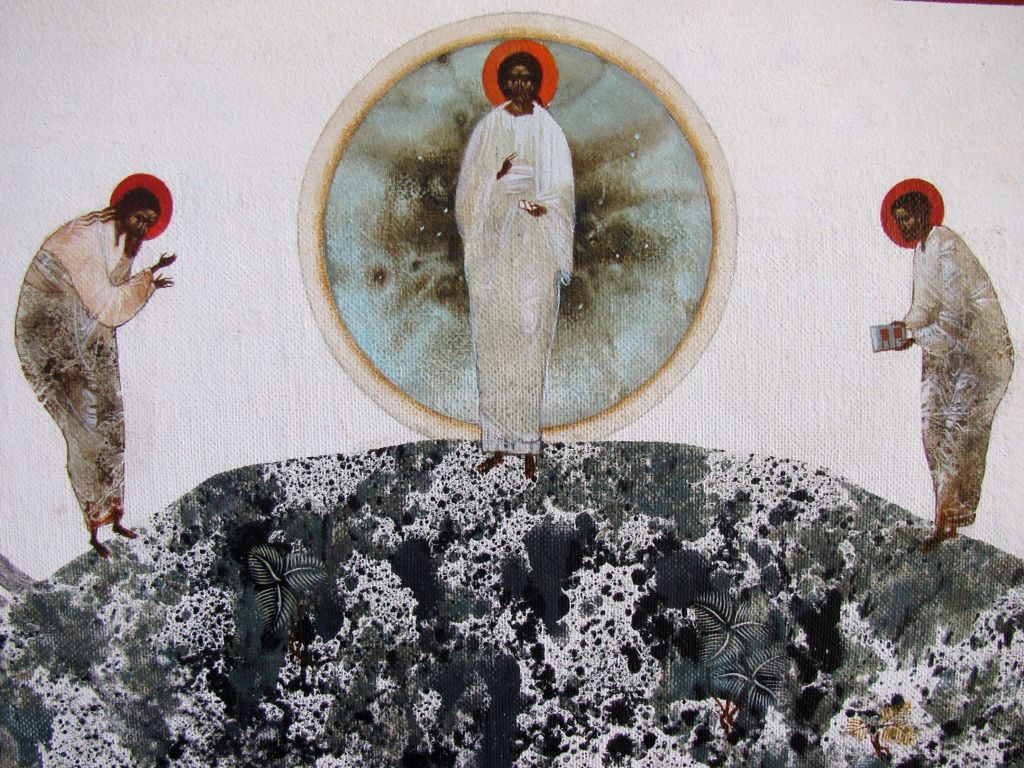
    At the Transfiguration: “This is my beloved Son, in whom I am well pleased — listen to him!”

    Before the Paschal Mystery: “I have glorified it, and I will glorify it again.”

    These occurrences of the Voice of God emphasize that Jesus is the Word of God — the incarnation of the Logos/Logic/Love of God sent into the world to redeem humanity from the dominion of Sin and Death.

    When He Who Sits Upon The Throne says, Look here! I am making all things new! — he is doing it through his eternal Word, his only begotten Son, Jesus Christ.

    This is what was promised in Abraham.
    Foretold by the Prophets.
    Born at Bethlehem.
    Inaugurated on Easter.
    The making of all things new!

    God’s solution for a Creation marred by Sin and Death is not to abandon it, evacuate it, condemn it, or destroy it, but to remake it — to make it new again! This is what was inaugurated on Easter! Read more

  • How Did Jesus Understand His Death?

    086_2

    How Did Jesus Understand His Own Death?
    Brian Zahnd

    A question for Good Friday:

    How did Jesus understand his own death?
    What meaning did Jesus give to his crucifixion?
    Did Jesus have a “theology of the cross”?

    Jesus repeatedly predicted his own death by crucifixion to his inner-circle of disciples, but did Jesus ever speak about what it meant?

    Yes.

    In Jerusalem a few days before Good Friday Jesus said this in reference to his impending crucifixion:

    Now is the judgment of the world.
    Now will the ruler of the world be cast out.
    And when I am lifted up from the earth—
    I will draw all people to myself.
    –John 12:31, 32

    Jesus says his crucifixion (seen in the light of resurrection) does three things…

    1. Judges the world.
    2. Reorganizes humanity.
    3. Drives out the satan.
    Read more

  • Betrayed By A Kiss

    cimabue - The Capture of Christ (detail). Date unknown. Fresco. Upper Church, San Francesco, Assisi, Italy

    Betrayed By A Kiss
    Brian Zahnd

    “Judas, is it with a kiss that you are betraying the Son of Man?” –Jesus

    Kiss and betrayal. Betrayed by a kiss. The kiss of Judas. The kiss of death. That ignominious kiss from two thousand years ago in the Garden of Gethsemane has planted itself firmly in the Western imagination. Is there a more famous kiss in history? How many paintings and poems, songs and sermons has that one kiss inspired? Louis Armstrong sang, “a kiss is just a kiss.” But is it? Here’s an axiom you can live by: Things are more complicated than you think. And this is true of Judas and his infamous kiss.

    Albert Einstein is supposed to have said, “everything should be made as simple as possible, but not simpler.” Yet we love simplifying things. Keep it simple, stupid. K.I.S.S. We especially like to simplify stories. Good guys and bad guys. White hats and black hats. Protagonist and antagonist. Conflict, climax, resolution. Followed by ten sequels. All with the same simple plot. But despite our penchant for simplification our stories remain complicated, because we are complicated. If we tell the story of Judas as just a bad guy who sold out Jesus to make a few bucks, that’s a simple story. Greedy thief. Thirty pieces of silver. Cut a deal with the priests. Kiss Jesus. Fade into the night. Simple. He did it for the money. It’s a simple story. Easy to comprehend. Plus, (and this is very important!) it has the advantage of being something we would never do. Betray Jesus for thirty pieces of silver? We would never do that! So we have established a safe distance between ourselves and Judas Iscariot, the Son of Perdition.

    But it’s not that simple. Yes, it’s true Judas was a thief — the treasurer who was also an embezzler. Nevertheless, I insist that Judas story is far more complicated than that of a petty thief who betrays his rabbi for thirty coins. Judas’ story gets complicated when Judas betrays Jesus with a kiss. Why the kiss? Why this theatrical embellishment? Why this feigned affection that has so captured our imagination? If Judas is betraying Jesus for money, why not just point him out — that’s the guy! — take the money and run? Why this business with a kiss? If we can answer this question, I think we’ll find that we don’t have a simple story of a petty thief, but a complicated tragedy and a story that may leave us rather uncomfortable.

    Read more