All posts in Jesus

  • A Long Way from Mona Lisa’s Smile

    Monascream

    A Long Way from Mona Lisa’s Smile
    by Brian Zahnd

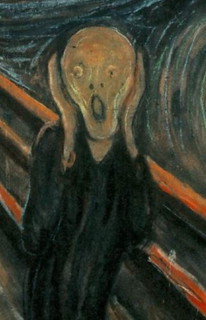
    Yesterday Edvard Munch’s modern masterpiece, The Scream, sold at Sotheby’s auction house in New York for a record $120 million, making it the most expensive piece of art ever sold at auction. To which I say three things:

    1. I like Edvard Munch. I saw an exhibit of his paintings at the Art Institute of Chicago in 2009.

    2. $120 million is a lot of money for a painting.

    3. We’re a long way from Mona Lisa’s smile.

    What do I mean by that? Well, if Leonardo da Vinci’s Mona Lisa with her enigmatic smile is the iconic image of the Renaissance, then Munch’s Scream may be the leading contender for the iconic image of modern man. And this is worth pondering. How has a mysterious smile been replaced by a horrified scream? What has happened to us? What is it about Munch’s disturbing masterpiece that speaks to us so deeply? Read more

  • Journey of the Magi

    display_image.php

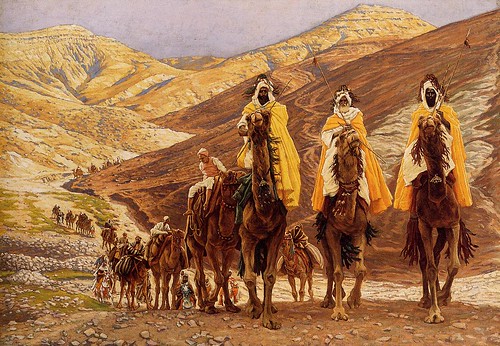
    Journey of the Magi
    by T.S. Eliot

    A cold coming we had of it,
    Just the worst time of the year
    For a journey, and such a long journey:
    The ways deep and the weather sharp,
    The very dead of winter.
    And the camels galled, sore-footed, refractory,
    Lying down in the melting snow.
    There were times when we regretted
    The summer palaces on slopes, the terraces,
    And the silken girls bringing sherbet.
    Then the camel men cursing and grumbling
    And running away, and wanting their liquor and women,
    And the night-fires going out, and the lack of shelters,
    And the cities dirty and the towns unfriendly
    And the villages dirty and charging high prices:
    A hard time we had of it.
    At the end we preferred to travel all night,
    Sleeping in snatches,
    With the voices singing in our ears, saying
    That this was all folly.

    Then at dawn we came down to a temperate valley,
    Wet, below the snow line, smelling of vegetation;
    With a running stream and a water mill beating the darkness,
    And three trees on the low sky,
    And an old white horse galloped away in the meadow.
    Then we came to a tavern with vine-leaves over the lintel,
    Six hands at an open door dicing for pieces of silver,
    And feet kicking the empty wineskins.
    But there was no information, and so we continued
    And arrived at evening, not a moment too soon
    Finding the place; it was (you may say) satisfactory.

    All this was a long time ago, I remember,
    And I would do it again, but set down
    This set down
    This: were we led all that way for
    Birth or Death? There was a Birth, certainly,
    We had evidence and no doubt. I had seen birth and death,
    But had thought they were different; this Birth was
    Hard and bitter agony for us, like Death, our death.
    We returned to our places, these Kingdoms,
    But no longer at ease here, in the old dispensation,
    With an alien people clutching their gods.
    I should be glad of another death.

    _______________________

    An old Magi remembers his hard journey from long ago.
    A hard time we had of it
    He doesn’t regret it. He says—
    I would do it again
    But…
    Finding the King of the Jews came with a price.
    To be a witness of this Birth was to also experience a particular Death.
    (The Magi had thought birth and death were different, but came find out otherwise.)
    Once you get even an inkling of what it really means that Jesus is King—
    Nothing is ever quite the same. Some things will die. For sure.
    We returned to our places, these Kingdoms,
    But no longer at ease here, in the old dispensations,
    With an alien people clutching their gods.

    Ain’t it the truth!
    I know that when I really began to see the Kingdom of God for what it is—
    Cherished assumptions about the nation and life I call mine had to die.
    I was no longer at ease here, in the old dispensation.
    Well, consider this:
    When the Magi made their way home, we’re told they went by “another way.”
    Of course they did.
    Once you see the King, once you have the Epiphany—
    You have to travel through this life by “another way.”
    (Or betray all you have been granted to see.)
    And to an “alien people clutching their gods”—
    You will seem at best odd, and at worse…well, something quite bad.
    Truth doesn’t come cheap.
    The hard journey to a real Epiphany will cost you more than some…
    Gold, frankincense and myrrh.
    It will cost you the way you look at the world.
    Something will have to die. And you may well mourn it.
    To really see the birth of Christ for what it is,
    Will bring you face to face with death—
    Death to what you were once so comfortable with.
    Eliot’s Magi concludes his memoir with this enigmatic line—
    I should be glad of another death.
    What does Eliot mean by that?
    I’m not entirely sure, but I think he means his Magi to say something like this:
    I’m ready even for more,
    More Epiphanies,
    More Births,
    More Stars in the East…
    Which will of course lead to more Deaths.
    That’s the way it works.
    The birth of truth is death to the lie—
    And there are a lot of lies we’ve leaned to love and cherish.
    The price of truth may be the willingness to endure a certain sorrow—
    The sorrow that comes from the death of a loved and cherished lie.
    But now I fear I’ve made the poet say too much.
    Because as another poet warned:

    Tell all the Truth but tell it slant—
    Success in Circuit lies
    Too bright for our infirm Delight
    The Truth’s superb surprise
    As Lightening to the Children eased
    With explanation kind
    The Truth must dazzle gradually
    Or every man be blind—

    BZ

    (The second poem is by Emily Dickinson.)
    (The artwork is Journey of the Magi by James Jacques Joseph Tissot)

  • That Preacher of Peace

    Pilate-Jesus

    That Preacher of Peace
    by Brian Zahnd

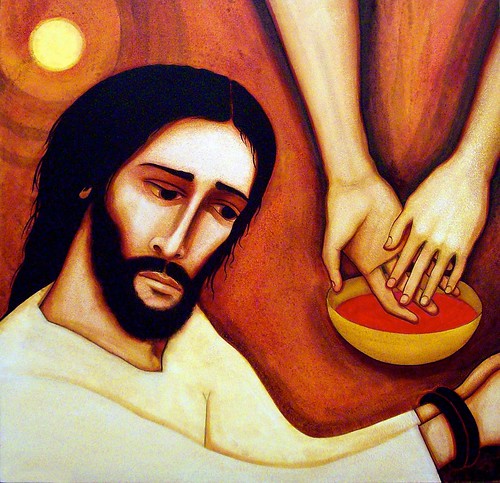
    In his bizarre and surrealistic novel, The Master and Margarita, the critically acclaimed 20th century Russian writer Mikhail Bulgakov creates a fascinating conversation between the Roman governor Pontius Pilate and the Galilean preacher Yeshua. When asked about his views on government, Bulgakov’s Yeshua says, “All power is a form of violence over people.” Yeshua goes on to contrast the governments of power and violence with the peaceable kingdom of truth and justice. In response Pontius Pilate rages, “There never has been, nor yet shall be a greater or more perfect government in this world than the rule of the emperor Tiberius!” When Pilate asks Yeshua if he believes this kingdom of truth will come, Yeshua answers with conviction, “It will.” Of course, Pilate cannot and will not stand for this.

    “It will never come!” Pilate suddenly shouted in a voice so terrible that Yeshua staggered back. Many years ago in the Valley of the Virgins Pilate had shouted in that same voice to his horsemen: “Cut them down! Cut them down!”…And again he raised his parade-ground voice, barking out the words so that they would be heard in the garden: “Criminal! Criminal! Criminal!”…“Do you imagine, you miserable creature, that a Roman Procurator could release a man who has said what you have said to me?…I don’t believe in your ideas!”

    It wasn’t so much the man who upset the Roman governor, but his ideas. Ideas. Ideas are powerful. Ideas are dangerous. Ideas shape our world. Ideas can change our world. Change—what shall we say about that? Slight change is one thing. When slight change is perceived as positive we call it progress. But paradigmatic change, radical change is another thing altogether. We call that revolution. Revolutionary change is precisely what those in positions of privilege and power—people like Pilate—are most threatened by. And this is what makes Jesus and his ideas dangerous. In The Master and Margarita Pontius Pilate seems to have no personal animosity toward the wandering Galilean preacher, but he hates his ideas. In the end what forces the Procurator to condemn Yeshua to crucifixion is the preacher’s revolutionary ideas about power, truth, and violence. If Yeshua had been content to confine himself to the dreamy world of afterlife expectations and not harbored revolutionary ideas about human social structure, Pilate would have seen little reason to bother with Yeshua, much less crucify him. But Yeshua did have revolutionary ideas. And it was Yeshua’s ideas about an alternative arrangement of the world—an arrangement that might best be called “peace”—that resulted in his death by state sponsored execution. Read more

  • The Beautiful Alternative

    angelico

    “Evil is to be overcome by forgiveness. As likewise is violence.”
    -John Milbank, Christ the Exception

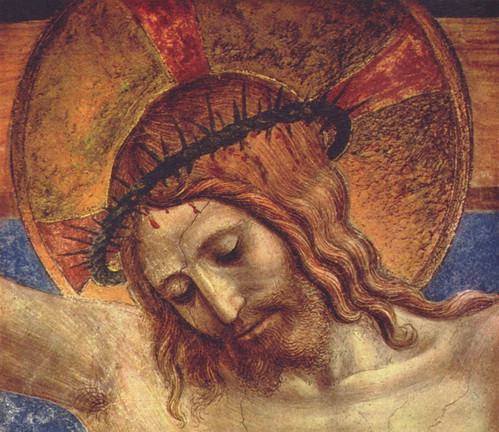
    Jesus gives us an alternative to violence. Forgiveness. Jesus didn’t just theorize about it, he lived it. On the cross Christ made his message credible. He lived it all the way to the end. And calls us to follow him.

    I believe most of us long for it to be true. We long for the Jesus way to be the beautiful alternative to the ugly way of violence. Romanticized violence can be appealing—imagined musketeers and Hollywood shoot ’em ups—but real violence is always ugly. In a world awash in endless cycles of violence we know it’s appalling and we wonder if the beautiful way of Christ is a viable alternative. Read more

  • Love Economics

    Love-Your-Neighbor

    Love your neighbor as yourself. —Jesus

    Jesus didn’t teach capitalist economics or socialist economics, Jesus taught love economics. In this present fallen age, the competition of a free market is probably the best way to arrange an economy, for the simple reason that the market is far more capable of fixing prices than any central committee. That being said, followers of Jesus must do what they can to make sure that competition is mitigated with copious amounts of compassion; because without compassion we turn the free market into a kind of vicious blood sport where those least equipped to compete are trampled underfoot and left behind. In other words, we must make sure that the losers in the game (and it is a game!) don’t lose everything. The Jesus way requires that love have a place in the economy and that competition be humane and not dog-eat-dog.

    BZ

    (The artwork is Love Your Neighbor by Tema Okun)

  • Blessed are the Meek

    St_FrancisPreachingtotheBirds_Giotto

    “Blessed are the meek, for they will inherit the earth.” —Jesus

    At the top of a list of things Jesus said that we don’t really believe I would place the third beatitude. Here are some of my thoughts on this most unsettling saying from Christ.

    What is Jesus really saying in the third beatitude? Is it something like this?—

    Blessed are the quiet and content, the humble and unassuming, the gentle and trusting who are not grasping and clutching, for God will personally guarantee their share when heaven and earth become one.

    Matthew tells us that the multitude which formed the audience for Jesus’ Sermon on the Mount was a mixed multitude coming from different places and representing diverse ethnic, religious and political backgrounds (see Matthew 4:25). There were religious Jews from Judea with their devout commitment to Torah observance and keeping kosher. There were Galilean Jews for whom synagogue life, though important, was not the obsession it was for the Judeans. There were non-observant Jews who, having dropped out of religious life altogether, were dubbed “sinners.” There were Greeks from the Decapolis region with their sophisticated love of art, philosophy, and athletics. And of course there were the Romans—the triumphant foreign occupiers from the dominant superpower. What Jesus has to say in the Beatitudes and the Sermon on the Mount he addresses to all of these people. His sermon is not instructions on how to be religious or how to be Jewish (or Christian)—Jesus’ instructions are on how to be human. Jesus is revealing to the human race the narrow way that leads to life. Jesus is teaching us the counterintuitive way of God that makes life livable.

    Perhaps the most counterintuitive of all the Beatitudes is the third blessing Jesus bestows. Jesus blesses the meek—the quiet, the gentle, the non-assertive, the non-aggressive—saying they will inherit the earth. But I doubt we believe this. We would say something different. Something like—“Blessed are the meek, for even though they come in last, they’ll be called a nice guy, receive a certificate of participation, and be named ‘Miss Congeniality.’” That’s what we think about the meek—but it’s not what Jesus says! Jesus says the meek will inherit the earth. Inherit the earth?! Really? Read more

  • Of Hitler and Lilies

    irises-van-gogh

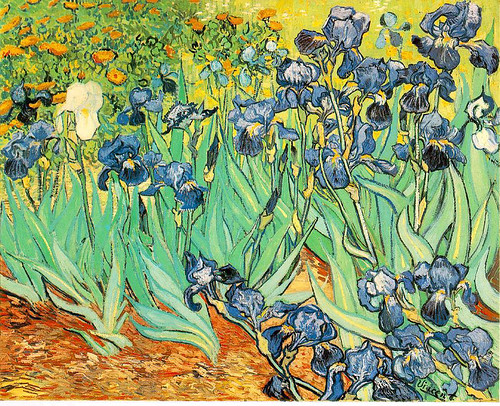
    “Consider the lilies.”
    —Jesus

    Leonard Woolf (1880-1969), the English writer, political theorist and husband of Virginia Woolf, wrote a book entitled Downhill All The Way. Published in 1966, it is an autobiographical account of the years leading up to World War II. Leonard Woolf closes Downhill All The Way with these words: Read more

  • Love Your Enemies

    (The video is available for purchase from The Work of the People.)

  • One Minute to Address the World

    Scher-Whole-World-590

    I’ve got a new thought experiment for you.

    Imagine you have one minute to address the whole world. You and you alone are given this opportunity. Every person in the world will hear what you have to say. You can say anything you want. You can address politics, economics, religion, culture—anything you want to say. But you are given only one minute. Sixty seconds. That’s all. What would you say? The address you compose is probably quite revealing about yourself.

    I worked on my one minute address to the world for twenty minutes or less. (So there’s not a lot of thought in it.) It’s what I would say today. Tomorrow…who knows? My address is 143 words. I can say it in one minute. Here it is: Read more