• The Cults of Caesar and Christ
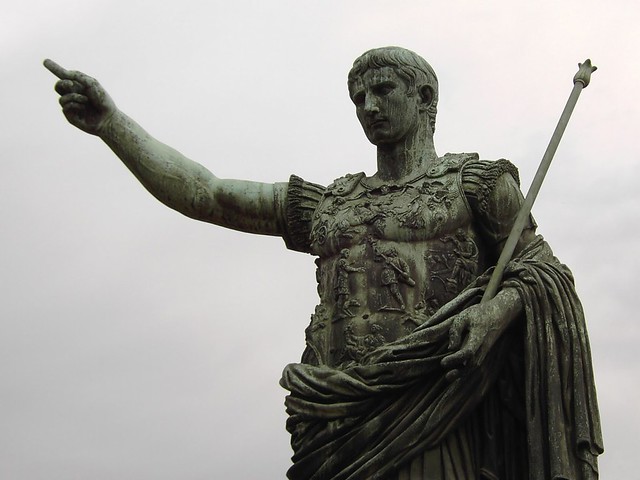
    DivineAugustus

    The Cults of Caesar and Christ
    Brian Zahnd

    The original name for what would eventually became known as Christianity was “the Way.” You won’t find “Christianity” in the Bible, but you will find “the Way” seven times in the book of Acts. If you had asked a baptized follower of Jesus during the first century, “What is your religion?,” she most likely would have replied, “I belong to the Way.” This is what the Apostle Paul said in his hearing before the Roman governor Felix: “I admit that I follow the Way, which they call a cult.” (Acts 24:14)

    The common life of following Jesus together was called the Way, not because it was the way to heaven (the afterlife was never the emphasis), but because they had come to believe that in his death and resurrection Jesus had inaugurated a new way of life. Because the lifestyle of the Way was such a radical departure from the way of the Roman Empire, it is no surprise that people viewed the Way with great suspicion and often maligned it as a dangerous cult.
    Read more

  • Kyrie Eleison

    Camino
    Kyrie Eleison
    Brian Zahnd

    Six months ago I walked across Spain. Five hundred miles.
    Saint-Jean-Pied-de-Port, France to Santiago de Compostela, Spain.
    Forty days and forty nights.
    A full life with two full moons. Harvest and Hunter’s.
    Heat and cold. Dust and rain. Wind and calm.
    It was all there.
    Beauty and blisters.
    Ecstasy and exhaustion.
    Pleasures and pains.
    Mountains, forests, and plains.
    Spaniards and Germans.
    Americans and Russians.
    Brazilians and Peruvians.
    Koreans, Japanese, and Chinese.
    They were all there.
    I was all there.
    Every step of the way.
    A million, three hundred thousand — give or take a few.

    I saw my life. The Camino was my life. My life compressed to forty days and forty nights.
    A five hundred mile walk of life. A precise (or at least an approximate) reflection.
    Read more

  • What Does This Mean? (Five Hundred Miles of Crucifixes)

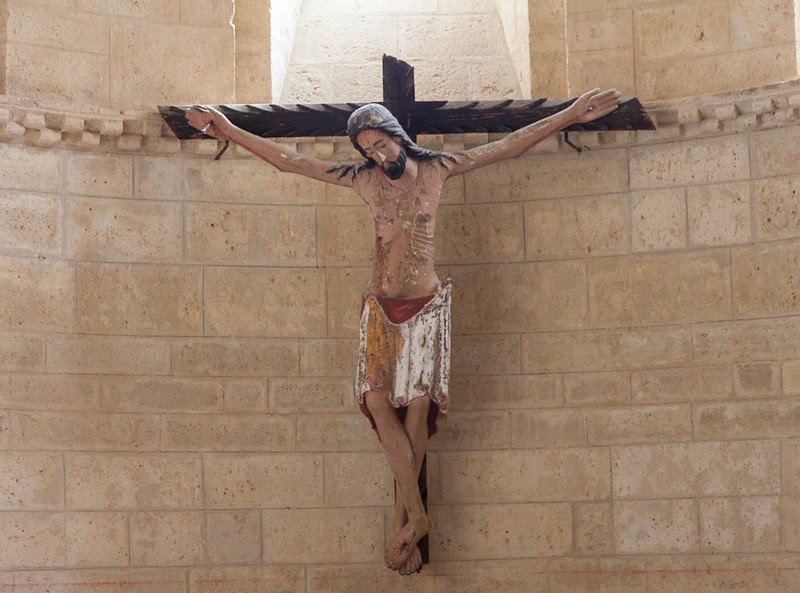
    San_Martin_Fromista_cristo
    What Does This Mean? (Five Hundred Miles of Crucifixes)
    Brian Zahnd

    Six months ago Peri and I walked five hundred miles across Spain on the Camino de Santiago. It was quite simply the most wonderful, most spiritual, most healing thing we’ve ever done. The Camino changed both of us. This morning as I prayed I thanked God in tears for the gift of the Camino. Until today I’ve not written about it, mostly because I’m still absorbing it. But Holy Week seems like the right time to share one aspect of my experience.

    We began the Camino on September 14, 2016 ( Holy Cross Day). After a long trek across the Pyrenees mountains from St.-Jean-Pied-de-Port, France we arrived in Roncesvalles, Spain. In Roncesvalles I spent some time alone in a thirteenth century chapel gazing on a medieval crucifix. While sitting in this dimly lit sanctuary the Holy Spirit seemed to give me four instructions for my five hundred mile walk:
    Read more

  • God Is Love. God Is Love.

    Sunset from the Top

    God is Love. God is Love.
    Brian Zahnd

    The topography of biblical witness is full of peaks and valleys, mountains and plains. The Bible is not flat terrain. The honest reader of the Bible readily admits that the Levitical prohibition against eating shellfish does not reach the same heights as the lofty Christology in Colossians. As we look at the great peaks of inspired biblical witness, none soar higher than the twin peaks of divine revelation given to us by the Apostle John.

    “But anyone who does not love does not know God, for God is love. … We know how much God loves us, and we have put our trust in his love. God is love, and all who live in love live in God, and God lives in them.” (1 John 4:8, 16)

    Soaring above everything else the Bible has to say about God are these twin peaks found in John’s first epistle: God is love. God is love.

    The Arapaho Indians called Longs Peak and Mount Meeker Nesótaieus, meaning “two guides.” The two peaks of this towering massif are useful for orientation when traveling in the front range of the Colorado Rocky Mountains, just as the two peaks of 1 John 4:8 and 4:16 are invaluable when navigating our way through the Bible. When the aged apostle put quill to papyrus to tell his readers that God is love (twice), and that to know love is to know God, and that to live in love is to live in God, he was making a daring move…and he dared to do it!
    Read more

  • The Sermon on the Mount and Caesar’s Sword

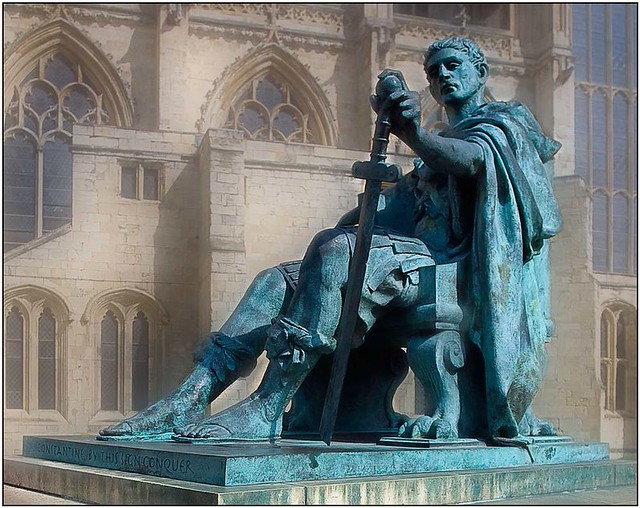
    Constantine

    The Sermon On the Mount and Caesar’s Sword
    Brian Zahnd

    As I call Christians to the practices of radical forgiveness and nonviolent peacemaking that Jesus embodied and most clearly sets forth in the Sermon on the Mount, I often encounter Christians using Romans 13:1–7 as a kind of rebuttal. (Though whom they’re rebutting — me or Jesus — isn’t always clear.) Their argument goes something like this:

    “God has ordained the government and has given it the sword to execute vengeance; therefore we cannot be opposed to war because Romans 13 sanctions ‘Just War.’”

    Usually this argument is given to me in the context of advocating that the United States government should wage total war on ISIS and other enemies of America, and that the church should celebrate this.

    But this is an egregious misinterpretation and misapplication of what Paul is talking about. Let me explain.
    Read more

  • The Barmen Declaration

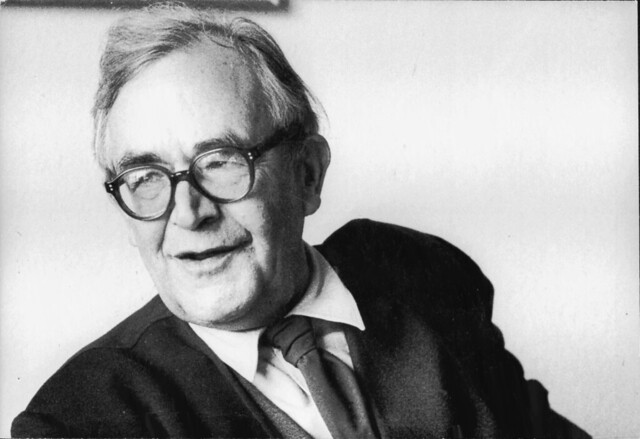
    karl_barth

    The Barmen Declaration of 1934 was a call to resistance against the theological claims of the German Christian movement. The German Evangelical Church had given its support to the Nazi state following Hitler’s rise to power in 1933. In opposition to the pro Nazi Evangelicals, the Confessing Church movement was born with the Barmen Declaration as their founding document. Written primarily by Karl Barth, the Barmen Declaration was grounded in Barth’s theological conviction that God cannot be made to serve nationalistic interests, God can only rule the nations. Among the original signers of the Barmen Declaration were Dietrich Bonhoeffer and Martin Niemöller. Of the 18,000 Protestant pastors in Nazi Germany, 3,000 became members of the Confessing Church.

    BZ
    Read more

  • Vive la Révolution!

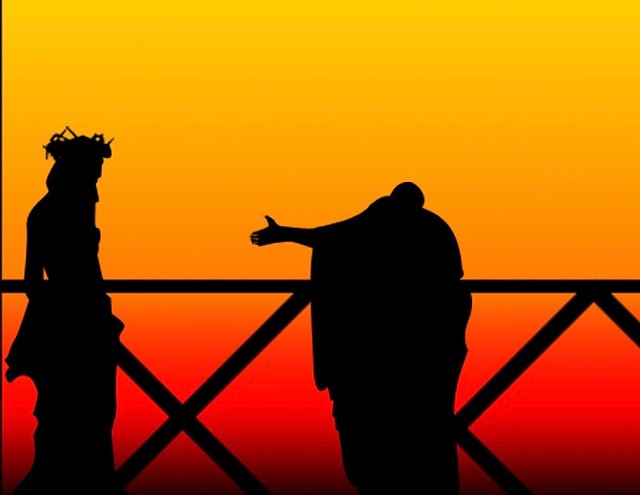
    jesus-and-pilate (1)

    Vive la Révolution!
    Brian Zahnd

    Pagan astrologers read it in the stars — a new king of the Jews had been born. And so the magi came from the Orient bearing their gifts and accidentally got tangled up with the current King of the Jews — a debauched and murderous megalomaniac named Herod who decades earlier had been made an imperial client king by the Roman Senate.

    Not long after that the death squads were breaking down doors and killing baby boys in Bethlehem.

    An angel got Mary and Joseph and the baby king out of town in the nick of time. And so the Holy Family became refugees seeking asylum in a foreign country in order to escape a violent regime in their homeland.

    All this was happening while Augustus Caesar was the Roman Emperor. The coinage of the Roman economy bore the image of the “august” Caesar with imperial titles like, Son of God, Savior of the World, King of Kings, Prince of Peace. Sitting in his palace on Palatine Hill, Augustus could never have imagined that in less than forty years these titles would be re-appropriated for a Galilean peasant who had suffered a state sponsored execution under the jurisdiction of a Roman governor. Much less could Caesar Augustus have imagined that within a few centuries millions of people throughout the Roman Empire would pledge their allegiance to the crucified Jesus of Nazareth, calling him the risen King of all kings.

    But that’s what happened.

    If this all sounds very political, you’re right, it was…and it is.
    Read more

  • Waiting for God to Act

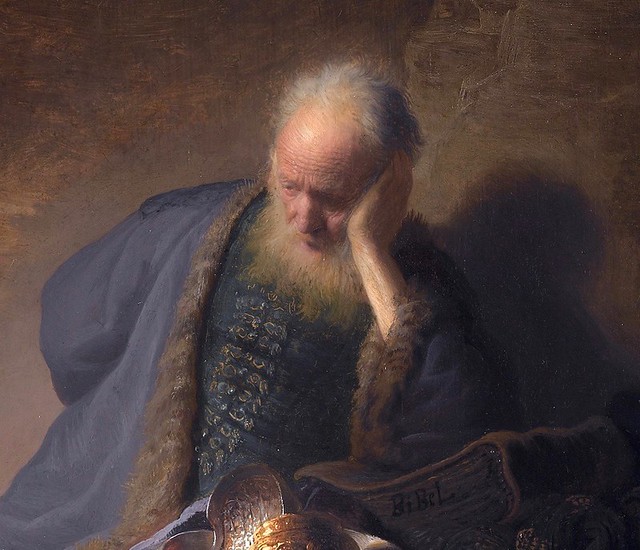
    Jeremiah lamenting the destruction of Jerusalem

    Waiting for God to Act
    Brian Zahnd

    Advent is for waiting. As we tell the story of redemption through the church calendar we begin our telling of the sacred story, not with doing, not with celebrating, but with waiting — waiting for God to act.

    Yet most of us — children of a high-tech, high-speed, instantaneous age — are not very good at waiting. It feels too much like doing nothing, and we are the driven ones who take pride in being busy. Waiting is not really our thing.

    Or worse yet, waiting feels too much like lamenting, which is closer to the truth. With the loss of a strong sense of the Christian calendar we have conflated Advent and Christmas into a single “holiday season.” But the truth is that Advent is quite different from Christmas as it carries its strong theme of prophetic lament. The world has gone wrong, justice lies fallen in the streets, and it seems that God is nowhere to be found. That’s when the lamentation of waiting arises in our soul: “O Lord, how long?” From Isaiah to Malachi there is a consistent theme of waiting in lament for God to act. All of the Hebrew prophets, each in their own way, composed their prophetic poems around this recurring theme: The Lord is coming, God is about to act, but for now…we wait.

    And yet the waiting is essential. For it’s in the waiting that our soul grows quiet and contemplative and cultivates a capacity for awareness by which we can discern what God is doing when he does act.
    Read more

  • A Sabbatical Walk to Santiago

    Camino

    A Sabbatical Walk to Santiago
    Brian Zahnd

    I’ve been a pastor for 35 years. One church. Nonstop. I’ve written 3,270 sermons. In the past seven years I’ve written six books. I’ve never been away from my church for two consecutive Sundays except during some international ministry trips. I’ve never gone two Sundays without preaching somewhere…ever.

    Now it’s time for a sabbatical. I’m going to be gone for seven Sundays. No sermon preparation, no preaching, no writing, no counseling. It will be a time of reflection, a time of prayer, and a time of walking.

    Walking, walking, walking…

    Peri and I are going on a 500 mile walk.
    Read more