• The Radical Alternative of the Gospel of Peace
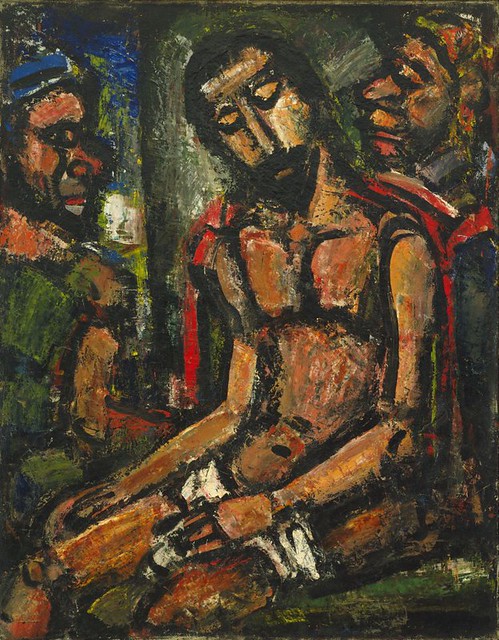
    Christ Mocked by Soldiers

    The Radical Alternative of the Gospel of Peace
    by Brian Zahnd

    Christians call Jesus the “Prince of Peace.” But what does that mean? Is it just a Christmas card cliché? Does it merely mean some peace of mind in an anxiety-ridden world? Or might it mean something more substantial? Perhaps much more substantial. Might it mean that Jesus offers the world an alternative arrangement that could best be described as peace? This is what I have come to believe. Jesus is the savior of the world in a real, wonderful, and urgent way — the Prince of Peace who can lead humanity out of the madness of arranging our world around power, violence and war.

    I have my own story of how I moved beyond a misguided allegiance to that tired paradigm of violence by discovering the radical alternative of the gospel of peace. This was not an easy move, but it was worth it. And it’s a story worth telling.

    But I’m most interested in telling the story of Jesus of Nazareth and the revolutionary ideas he preached — especially his ideas about peace. This first century Jew from whose birth we date our common era, this one who became the heir of Isaiah’s ancient moniker of “Prince of Peace,” preached a new way of being human and an alternative arrangement of society that he called the reign or kingdom of God. It was (and is!) a peaceable kingdom. My claim, which I’m told is audacious by some and naïve by others is simply this: Jesus Christ and his peaceable kingdom are the hope of the world.
    Read more

  • Narrative Arcs and Jumping Sharks

    jesus-crown-of-thorns-thu-sophannarith

    Narrative Arcs and Jumping Sharks
    A Lenten Meditation
    by Brian Zahnd

    What I am doing you do not understand now. -Jesus

    .
    .
    .

    We all wear the same thorny crown. -Dylan

    The call of Christ is simple, primal even: “Follow me.”

    Either we do or we don’t. Either we will or we won’t.

    It takes real faith to believe in Jesus enough to actually make your way through the darkness of this world illuminated by the light of Christ.

    As we believe the gospel and begin to follow Jesus, our story becomes enfolded into Jesus’ story. There is a merging of stories. Our life becomes an original adaptation of the Passion Play.

    The transformation that occurs as our story begins to take on elements of Jesus’ story is what salvation looks like. We’re not conformed to the image of Christ until our story roughly simulates the contours of Jesus’ story.

    So remember the narrative arc of the Jesus story (so pronounced in the synoptic gospels). After his baptism and initial testing, Jesus experiences a steady rise in influence and popularity. We would call it success. This steady rise reaches its zenith with the miracles of the loaves and fishes (when the crowd wanted to make him king) and the Transfiguration (when his divine glory is fully seen).

    But then there is a change.
    Read more

  • Why Ashes?

    ash wednesday.120cmx90cm

    (This was originally posted in 2013.)

    Ash Wednesday marks the beginning of Lent — the forty days of fasting the lead us to Easter. It is a time to recall, retell, relive Jesus’ journey to his crucifixion and death. But why Ash Wednesday? Of course it’s because on this Wednesday millions of Christians around the world from different denominations will have an ashen cross imposed on their forehead. (I even know of some Baptist churches that have adopted this practice!) But what’s it about? Why this ancient Christian practice?

    Ashes speak of two things: Repentance and Mortality. These are the dual themes of Ash Wednesday.

    The Bible frequently speaks of “repenting in sackcloth and ashes.” Jesus himself spoke of repenting in sackcloth and ashes. (Matthew 11:20-21) A person grieving or repenting would cover themselves in ashes as a public expression of their inner state. But you say, “We don’t do that sort of thing anymore.” Precisely! But why not?

    Read more

  • Lenten Scripture Reading Guide

    _49293384_procession17_cross

    Lent is a time for us to revisit, recall, retell, relive Jesus’ journey to Jerusalem and especially his suffering and death. I would like to share with you the scripture reading guide I’ll be following during Lent. Read it slow and in a contemplative manner; try to fall into the story. Be there with Jesus. I pray this Lenten journey through the second half of the Gospel story will help you to encounter Jesus in fresh new ways.

    (As you will notice the Sunday readings depart from the narrative course to recall the resurrection.)

    BZ

    (The artwork is The Procession to Calvary by Pieter Brueghel The Younger) Read more

  • Ring Them Bells ~ Danceable Homiletics

    0986

    BZ collides with European dance tunes…

    Here, check this out. (Click play.)

    BZ

  • How to Change the World MLK Way

    martin-luther-king-jr-mlk-lee-madrid

    “The evil deed of the enemy-neighbor, the thing that hurts, never quite expresses all that he is. An element of goodness may be found even in our worst enemy.”

    “We must not seek to defeat or humiliate the enemy but to win his friendship and understanding.”

    “Returning hate for hate multiplies hate, adding deeper darkness to a night already devoid of stars.”

    “Violence multiplies violence.”

    “Love is the only force capable of transforming an enemy into a friend.”

    “Have we not come to such an impasse in the modern world that we must love our enemies—or else? The chain reaction of evil hate begetting hate, wars producing more wars—must be broken, or we shall be plunged into the dark abyss of annihilation.”

    “To our most bitter opponents we say: ‘We shall match your capacity to inflict suffering by our capacity to endure suffering. We shall meet your physical force with soul force. Do to us what you will, and we shall continue to love you. Throw us in jail and we shall still love you. Bomb our homes and threaten our children, and we shall still love you. Send your hooded perpetrators of violence into our community at the midnight hour to beat us and leave us half dead, and we shall still love you. But be ye assured that we will wear you down by our capacity to suffer. One day we shall win freedom, but not only for ourselves. We shall so appeal to your heart and conscience that we shall win you in the process and our victory will be a double victory.'”

    -Martin Luther King, Jr.

    (From his sermon, “Loving Your Enemies,” preached at Dexter Avenue Baptist Church, Montgomery, Alabama, Christmas 1957.)

    That, my friends, is how you change the world MLK way!

    Of course, you may have to lay down your life to do it. Which is why Jesus said, “Take up your cross and follow me.”

    That last quote, where Dr. King directly addresses his enemies, blows my mind! It’s nothing less than a call to live the Sermon on the Mount! And guess what? It changed the world! So don’t tell me the Sermon on the Mount isn’t “practical.” It is! It will change the world. It just takes more patience than the violent way of satan. Besides, the violent way of satan doesn’t change the world anyway, it just recycles the sin.

    Martin Luther King, Jr. had the courage to change the world by following the Jesus way. Do we?

    Happy Martin Luther King Day.

    BZ

    PS: The entire sermon is here.

  • Why I Don’t Own A Gun

    DSC01244_3

    Why I Don’t Own A Gun
    by Brian Zahnd

    I don’t own a gun. I never have. Why?

    First of all I don’t hunt. I have nothing against hunting. (After all, I’m not a vegetarian.) I don’t hunt like I don’t golf—it’s just something I never took up. So I don’t own a shotgun or a hunting rifle for the same reason I don’t own golf clubs. And for the same reason you probably don’t own crampons and an ice axe. Since I don’t hunt, I don’t need the equipment.

    Secondly, I don’t own a gun because I don’t want to shoot anyone. Shotguns and hunting rifles are designed for the purpose of shooting game. Handguns and assault rifles are designed for the purpose of shooting people. But I don’t want to shoot anyone. So, once again, I don’t need the equipment. I’m perfectly content to allow a trained and authorized police force to handle this equipment on behalf of society. I think that’s a good idea. (If you don’t think that’s a good idea, well, then we just disagree. Don’t shoot me.) I’m not a police officer, so I don’t need police equipment. I don’t own surgical equipment either, because…well, you get my point.

    Can you come up with an imagined scenario where I would wish I had a gun? Probably. Can I come up with an imagined scenario where you wish you did not own a gun? Just as easily. (And my imagined scenario turns out to be a whole lot more common in real life!)
    Read more

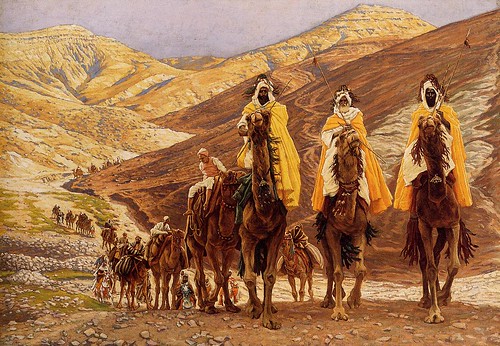
  • The Magi and I

    display_image.php

    T.S. Eliot’s poem Journey of the Magi with my quasi-interpretation of it.

    (Which is more than an interpretation — it’s also a kind of autobiographical confession;
    for I too have had a hard time of it. And like Eliot’s Magi I would do it all over again.)
    Read more

  • God Doesn’t Build His House By Violence

    lastsuppersgiclee

    God Doesn’t Build His House By Violence
    Brian Zahnd

    The New Testament begins with these words: “The book of the genealogy of Jesus Christ, the son of David, the son of Abraham.” Or more literally: “The bible of the genesis of Jesus…”

    Jesus doesn’t just pop into history out of nowhere—he arrives as the Seed of Abraham and the Son of David. He has a genealogy and that genealogy matters. The genealogy of Jesus is an essential part of the Big Story of the Gospel. If we don’t see how Jesus fits into the Big Story the Bible is telling we invariably reduce the gospel to postmortem hell avoidance. So how can we tell the Big Story of the Bible? It might go like this:
    Read more