All posts by Brian Zahnd

  • Hero or Saint?

    milesteves-Ancient-Crucifixion

    Hero or Saint?
    Brian Zahnd

    In the Western world we are deeply conditioned to choose the heroic over the saintly. We love our heroes best of all. Heroes are goal-oriented people of great capabilities who know how to make things happen. We admire their ability to get things done and shape the world according to their will. Saints on the other hand — especially to the American mind — seem quaint and marginal, occupying religious spheres on the periphery of the action. We want to be heroes, we don’t really want to be saints. The difference between the heroic vision and the saintly vision is a fundamentally different way of viewing the purpose of life.
    Read more

  • Ten Flags

    American-Flag-twincherrie-30966009-2560-1691

    Ten Flags
    by Blind Man at the Gate
    (This poem is mostly true)

    Today I saw ten flags in ten minutes
    Of the stars and stripes variety
    Three were flown from churches
    With marquees that said things like
    “Celebrate Freedom”
    Five were flown in front of banks
    The biggest one waved proudly above a
    Perkins Restaurant
    (Omelettes starting at $6.99)
    The highest one flew atop a
    Wal-Mart
    Of the Supercenter variety
    (Open 24 hrs)
    Ain’t this America
    With liberty and justice and omelettes
    And low mortgage refinancing for all
    Freedom is what it’s called
    Freedom is what it’s about
    Freedom is what we’re fighting for
    Just remember buckaroo
    Freedom isn’t free
    It starts at $6.99
    With 7.39% APR financing
    (Rates adjust annually thereafter)
    O say!
    Does that Star Spangled Banner yet wave
    O’er
    Churches and Banks and Perkins and Wal-Mart?
    Freedom© made in America®
    Freedom of religion and commerce and omelette
    Freedom to buy cheap apparel made in Guatemala
    I’m proud to be an American
    Where at least I know I’m free
    Ev’ry heart beats true
    ‘Neath the Red, White and Blue
    Support our troops
    Buy American. Save Jobs.
    Financing options available
    Today I saw ten flags in ten minutes
    Read more

  • The X-Files Is Better Than Scooby-Doo

    the_truth_is_out_there_by_phrakked-d3t52b4

    The X-Files Is Better Than Scooby-Doo
    Brian Zahnd

    Fundamentalism was born as the wrongheaded reaction to the crisis of modernity. Ironically, fundamentalism is an approach to faith that accepts modernity’s now discredited claim that empiricism is the sole source of knowledge. Feeling intimidated by the Scientific Revolution, fundamentalism takes a “scientific” approach to the Bible — which is perhaps the worst of all ways to approach Scripture. The Bible is not interested in giving (or even competing with) scientific explanations. What Scripture gives us is inspired glimpses of the Divine Mystery. The point is never to “prove” the Bible, but to enter into the mystery through the portal of Scripture. The Bible has no interest in “proving” itself — it has no need to do this and makes no attempt to do so. What the Bible is, is the Spirit-inspired sign that points us to the true Word of God — the Word made flesh. And the Word made flesh is the greatest of all sacred mysteries. Any approach to the Incarnation that does not treat it as a sacred mystery is an act of desecration. If we insist on explaining the mysteries of faith — the bane of fundamentalism — mysteries like the Trinity, the Incarnation, the Resurrection, the Ascension, the Parousia, the new birth, baptism, the Eucharist — we inevitably reduce rich mysteries to cheap certitudes. In the search for certitude and a penchant for Bible-Answer-Man explanation, the intrinsically artistic nature of the Christian mystery is turned into gift shop simulacra. Fundamentalism is to Christianity what paint-by-numbers is to art.
    Read more

  • When America Went To Hell

    Amerfican Art Exhibit  Civil War Church_Our_Banner_In_The_Skyaa
    When America Went To Hell
    Brian Zahnd

    “How I wish that you of all people would understand the things that make for peace.”
    —Jesus (Luke 19:42)

    Whether or not slavery was the direct cause for the first shots fired upon Fort Sumter in April of 1861 is a matter of scholarly debate. What is undeniable is that two and half centuries of slavery was the fuel that caused the American Civil War to ignite into a conflagration that resulted in 623,000 deaths. From its Jamestown beginnings the American colonies and later the United States practiced one of the most brutal forms of slavery the world has ever known. The preservation of an institution that systematically dehumanized millions of people for the sake of economic gain was not a thing that made for peace. Inevitably that kind of cruel exploitation would overflow its cup and unleash death and hell, bringing everything that is the opposite of peace. During the horror of the American Civil War, the “land of the free” became a burning Gehenna. Thirty percent of Southern men of fighting age were slain on battlefields that saw the birth of modern warfare. From now on, war would be totalized and mechanized. The four horseman of the Apocalypse galloped across America leaving a wake of war, disease, famine, and death.
    Read more

  • Credo


    Credo
    Brian Zahnd

    I hold a high view of Scripture. I accept as authoritative for faith the canon of Holy Scripture. Scripture forms and informs my faith. But why? Why do I believe the Bible?

    I know very few Christians who can adequately answer this question. If they are challenged by a skeptic as to exactly why they believe the Bible they find themselves on uncomfortable ground; their hands break out in a sweat as they fumble for a defense. Perhaps they go home, dig out a Josh McDowell book , cram for the “test”, try to memorize a few apologetic facts, and then head back the next day ready to explain why they believe the Bible…based on the arguments they read and tried to memorize the night before.

    But the problem with this defense is that it is disingenuous. As true as the apologetic arguments for the veracity of Scripture may be, it is not why they believe the Bible. The truth is, they believed the Bible before they knew a single apologetic argument. I doubt that one in ten thousand Christians believes the Bible because of historical, archeological, textual, literary, philosophical evidence. They believe in the Bible for a completely different reason, though they probably have never consciously understood this reason.

    I believe the Bible because I believe in the resurrection of Jesus Christ and because I believe in the Church.

    Here’s how it works…
    Read more

  • You Are What You Pray

    DSC00199

    You Are What You Pray
    Brian Zahnd

    I am a religious person because I pray.

    In that sense I have a solidarity with all who pray.

    I have more in common with the Egyptian Muslim who prays five times a day than with the European secularist who never prays.

    I have more in common with the Indian Hindu who prays to Brahma than with the American consumerist who prays to nothing at all.

    I have more in common with the mystic Rumi than with the Deist Jefferson.

    (That the majority of American evangelicals feel more at home with an Enlightenment secularist than with a Muslim mystic shows just how secular we really are.)

    I am a Christian because I pray as a Christian.

    I pray to the God who is Father, Son, and Holy Spirit.

    I pray in the name of Jesus Christ.

    I pray the prayer Jesus gave his disciples to pray.

    I pray the prayers of the Church.

    How we pray is how we are formed.

    The Hindu is formed by Hindu prayers.

    The Jew is formed by Jewish prayers.

    The Christian is formed by Christian prayers.

    The Muslim is formed by Muslim prayers.

    The secularist is formed by not praying.

    Those who refuse to pray the liturgical prayers of a received tradition are on the verge of becoming a secularist.

    They have followed the dictates of Voltaire and Jefferson and rejected the authority of religious tradition.

    They endorse Voltaire’s cynicism and Jefferson’s scissors.

    If they pray at all, they pray their own prayers, which is to say, they’re not being formed by prayer—
    They’re only wishing.

    They wish for what they want and call it prayer.

    Window shopping imagined as prayer.

    This is the prayer of the consumerist, the secularist, the atheist.

    But Christian tradition knows better.

    The primary purpose of prayer is not to get God to do what you want him to do—
    But to be properly formed.

    We are formed as Christian people as we pray Christian prayers.

    “When you pray, say…” -Jesus

    BZ
    Read more

  • Radical Forgiveness

    photo(97)

    Radical Forgiveness
    Brian Zahnd

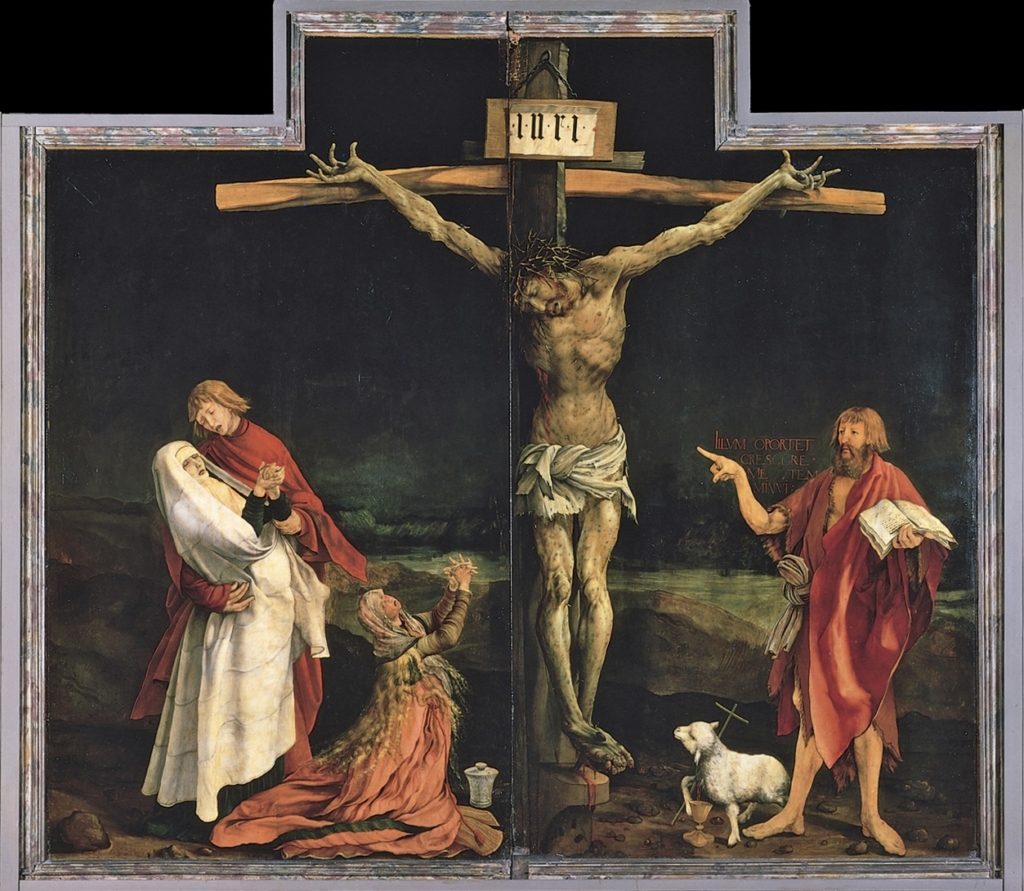
    When Jesus calls his disciples to take up their own cross and follow him, he means that his disciples are not merely to admire him, but to actively imitate him. And what did Jesus do? He voluntarily abandoned the option of violent retaliation, responding to deep injustice with nothing but forgiving love. On the cross Jesus absorbed sin that was violently sinned into him, refusing to call for the “twelve legions” of retaliation. Instead, Jesus prayed, “Father, forgiven them, for they know not what they do.” With this act of radical forgiveness Jesus broke the bloody cycle of violent revenge. Jesus shed his own blood rather than shed the blood of his enemies. By the blood of Jesus we have been redeemed from sin — the sinful way that Cain and his successors organized human civilization. This act of cruciform love is the epicenter of Christianity. The cross gives the world a new organizing principle. Instead of being organized around an axis of power enforced by violence, the world has now been re-founded around an axis of love expressed in forgiveness. This is what we mean when we speak of the salvation of the cross.

    Our own imitation of this kind of cruciform love is demanding, but nothing less than this is authentic Christian discipleship. Sadly, for the most part, the world is still waiting to see this kind of radical discipleship taught and lived out with any consistency by the Church. This should also make it clear why any talk of being a “Christian nation” — whether claimed by Russia, Spain, England, Germany, the United States, or any other body politic — is sheer propaganda. For if as a matter of policy an institution is committed to violent retaliation, whatever else it may be, that institution by definition cannot be called Christlike.

    BZ
    Read more

  • Windbag Speeches: The Cruelty of Talking Too Much

    job_olive

    Windbag Speeches: The Cruelty of Talking Too Much
    by Brian Zahnd

    The only detailed story of the satan in the Old Testament is found in the tragedy of Job. In the first two chapters the satan accuses Job before God and trouble shortly ensues. In three thunderclaps of horror Job loses his wealth, his health, and his children.

    After the first two chapters in the Book of Job the satan disappears from the narrative. Or does it? What actually happens is the satan is channeled through Job’s three annoyingly religious friends: Eliphaz, Bildad, and Zophar.

    Eliphaz, Bildad, and Zophar initially come to comfort Job, but end up tormenting Job’s already shattered soul. I think the three amigos intended well, but in their obsession to explain they became satanic agents of accusation and cruelty.

    Basically, Larry, Moe, and Curly had a “Proverbial Theology.” One of the dominant themes of the Book of Proverbs is that if you fear God and live righteously good things will happen. And this is true. We all know it’s true. To fear God and live righteously leads to a blessed and happy life. It’s true. Except when it isn’t.
    Read more

  • The Onion: A Parable

    FD

    THE ONION

    “Once upon a time there was a woman, and she was wicked as wicked could be, and she died. And not one good deed was left behind her. The devils took her and threw her into the lake of fire. And her guardian angel stood thinking: what good deed of hers can I remember to tell God? Then he remembered and said to God: once she pulled up an onion and gave it to a beggar woman. And God answered: take now that same onion, hold it out to her in the lake, let her take hold of it and pull, and if you pull her out of the lake, she can go to paradise. The angel ran to the woman and held out the onion to her: here, woman, he said, take hold of it and I’ll pull. And he began pulling carefully, and had almost pulled her all of the way out, when other sinners in the lake saw her being pulled out and all began holding on to her so as to be pulled out with her. But the woman was wicked as wicked could be, and she began to kick them with her feet: ‘It’s me who’s getting pulled out, not you; it’s my onion, not yours.’ No sooner did she say it than the onion broke. And the woman fell back into the lake and is burning there to this day. And the angel wept and went away.”

    (From The Brothers Karamazov by Fyodor Dostoevsky)
    Read more