All posts in Christianity

  • Out of the Corner of My Eye
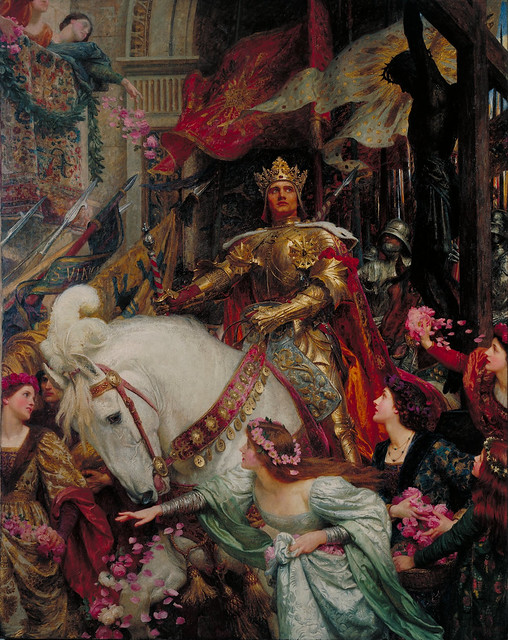
    Sir_Frank_Dicksee_-_The_Two_Crowns_-_Google_Art_Project

    Out of the Corner of My Eye
    Blindman at the Gate

    I think I caught a glimpse of truth out of the corner of my eye.
    A ghost, a whisper, a suspicion, a subtle and subversive rumor.
    So dangerous that every army would be commanded to march against it;
    so beautiful that it would drive those who see it to madness
    or sanity.
    Does the whole of my kind suffer from mental and moral vertigo?
    As Melville said of cabin boy Pip,
    he saw the foot of God upon the treadle of the loom
    and dared to speak it.
    Henceforth his shipmates called him mad.
    As Vladimir said when they came to bury Fyodor,
    the spiritual leader must feel the falsehood prevailing in society;
    the prophet must struggle against it, never tolerate it, never submit to it.
    I think I caught a glimpse of truth out of the corner of my eye.
    Have we been so blinded by the bright lights of advertisers’ lies
    that the only true vision is peripheral vision?
    In the age of constant commercialization and overblown hype
    does truth shout with a whisper and stand out with subtlety?
    I think I caught a glimpse of truth out of the corner of my eye.
    It terrified me as I fell in love with it.
    I said,
    This explains everything.
    This changes everything.
    This challenges everything.
    This threatens everything.
    This transforms everything.
    Dare I speak it?
    The truth I caught out of the corner of my eye?
    Every empire of man is built upon a lie;
    they come to kill, steal, and destroy.
    Every empire of man is built upon a lie;
    all virtue is subject to sacrifice upon the altar of imperial expediency.
    Every empire of man is built upon a lie;
    God or gods exist only to serve its cause.
    Every empire of man is built upon a lie;
    religion takes off its mask when it says—
    We have no king but Caesar.
    The ultimate betrayal,
    the final apostasy,
    every empire of man is built upon a lie.
    Marx was more than half right when he said—
    Religion is the opiate of the masses.
    Every empire of man is built upon a lie:
    Self-promotion and Self-preservation,
    Greed and Lust,
    Industry and War,
    the industry of war.
    Long live the Empire!
    Keep the Empire alive,
    and to keep the Empire alive
    many will be made to die,
    because the Empire lives by the sword
    and dies by the same.
    Every empire of man is built upon a lie.
    From Aztec to Zulu,
    Egyptian and Ottoman,
    Persia and Babylon,
    Greece and Rome,
    England and—
    Now I’m too close to home.
    A kinder, gentler Babylon to be sure,
    but a Babylon for sure.
    Every empire of man is built upon a lie.
    So when Christ came
    he did not bring
    another empire of men
    built upon a lie
    as the liar in the desert tempted.
    Instead he brought
    the Empire of God,
    Good News!
    The government of justice and mercy, grace and truth,
    and the truth is
    every empire of man is built upon a lie,
    though every empire says,
    We have God on our side.
    So you will have to decide
    how patriotic a Byzantine believer can be.
    May we be salt and light,
    a prophetic voice,
    a Christian conscience.
    May we preserve and illuminate,
    cry aloud and convict,
    but never forget
    every empire of man is built upon a lie.
    And to stand for truth
    and to stand for God
    is to stand against the lie the empire is built upon.
    And in the midst of imperial self-justification pray—
    Thy Empire come.
    There, I’ve said it.
    The truth I glimpsed out of the corner of my eye.
    And when push comes to shove,
    as it always does,
    the Empire of Men will oppose the Empire of God.
    To know this is dangerous.
    To say it can be deadly.
    Do you think I’m kidding?
    What crucified Jesus?
    Self-righteous religion?
    No, not religion alone.
    Religion as the whore of Empire.
    This is what killed Jesus.
    And Paul.
    And Peter.
    And Polycarp.
    And Huss.
    And Bonhoeffer.
    Because this is what empires do.
    Silence the prophets who will not prostitute the truth.
    Religion is tolerated.
    Imperial religion is promoted.
    But the prophetic hope of another way
    must be censored
    even by the sword.
    This is the way of empire.
    Because
    every empire of man is built upon a lie.
    Constantine can become a Christian,
    but Constantine cannot baptize the Empire.
    The Empire of God converts the hearts of men one at a time.
    Christ the King must himself sponsor each one into his Kingdom.
    But when the Empire sanctions religion for its own purposes,
    the whore of Babylon rides the back of the beast.
    Giddyup and God bless the Empire!
    Every empire of man is built upon a lie.
    I glimpsed this truth out of the corner of my eye.
    To believe this truth will set you free.
    And you thought it was just Sunday school banality
    or empty religious sentimentality
    to pray
    Thy Empire come
    Thy Policy be done.
    You had no idea it was dissident and subversive,
    because every empire of men is built upon a lie.
    The lie that the empire has God on its side.
    I glimpsed this truth out of the corner of my eye.
    And if you ask me my politics, I will say,
    Jesus is Lord!
    I glimpsed this truth out of the corner of my eye.
    Read more

  • Christianity In the Age of Nuclear Weapons

    luciano-civettini-mushroom-cloud-jpb

    Christianity In the Age of Nuclear Weapons
    Brian Zahnd

    Today is the anniversary of the atomic bombing of Hiroshima. Saturday we will mourn Nagasaki. As we remember Hiroshima, Nagasaki, and the quarter of a million casualties suffered, I would like to share a few words from A Farewell To Mars.

    It’s easy to imagine that the world doesn’t really change — that it simply marches around the maypole of violence, trampling the victims into the mud same as it ever has. But as true as that may be, something has changed. We are post-something. If nothing else, we are post-1945 when the enlightenment dream of attainable utopia went up in smoke — literal smoke! — from the chimneys of Auschwitz and a mushroom cloud over Hiroshima.

    After 1945 we lost our blind faith in the inevitability of human progress. A threshold was crossed, and something important changed when humanity gained possession of what previously only God possessed: the capacity for complete annihilation. In yielding to the temptation to harness the fundamental physics of the universe for the purpose of building city-destroying bombs, have we again heard the serpent whisper, “You will be like God”?

    When Robert Oppenheimer, the father of the atomic bomb, witnessed the first atomic detonation at Los Alamos on July 16, 1945, he recalled the words of Vishnu from the Bhagavad Gita…

    “Now I am become Death, the destroyer of worlds.”

    When the monstrous mushroom cloud rose over the New Mexico desert, did the human race indeed become Death, the destroyer of worlds? It’s more than a legitimate question. We’ve now lived for over a generation with the most haunting post-Holocaust/Hiroshima uncertainty: Can humanity possess the capacity for self-destruction and not resort to it? The jury is still out. But this much is certain: If we think the ideas of Jesus about peace are irrelevant in the age of genocide and nuclear weapons, we have invented an utterly irrelevant Christianity!
    Read more

  • For The Common Good

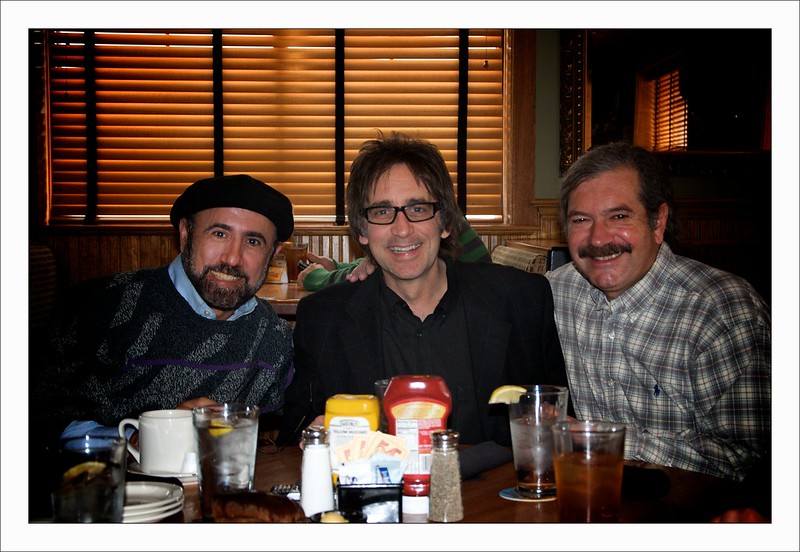
    Ahmed, Brian, and Samuel w.border

    A few years ago I drafted a statement to explain the friendship and cooperation I have with Ahmed El-Sherif, an Arab Muslim scientist, and Samuel Nachum, an Israeli Jewish artist, as we work together for peace in Israel and Palestine. This seems like a good time to share it again.

    For the Common Good

    We are Jews, Christians and Muslims.
    And we are friends.
    We seek to follow our respective religions faithfully.
    We do not believe all religions are the same.
    We recognize the reality of our religious differences.
    But we are friends.
    We are devout in our faith and respectful of our friendship.
    Our faith and friendship need not be mutually exclusive.
    We recognize that we share common space — the common space of a shared planet.
    For the sake of the common good we seek common ground.
    We do not share a common faith, but we share a common humanity.
    In our different religions we do not practice the same rituals or pray the same prayers.
    But in our shared humanity we hold to a common dream: Shalom, Salaam, Peace.
    We hold to the dream that our children may play in peace without fear of violence.
    And so…
    We pledge not to hate.
    We pledge not to dehumanize others.
    We pledge to do no harm in the name of God.
    As individuals we do not compromise the truth claims of our respective religions—
    But we will not use truth claims to fuel hate or justify violence.
    We will practice our respective faiths: Judaism, Christianity, Islam.
    But we believe our faith can be practiced in the way of peace—
    We believe our faith truly practiced need never be at odds with humanitarian ideals.
    Our religions share a complex and intertwined history—
    A history of interaction that has too often been tumultuous and bloody.
    We believe there must be a better way and we seek that better way.
    The way of peace.
    We are Jews, Christians and Muslims.
    And we are friends.
    We seek common ground for the common good.
    Shalom, Salaam, Peace.

    Ahmed El-Sherif
    Samuel Nachum
    Brian Zahnd

    Read more

  • Echoes

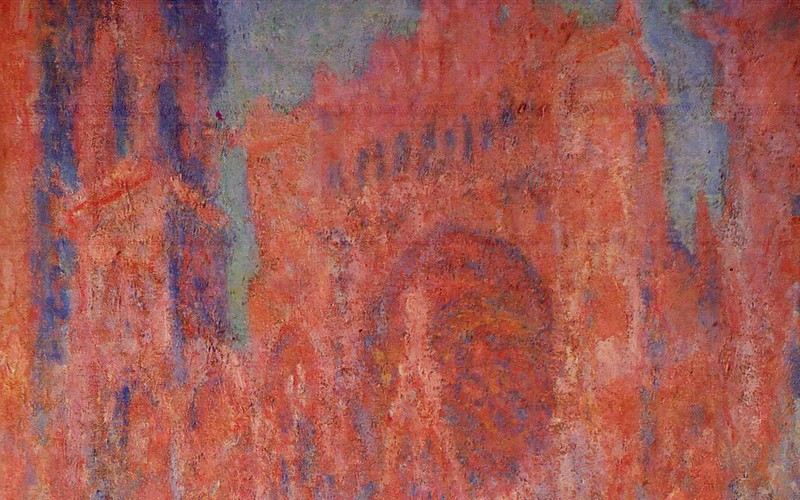
    Rouen-Cathedral-–-Claude-Monet

    Echoes
    Brian Zahnd

    I’m trying to listen to echoes these days — the return of earlier sounds. I need to hear the distant echoes of an earlier Christianity. I am beginning to understand how important it is to maintain an ongoing conversation with the Christians who have lived before us. We must resist the tyranny of the present. If we ignore the echoes of the past we doom ourselves to an unrecognized ignorance. It’s only because of our connection with our technological past that we don’t have to reinvent the wheel every generation. Likewise, if we maintain a connection with our theological past we don’t have to reformulate the essential creeds every generation. When I encounter people obviously confused about the nature of the Trinity, I think, don’t you know we settled this in 325? Of course, they may very well not know! Or if they do know, they don’t care. They have no respect for the past. To them it’s just old — and old means obsolete. Which is, of course, a ridiculous notion peculiar to the modern era.

    One of the problems with contemporary revivalism is its egocentric obsession with the present and its woeful ignorance of the past. For too much of my life my idea of church history went something like this: The church started off great with Pentecost, jumped the tracks a couple of centuries later, got back on track with the Reformation, and really took off with Azusa street. The arrogance is appalling. It’s why most modern revivalist movements seem to follow this implicit dictum: Re-found the church and prepare for Armageddon. Contemporary revivalist movements always seem convinced that they’re the first generation to recover “apostolic purity” and the last generation before the return of the Lord. They misappropriate 1 Peter 2:9 as they brashly claim “we are the chosen generation.” Without a clear memory of church history we become the Alpha and Omega in our imagined self-importance. Christian amnesiacs could benefit from some echoes — the echoes of Athanasius and Aquinas, Irenaeus and Erasmus, Clement and Kierkegaard. The Holy Spirit has never abandoned the church. Every generation had those who heard and spoke what the Spirit said to the church. We should pay attention to their echoes.
    Read more

  • Bread on the Table

    167_1

    Bread on the Table
    Brian Zahnd

    The church in Western Europe and North America is struggling with deep disappointment. We are disappointed with the failure of the Christendom project. The grand attempt to produce a continent of Christian civilization through the apparatus of the state is either dead or dying. It appears that secularism has already won in Europe and will win in North America. So we either deny it (more easily done in America), or we angrily blame scapegoats (those we claim have “compromised the gospel”), or we simply trudge along, a bit sad about it all.

    The church in the post-Christendom world is walking the Emmaus Road. Confused and disappointed. Just like those two disciples on the first Easter. (see Luke 24:13-35) The original Emmaus Road disciples had misread everything. Their disappointment was a result of their wrong expectations. They expected a conventional king after the model of the Pharaohs and Caesars. They expected Jesus to be a war-waging Messiah like King David or Judah Maccabeus. What they ended up with was a “failed” Messiah — a Messiah executed by the Romans. The movement in which they had invested all their hope had failed. So they walked the Emmaus Road with soul-crushing disappointment. This is when Jesus came and walked with them “in another form.” (Mark 16:12)

    When Jesus in the guise of a wayfaring stranger remarked upon their evident sadness, the disciples told how they had hoped that Jesus of Nazareth was the long-awaited Messiah, the one who would redeem Israel. But that was all over. Their hopes had been dashed when their would-be Messiah was condemned by the priests and crucified by the Romans. Their movement had failed and disappointment had settled in.
    Read more

  • Armageddon Left Behind

    What's Left Behind 750

    Armageddon Left Behind
    Brian Zahnd

    Jesus is not a conductor handing out tickets to a paradise beyond the stars. Jesus is the carpenter who repairs, renovates, and restores God’s good world. Far too many American Christians embrace a faulty, half-baked, doom-oriented, hyperviolent eschatology, popularized in Christian fiction (of all things!) that envisions God as saving parts of people for a nonspatial, nontemporal existence in a Platonic “heaven” while kicking his own good creation into the garbage can! Framed by this kind of world-despairing eschatology, evangelism comes to resemble something like trying to push people onto the last chopper out of Saigon.

    Our looming Armageddons are always a possibility but never an inevitability. Armageddon is only inevitable if we listen to the propaganda that comes croaking from the dragons, beasts, and false prophets of nationalism, empire, and war. (See Revelation 16:13–16.) Jesus wept over Jerusalem because their fate could have been avoided. If they had believed in Jesus as the messianic Prince of Peace instead of a messianic Lord of War, Jerusalem could have actually become the City of Peace. Instead, they chose the path that led to a hellish nightmare of siege, famine, cannibalism, destruction, and death.

    Repairing the world. Healing wastelands. Laboring to make a dying world livable again. This is the vision of the apostles and prophets. This is the prophetic paradigm the people of God are to coordinate their theology and lives with. We are not to be macabre Christians lusting for destruction and rejoicing at the latest rumor of war. It’s high time that a morbid fascination with a supposed unalterable script of God–sanctioned–end-time–hyperviolence be once and for all left behind.

    A secret (or not-so-secret) longing for the world’s violent destruction is grossly unbecoming to the followers of the Lamb. We are not hoping for Armageddon; we are helping build New Jerusalem. We will not complete it without the return of the King, but we will move in that direction all the same. We refuse to conspire with the beasts of empire who keep the world confined to the death culture of Babylon. There’s always another Armageddon looming on the horizon, threatening to perpetuate the bloody ways of Cain and throw more Abels in a mass grave. But we are not to cooperate with that vision. We are to resist it. We are to anticipate a future created by the Prince of Peace through the very lives we live. We are to work in concert with Jesus Christ as he labors to repair the world.

    BZ
    Read more

  • A Farewell To Mars

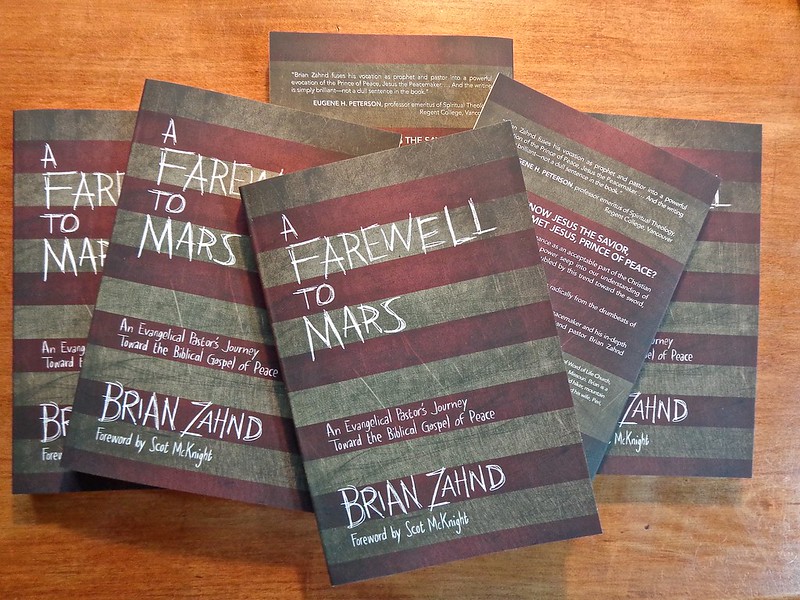
    2014-05-30 13.22.04

    A Farewell To Mars releases June 1. Here is a taste from chapter eight.
    ____________________________________________

    A Farewell To Mars
    Brian Zahnd

    Isaiah, in his prophetic poems, frames the Messianic hope like this: A Prince of Peace will establish a new kind of government, a government characterized by ever-increasing peace. Weapons of war will be transformed into instruments of agriculture. Swords turned into plowshares, spears into pruning hooks. Tanks turned into tractors, missile silos into grain silos. The study of war abandoned for learning the ways of the Lord. The cynic will laugh (for lack of imagination), but this is Isaiah’s vision. At last the nations will find their way out of the darkness of endless war into the light of God’s enduring peace. This is Isaiah’s hope. (see Isaiah 2:1-4; 9:1-7)

    Christians take Isaiah’s hope and make a daring claim: Jesus is that Prince of Peace. Jesus is the one who makes Isaiah’s dreams come true. From the day of Pentecost to the present, this is what Christians have claimed. We claim it every Christmas. But then a doom-obsessed dispensationalist performs an eschatological sleight of hand and takes the hope away from us. On one hand, they admit that Jesus is the Prince of Peace who has come, but on the other hand, they say his peace is not for now … it’s only for when Jesus comes back again. Bait and switch. Yes, swords are to become plowshares … but not today. For now plowshares become swords; in our day, it’s war, war, war! They abuse Jesus’s prediction of the destruction of Jerusalem in the first century by always applying it to the latest contemporary geopolitical events. They replace the hope of peace with an anticipation of war! They find a way to make war a hopeful sign. Think about that for a moment! And here is the worst irony: It was precisely because Jerusalem failed to recognize Jesus as Isaiah’s Prince of Peace right there and then that Jerusalem rushed headlong into the war that ended with its own destruction!
    Read more

  • Jesus Trumps Biblicism: A Tale of Sticks and Stones

    Abstract-Artist-Lucie-Beardwood-Art-Painting

    Jesus Trumps Biblicism: A Tale of Sticks and Stones
    Brian Zahnd

    This morning I was reading Scripture. From the Old Testament I was reading Numbers and in the New Testament I was reading John. In Numbers chapter 15 we find this story…

    An Israelite guy was gathering sticks on the Sabbath. This was forbidden. The guy got caught and was taken into custody. Moses inquired of Yahweh what should be done. Yahweh told Moses that the guy had to be killed. So the stick-gathering Sabbath-breaker was taken outside the camp and stoned to death by the congregation of Israel. Sticks and stones. (Number 15:32–36)

    Next I read from the Gospel of John chapter 5. This is what happens…

    Jesus meets a guy who has been paralyzed for 38 years. Jesus tells the guy to take up his bed and walk. The man is healed, takes up his bed, and heads for home. But this was the Sabbath. And the guy gets busted for breaking the Sabbath. When the Judean Torah enthusiasts find out that it was Jesus who was behind all this Sabbath breaking, they are prepared to kill Jesus. (Like Moses did in the Bible.) John concludes the story like this…

    “This is why the Judeans were persecuting Jesus, because he was doing these things on the Sabbath. But Jesus answered them, ‘My Father is working until now, and I am working.’ This is why the Judeans were seeking all the more to kill him, because not only was he breaking the Sabbath, but he was even calling God his own Father, making himself equal with God.” (John 5:16–18)

    Look at what we have here. In Numbers a guy gets caught picking up sticks on a Saturday and is stoned to death. The text tells us that Yahweh instructed Moses to do this. This is the Moses who spoke to God face to face. (Exodus 33:11)

    But in the prologue to his gospel John says this…

    “The Torah was given by Moses. Grace and truth came through Jesus Christ. No one has ever seen God. The only begotten God who is near the Father’s heart, he has made him known.” (John 1:17–18)
    Read more

  • Water To Wine (Some of My Story)

    Water-to-Wine

    Water To Wine
    Brian Zahnd

    Ten years later it’s time to tell some of my story…

    I was halfway to ninety, midway through life, and I’d reached a full-blown crisis. Call it a garden variety mid-life crisis if you want, but it was something more than that. You might say it was a theological crisis, though that makes it sound too cerebral. The unease I felt came from a deeper place than a mental file labeled “theology.” My life was like that U2 song stuck on repeat — I Still Haven’t Found What I’m Looking For. I was wrestling with an uneasy feeling that the kind of Christianity I had built my life around was somehow deficient. Not wrong, but lacking. It seemed watery and weak. In my most honest moments I couldn’t help but notice that the Christianity I knew seemed to lack the kind of robust authenticity that made Jesus so fascinating. And I’d always been utterly fascinated by Jesus. Jesus wasn’t in question, but Christianity American style was.

    I became a committed Christian during the Jesus Movement. I was the high school “Jesus freak” and by the tender age of twenty-two I had founded a church — as ridiculous as that sounds now! After a prolonged slow start I eventually enjoyed what most would call a “successful ministry.” At one point during the 1990’s our church was dubbed “one of the twenty fastest growing churches in America.” I was a success. Ta-da!

    But by 2003, now in my mid-forties, I had become, what shall I say?…bored, restless, discontent. From a certain perspective things couldn’t have been better. I had a large church with a large staff supported by a large budget worshiping in a large complex. I was large and in charge! I had made it to the big time. But I had become increasingly dissatisfied. I was weary of the tired clichés of bumper-sticker evangelicalism. I was disenchanted by a paper-thin Christianity propped up by cheap certitude. The politicized faith of the Religious Right was driving me crazy. I was yearning for something deeper, richer, fuller. Let me say it this way — I was in Cana and the wine had run out. I needed Jesus to perform a miracle.
    Read more