All posts in Christianity

  • End of the Line

    parismetro.orleans

    End of the Line
    By Brian Zahnd

    Western Christianity is at a critical juncture. Those who care deeply about the church are aware of this. Things are not as they once were. Things are changing. Dramatically so. Even if we don’t understand what is happening, we can certainly feel it. There is an uneasy feeling throughout evangelicalism that everything is changing. Long-held certitudes are being challenged from both within and without the Christian faith. The way things were even ten years ago is no longer the way things are today. It’s easy to be disconcerted by it all. Read more

  • Scot McKnight’s Foreword to “A Farewell To Mars”

    Mars

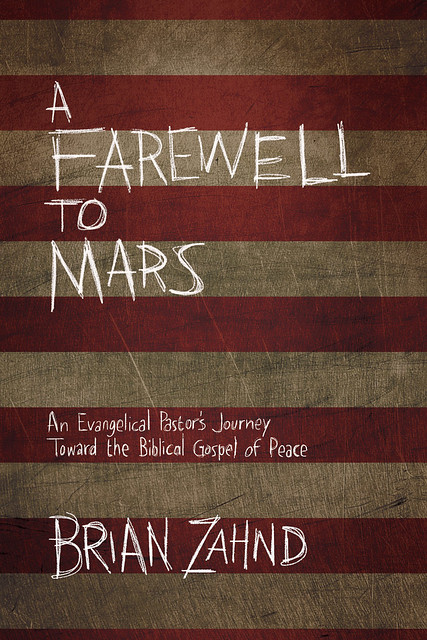
    I have a new book coming out in June. A Farewell To Mars (David C. Cook). I’m pretty excited about it. I plunged my pen into my heart and wrote from deep within. It will probably stir a bit of controversy. So be it. What matters is that I’ve told my own story honestly.

    Scot McKnight, New Testament scholar, professor of New Testament at Northern Seminary, and author of several important books such as The Jesus Creed, The Blue Parakeet, and The King Jesus Gospel has written the foreword to A Farewell To Mars. Perhaps you would not think too uncharitably of me if I shared it with you.

    BZ
    _______________________________________________________________

    Though some may contest the point, and I’ve heard them for years, there is something profoundly unsettling to watch those who follow Jesus, who is the Prince of Peace, use weapons of warfare to kill others and think they are somehow following Jesus. At the simplest level of evangelicalism, and by that I mean anyone who affirms salvation in Christ alone, it impossible for me to comprehend how a Christian can kill a non-Christian who is thereby prevented from turning to Christ just as it is also beyond me how any Christian can kill another Christian at the orders of State military leaders. In both instance the Christian renders to Caesar what is due only to Christ.

    As Brian Zahnd says in this aesthetic and courageous book, too often the church – and individual Christians are therefore complicit – has become chaplain to the State. It’s divinely-ordained and Christ-shaped role is thereby denied, it has become idolatrous and has betrayed the Prince of Peace. Our responsibility is not to chaplain the State but to call the State to repentance and to surrender to the King who is Lord. Our responsibility is to be an alternative to the State. Christians would do far more good for our country by learning not to look to DC for solutions but to the glorious Son of God, who loved us and who gave himself for us and in so giving himself gave us a whole new way of life, one not shaped by the power of force but the force of the gospel.

    Leaders like Brian Zahnd are quietly becoming more numerous, not because they’ve turned Euro on us but because they’ve turned once again to the Gospels and to the New Testament to find an alternative political vision for our world. They’ve eschewed pragmatics and compromise for a full-throated commitment to the kingdom vision of Jesus, which by the way is necessarily political, but an alternative politic. This alternative political world, what Stanley Hauerwas calls a “peaceable kingdom,” refuses to flash the sword of Caesar or Constantine, Germany or the USA, and it instead flashes the cross as the way to live. The cross is the symbol of the politics of Jesus, and it is beginning to burn its way into the heart of so many in the church in the USA. We need it.
    Read more

  • Scripture as Witness to the Word of God

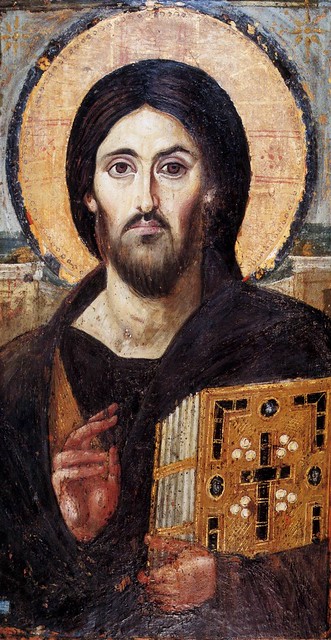
    christsinai
    Scripture as Witness to the Word of God
    Brian Zahnd

    To begin with a few axiomatic thoughts on Christ and the Bible…

    The Bible is the word of God that bears witness to the Word of God — Jesus Christ.

    The Logos-Word became flesh — not a book.

    Jesus is God. The Bible is not.

    The Bible did not create the Heavens and Earth — the Word (Christ) did.

    We worship Jesus; we do not worship the Bible.

    The Bible is not a member of the Trinity.

    The Bible is not God. Jesus is God.

    The Bible is not perfect. (There are parts of it we now regard as obsolete; e.g. Levitical codes.)

    Christ is the perfection of God as a human being.

    What the Bible does infallibly is point us to Jesus Christ.

    There is one mediator between God and man…and it’s not the Bible.

    The Bible is the inspired witness to the true Word of God who is Jesus Christ.

    Now consider this…

    The first Sunday after Christmas the Gospel reading was John 1:1-18. As I heard the Gospel read it occurred to me that the role John the Baptist played as the divinely sent witness to the Light is precisely how we should view Scripture in relation to Christ. Allow me to reproduce the reading, but I will substitute John the Baptist with Holy Scripture.
    Read more

  • Nelson Mandela: From Prisoner to President

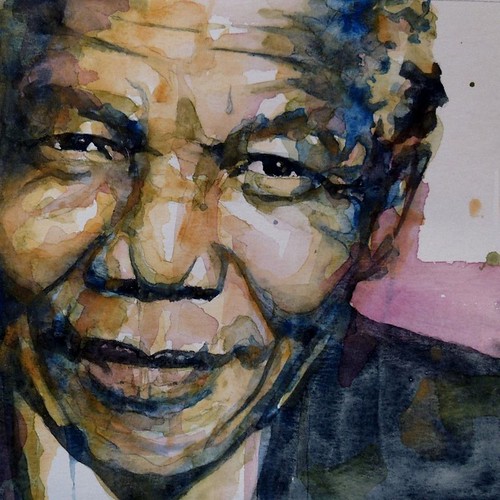
    nelson_mandela_by_loveringarts-d5zj89t

    Nelson Mandela
    1918—2013

    Genesis comes to a close with the story of a prisoner who becomes president and gives a nation a future based on forgiveness. But it’s not a story which must be relegated to ancient history. These things still happen. Injustices still occur and occasionally great souls still rise up to lead people out of the dead-end of retaliation into a future only reconciliation can create. The story of a prisoner who becomes president and gives his people a future based on forgiveness is the story of the Hebrew patriarch Joseph. It’s also the story of Nelson Mandela.
    Read more

  • Have We Become Death?

    ku-xlarge

    Have We Become Death?
    Brian Zahnd

    First watch this video…

    Now let’s step back and think for a moment about where we stand as a people and a planet. It’s easy to imagine that the world doesn’t really change — that it simply marches around the maypole of violence trampling the victims into the mud same as it ever has. But as true as that may be, something has changed. We are post-something. If nothing else we are post 1945 when the Enlightenment dream of attainable utopia went up in smoke — literal smoke! — from the chimneys of Auschwitz and a mushroom cloud over Hiroshima.

    After 1945 we lost our blind faith in the inevitability of human progress. A threshold was crossed and something important changed when humanity gained possession of what previously only God possessed: the capacity for complete annihilation. In yielding to the temptation to harness the fundamental physics of the universe for the purpose of building city-destroying bombs have we again heard the serpent whisper, “You will be like God”?
    Read more

  • Halloween: A Search For The Sacred

    the-bored-gargoyle-of-notre-dame-2

    Halloween: A Search For The Sacred
    Brian Zahnd

    It’s Halloween. The season of ghosts and goblins, haunted houses and horror movies. The modern observance of Halloween seems, for the most part, to be an innocent celebration of the strange joy of being scared. There’s no doubt that a significant number of us do enjoy being scared as a form of entertainment. How else do you explain that Stephen King has sold half a billion books?! But why? Why do we like to be scared? I think it has to do with a search for what is most missing in the modern world: the sacred. We like being scared because we are so very secular.

    When modernity came of age it banished the sense of the sacred. Empiricism, materialism, positivism had won the day. Science was now the high priest that would answer all questions and religion was merely the superstition of the hopelessly naïve. We found ourselves in a world without God or gods, a world beyond good and evil (as Nietzsche said), a world without angels and demons. Religion was but hucksterism and nothing was truly sacred anymore. Bob Dylan captured it well when he said,
    Read more

  • Mass Suicide

    communion-of-saints-elise-ritter

    Mass Suicide

    “The Eucharist becomes the meal of unity binding Christians through time and space to be one body, one Christ, for the world. That we have been made one makes it impossible, therefore, for Christians to contemplate killing other Christians with whom we share this meal. Such killing is not murder, it is suicide.”

    —Stanley Hauerwas, Commentary on Matthew, pg. 219

    This may explain the death of Christianity in Western Europe following the two world wars.
    It was mass suicide.
    Or Mass suicide.
    Selah.
    Read more

  • Columbus Day

    columbus-in-prison

    Columbus Day
    Brian Zahnd

    It’s Columbus Day in America. Well, depending on where you live. South Dakota, Oregon, Alaska, and Hawaii don’t recognize Columbus Day. Where Native Americans still have a fairly visible presence Columbus Day can be a bit awkward. In South Dakota today is a state holiday — “Native American Day.”

    Growing up in Missouri I knew Columbus Day as the celebration of the “discovery” of America. Which lets slip the obvious fact that the story is being told from a European vantage point. Last May Peri and I arrived for the first time in Portugal, but we hardly “discovered” Portugal. Yet from our perspective we were making a new discovery. (We did refrain from claiming to now own Portugal.)

    Contrary to what you may have thought, Columbus did not arrive on the shores of an empty wilderness, but on the shores of a world more populous than Europe. Tenochtitlan (Mexico City) was larger than any European city. But armed with guns, steel, and germs, and driven by the conquistador’s lust for gold and slaves, the population of the Americas was decimated. Columbus discovered America like that asteroid discovered the dinosaurs.
    Read more

  • A Premodern Sacramental Eclectic

    DSC00210

    A Premodern Sacramental Eclectic
    Brian Zahnd

    Ten years ago I was a poverty-stricken Christian…and I didn’t even know it. My poverty was theological and it was the sad consequence of my arrogant sectarianism. By restricting my Christianity to the narrow confines of modern charismatic evangelicalism I suffered from a self-inflicted theological poverty. I needed the riches of the whole church. I needed to be able to draw upon the broad spectrum of Christian thinkers and theologians, mystics and writers. I needed to become eclectic in my approach to Christianity. A Christianity that is sufficiently broad and eclectic liberates us from an arrogant and impoverished sectarianism.

    In my youthful arrogance (the word I really want to use is stupidity) I effectively defined and limited Christianity to my kind of Christianity — a charismatic flavored evangelicalism. As far as I was concerned, most Catholics, Orthodox, Anglicans, and mainline Protestants needed to “get saved” — which is to say, they needed to become my “style” of Christian. There were times in my twenties and thirties when I was particularly antagonistic toward Catholics and mainline Protestants. I thought Catholics belonged to the “whore of Babylon” and mainliners were all “liberal goats.” How egotistical! How stupid! I’m ashamed of all that now. I have repented. Which means I’ve called my former attitude sinful and changed my mind — I simply don’t think that way anymore.
    Read more