All posts in Christianity

  • Hero or Saint?

    milesteves-Ancient-Crucifixion

    Hero or Saint?
    Brian Zahnd

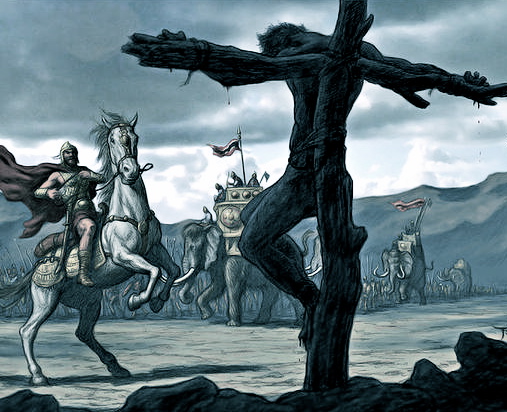
    In the Western world we are deeply conditioned to choose the heroic over the saintly. We love our heroes best of all. Heroes are goal-oriented people of great capabilities who know how to make things happen. We admire their ability to get things done and shape the world according to their will. Saints on the other hand — especially to the American mind — seem quaint and marginal, occupying religious spheres on the periphery of the action. We want to be heroes, we don’t really want to be saints. The difference between the heroic vision and the saintly vision is a fundamentally different way of viewing the purpose of life.
    Read more
  • The X-Files Is Better Than Scooby-Doo

    the_truth_is_out_there_by_phrakked-d3t52b4

    The X-Files Is Better Than Scooby-Doo
    Brian Zahnd

    Fundamentalism was born as the wrongheaded reaction to the crisis of modernity. Ironically, fundamentalism is an approach to faith that accepts modernity’s now discredited claim that empiricism is the sole source of knowledge. Feeling intimidated by the Scientific Revolution, fundamentalism takes a “scientific” approach to the Bible — which is perhaps the worst of all ways to approach Scripture. The Bible is not interested in giving (or even competing with) scientific explanations. What Scripture gives us is inspired glimpses of the Divine Mystery. The point is never to “prove” the Bible, but to enter into the mystery through the portal of Scripture. The Bible has no interest in “proving” itself — it has no need to do this and makes no attempt to do so. What the Bible is, is the Spirit-inspired sign that points us to the true Word of God — the Word made flesh. And the Word made flesh is the greatest of all sacred mysteries. Any approach to the Incarnation that does not treat it as a sacred mystery is an act of desecration. If we insist on explaining the mysteries of faith — the bane of fundamentalism — mysteries like the Trinity, the Incarnation, the Resurrection, the Ascension, the Parousia, the new birth, baptism, the Eucharist — we inevitably reduce rich mysteries to cheap certitudes. In the search for certitude and a penchant for Bible-Answer-Man explanation, the intrinsically artistic nature of the Christian mystery is turned into gift shop simulacra. Fundamentalism is to Christianity what paint-by-numbers is to art.
    Read more

  • When America Went To Hell

    Amerfican Art Exhibit  Civil War Church_Our_Banner_In_The_Skyaa
    When America Went To Hell
    Brian Zahnd

    “How I wish that you of all people would understand the things that make for peace.”
    —Jesus (Luke 19:42)

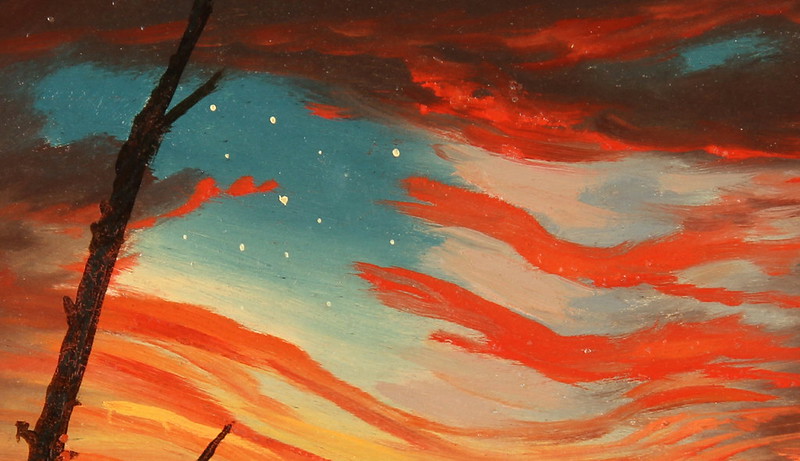
    Whether or not slavery was the direct cause for the first shots fired upon Fort Sumter in April of 1861 is a matter of scholarly debate. What is undeniable is that two and half centuries of slavery was the fuel that caused the American Civil War to ignite into a conflagration that resulted in 623,000 deaths. From its Jamestown beginnings the American colonies and later the United States practiced one of the most brutal forms of slavery the world has ever known. The preservation of an institution that systematically dehumanized millions of people for the sake of economic gain was not a thing that made for peace. Inevitably that kind of cruel exploitation would overflow its cup and unleash death and hell, bringing everything that is the opposite of peace. During the horror of the American Civil War, the “land of the free” became a burning Gehenna. Thirty percent of Southern men of fighting age were slain on battlefields that saw the birth of modern warfare. From now on, war would be totalized and mechanized. The four horseman of the Apocalypse galloped across America leaving a wake of war, disease, famine, and death.
    Read more

  • Belong (Antidote for Gnosticism)

    Saturday Morning 04.30.12.16x20_2642

    Belong
    (Antidote for Gnosticism)

    Let Christ inform all of life
    Don’t be a religious cliché
    Be a real human being
    Belong to the human race
    Belong to the woods
    Belong to the city
    Go for long walks
    Learn to appreciate art
    Take up the violin
    Cultivate culinary skills
    Read War and Peace
    Laugh more than you do
    Weep now and then
    Listen to live jazz
    Pray
    Eat a peach
    Do something ridiculous
    Go dancing
    Stop judging
    Start loving
    Plant a garden
    Climb a mountain
    Memorize a long poem
    Learn some astronomy
    Become a bee-keeper
    Go back to college
    Take up a new hobby
    Make some new friends
    Read the Bible
    In a new translation
    Get rid of bumper stickers
    Learn a foreign language
    Watch a foreign film
    Change your mind
    Drink only good coffee
    Trust the sommelier
    Talk to your neighbor
    Not about religion
    Go to church
    Go to the circus
    Don’t confuse them
    Be human
    Belong

    BZ

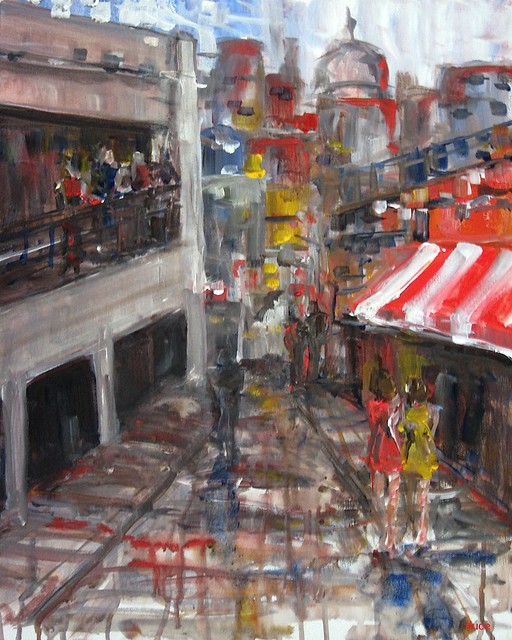
    (The artwork is Saturday Morning, Painted by Anthony Duce.)
    Read more

  • It’s All A Gift

    il_fullxfull.365019407_6ne4

    “Fear not, little flock, it is your Father’s good pleasure to give you the kingdom.” –Jesus (Luke 12:32)

    The kingdom of God is what it’s all about. The reign and rule of God. The government and politics of heaven. God’s alternative structure for human society. This kingdom is how God saves the world from all that has gone wrong. Idolatry and injustice. Pride, greed, and lust. Poverty and disease, oppression and war. And ultimately, death itself. All of these human ills are what we are saved from through the reign of Christ. And get this…

    It’s all a gift!
    We cannot build the kingdom of God, much less fight for it.
    We can only perceive the kingdom by faith and receive it as a gift.

    How the kingdom of God comes is what the kingdom of God is.
    If it comes by hierarchies building it or by armies fighting for it—
    It’s not the kingdom of God.
    The means are the ends in the process of becoming.

    It’s All A Gift

    In the midst of the human catastrophe — human civilization gone wrong from the very start, where Cain kills Abel and builds the first city — God has acted. Imagine a vast sheet — a sheet as vast as the world itself. This is human civilization. Now imagine God penetrating that vast sheet with a single pinpoint. This is the Incarnation. From this infinitesimal point — the birth of a peasant child in out-of-the-way corner of the world — God entered human civilization…and this changes everything! From that single life the kingdom of God comes.
    Read more

  • The World After Easter

    Edge-of-a-Wheat-Field-with-Poppies-and-a-Lark-by-Vincent-Van-Gogh-OSA401

    The World After Easter
    by Brian Zahnd

    He Who Sits Upon The Throne says, “Look here! I am making all things new!”

    This is the only time in Revelation where we hear the voice of Him Who Sits Upon The Throne.

    There are only three other times in the New Testament when we hear the voice of God the Father:

    At Jesus’ baptism: “This is my beloved Son, in whom I am well pleased.”

    At the Transfiguration: “This is my beloved Son, in whom I am well pleased — listen to him!”

    Before the Paschal Mystery: “I have glorified it, and I will glorify it again.”

    These occurrences of the Voice of God emphasize that Jesus is the Word of God — the incarnation of the Logos/Logic/Love of God sent into the world to redeem humanity from the dominion of Sin and Death.

    When He Who Sits Upon The Throne says, Look here! I am making all things new! — he is doing it through his eternal Word, his only begotten Son, Jesus Christ.

    This is what was promised in Abraham.
    Foretold by the Prophets.
    Born at Bethlehem.
    Inaugurated on Easter.
    The making of all things new!

    God’s solution for a Creation marred by Sin and Death is not to abandon it, evacuate it, condemn it, or destroy it, but to remake it — to make it new again! This is what was inaugurated on Easter! Read more

  • How Did Jesus Understand His Death?

    086_2

    How Did Jesus Understand His Own Death?
    Brian Zahnd

    A question for Good Friday:

    How did Jesus understand his own death?
    What meaning did Jesus give to his crucifixion?
    Did Jesus have a “theology of the cross”?

    Jesus repeatedly predicted his own death by crucifixion to his inner-circle of disciples, but did Jesus ever speak about what it meant?

    Yes.

    In Jerusalem a few days before Good Friday Jesus said this in reference to his impending crucifixion:

    Now is the judgment of the world.
    Now will the ruler of the world be cast out.
    And when I am lifted up from the earth—
    I will draw all people to myself.
    –John 12:31, 32

    Jesus says his crucifixion (seen in the light of resurrection) does three things…

    1. Judges the world.
    2. Reorganizes humanity.
    3. Drives out the satan.
    Read more

  • How Do We Know Christianity Is True?

    crosses

    I was asked this question by a young man.

    Hello Pastor Zahnd. I have a question; I hope you can give me some input. I recently became friends with people of the Muslim practice. We exchanged what our beliefs were and how they differ. (In a friendly way.) But this thought has ached at me for months now. How do we know, as Christians, we are correct? How do we know our religion, our denomination, our practice is correct?

    S.

    Here is my answer
    Read more

  • The Radical Alternative of the Gospel of Peace

    Christ Mocked by Soldiers

    The Radical Alternative of the Gospel of Peace
    by Brian Zahnd

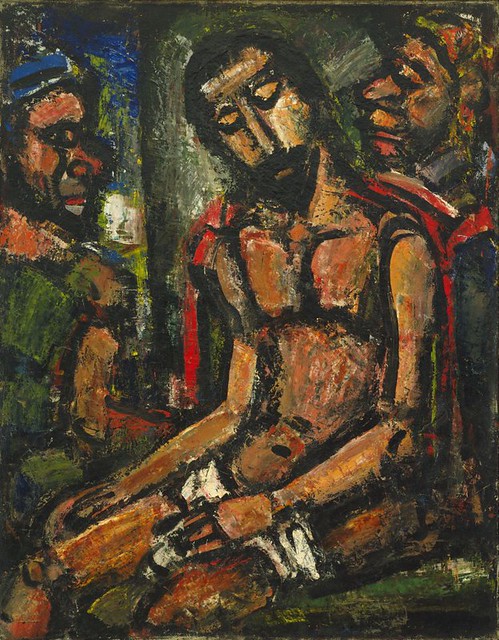
    Christians call Jesus the “Prince of Peace.” But what does that mean? Is it just a Christmas card cliché? Does it merely mean some peace of mind in an anxiety-ridden world? Or might it mean something more substantial? Perhaps much more substantial. Might it mean that Jesus offers the world an alternative arrangement that could best be described as peace? This is what I have come to believe. Jesus is the savior of the world in a real, wonderful, and urgent way — the Prince of Peace who can lead humanity out of the madness of arranging our world around power, violence and war.

    I have my own story of how I moved beyond a misguided allegiance to that tired paradigm of violence by discovering the radical alternative of the gospel of peace. This was not an easy move, but it was worth it. And it’s a story worth telling.

    But I’m most interested in telling the story of Jesus of Nazareth and the revolutionary ideas he preached — especially his ideas about peace. This first century Jew from whose birth we date our common era, this one who became the heir of Isaiah’s ancient moniker of “Prince of Peace,” preached a new way of being human and an alternative arrangement of society that he called the reign or kingdom of God. It was (and is!) a peaceable kingdom. My claim, which I’m told is audacious by some and naïve by others is simply this: Jesus Christ and his peaceable kingdom are the hope of the world.
    Read more