All posts in Jesus

  • Forty Years of Following Jesus

    BZ74

    Forty Years of Following Jesus
    Brian Zahnd
    November 9, 2014

    It was November 1974. I was fifteen and it was my year of discovery. I was awakening to the world around me, forging an identity, becoming a self. I was drawn to the counterculture. I had discovered music — not my parents music, my music. Led Zeppelin was magic for me. I still remember the first time I heard Whole Lotta Love. That opening riff channeled my lust for life. I would sit for hours in my basement bedroom listening to Zeppelin, Hendrix, Mountain, Deep Purple, Allman Brothers. Soon I would discover Bob Dylan and he would provide the soundtrack for my life. My mom was worried about my long hours alone in my bedroom with my music, black lights, and incense. But she needn’t be. I was just making discoveries.

    You can live a whole lifetime when you’re fifteen. I don’t remember that much about being twenty-six or thirty-eight or forty-three, but it seems I remember every week of being fifteen. It was 1974 and people were reading Jaws. President Nixon resigned in August and Lynyrd Skynyrd didn’t care — “now Watergate does not bother me” (Sweet Home Alabama). The Rolling Stones told the truth: It’s Only Rock N’ Roll (But I Like It). Oh yeah, I remember that year. Every week was a new discovery.

    Then came November 9, 1974. It was a Saturday. A crisp autumn day. I woke up to David Essex on the radio. Rock On—
    Read more

  • A Dusting of Snow During a Bloody Summer

    IMG_1205

    A Dusting of Snow During a Bloody Summer
    Brian Zahnd

    It’s been a bloody summer. In Iraq, Syria, Gaza, Nigeria, and the Ukraine.
    Kill the bad guys and there will be peace is the tired refrain.
    All sides say it. Ad infinitum.

    (I didn’t even mention the bloody streets of America, to which we have grown so numb.)

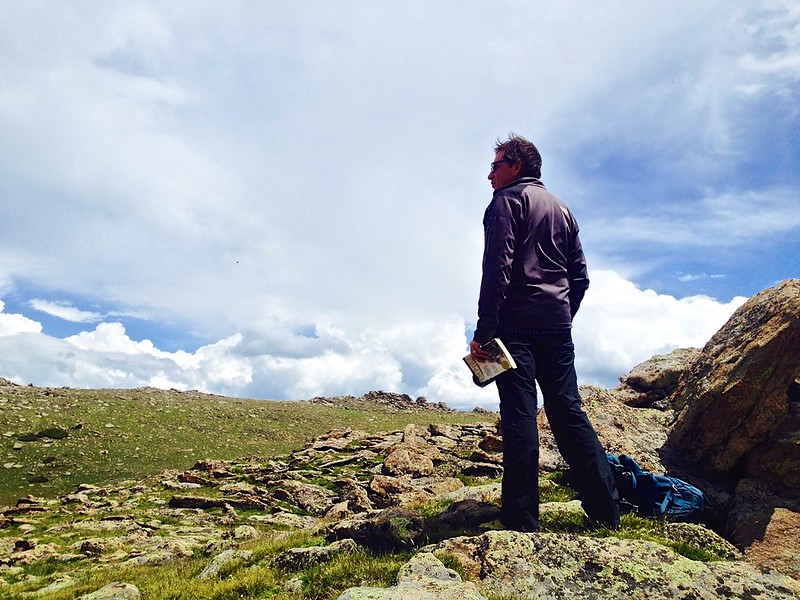
    But I am where I always hope to be this time of year: In the mountains that I love.

    When I hike above treeline onto the great expanse of the high tundra my soul finds room for expansion. I’m no longer hemmed in by the din from the reactive ideologues. I find time and space to pray and think.

    And as I pray and think, I know this…

    Creation is good. Very good. It bears witness to its Creator, who is good too.

    In our primitive dread we imagine a god who is petulant and hard to please, vindictive and retributive, capricious and cruel. But these are only petty projections born of our own fear.

    The mystics (and maybe the mountaineers) know better.

    When I can clear my head, I know better. High on the tundra between Longs Peak and the Never Summer Mountains I know the greatest of all truth: God is Love.
    Read more

  • The Four Horsemen of the Apocalypse and The Eucharist

    Apocalypse_vasnetsov

    The Four Horsemen of the Apocalypse and The Eucharist
    Brian Zahnd

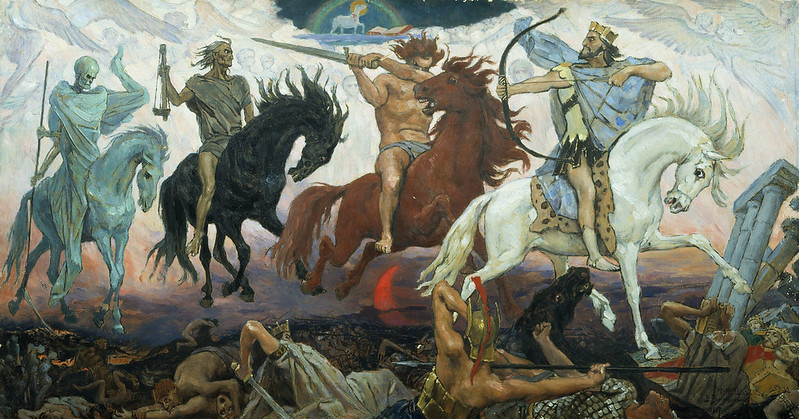
    Like the other Gospel writers John recounts the story of Jesus multiplying the loaves and fishes to feed five thousand. But John adds this unique postscript:

    “When Jesus realized that they were about to come and take him by force to make him king, he withdrew again to the mountain by himself.” (John 6:15)

    The crowd’s response to this “table in the wilderness” was an impulse to make Jesus king…but Jesus declined. Why? Jesus is king, he came to be king, king is what Messiah means. So why does Jesus slip away from the crowd when they want to make him king? The issue is force.

    The crowd wanted to “take him by force and make him king.” At the center of the crowd’s concept of kingship was violent force. They wanted to force Jesus to be their forceful king so he could lead their forces in an uprising of violent force against the Romans. This was antithetical to the kind of king Jesus came to be. Caesar is a crucifying king who reigns by force. Christ is the crucified king who reigns without force. Christ’s kingdom is built upon co-suffering love, not violent force.

    The crowd that wanted to force Jesus to be king was operating from the dominant paradigm of scarcity. This is the paradigm that possessed Cain to kill Abel, and it lies at the dark heart of human civilization. We are scripted to believe that reality is zero-based and that we live in a closed system.

    This paradigm of scarcity and insufficiency is the philosophy that undergirds our structures of systemic sin. We fear there won’t be enough land, water, food, oil, money, labor to go around, so we build evil structures of sinful force to guarantee “us” “ours.” We call it security. We call it defense. We call it freedom. What we don’t call it is what it is…fear. Driven by our fear of scarcity we create an organized, large-scale, slow-motion version of anarchy. A mob on a looting rampage is called anarchy. One nation looting another is called glorious conquest — but it’s just looting on a grand scale. Kings are tasked with looting our enemies on our behalf.
    Read more

  • What If Hitler Invaded Your House?

    image-4

    What If Hitler Invaded Your House?
    Brian Zahnd

    Lately I’ve been giving a lot of interviews on my new book A Farewell To Mars. It’s a semi-autobiographical confession of how I moved from being an enthusiastic supporter of war American style to proclaiming the peaceable kingdom of Christ. Since I’ve marched among the ranks of sincere war-endorsers for most of my life, I’m sympathetic with well-meaning Christians who believe in the way of Mars. I try to tell the story of my conversion honestly and gracefully. I level criticism, not at soldiers, but at myself. My aim is to take the reader on a journey where Jesus and war are examined in the light of an unencumbered reading of Scripture.

    But in a twelve minute radio interview there is little time for narrative and nuance. Instead, the interviewer usually leaps to what they consider “the heart of the matter.” In every interview I’ve been asked this question: “What would you do if Hitler invaded your house?” Well, it’s not exactly that question, but in every interview these two questions have come up: What about Hitler? What would you do if someone invaded your home? Hitler and home invasion. These are the two arguments that allegedly make the Jesus way of peace impossible. So let me address them. I’ll begin with Hitler.
    Read more

  • It’s Hard to Believe in Jesus

    3298 Sermon on Mount 10.5x13.75 cas d(v) Dec. 23, 1949 signed (v)

    It’s Hard to Believe in Jesus
    Brian Zahnd

    The cross is shock therapy for a world addicted to solving its problems through violence. The cross shocks us into the devastating realization that our system of violence murdered God! The things hidden from the foundation of the world have now been revealed. The cross shames our ancient foundation of violence. The cross strips naked the principalities and powers. The cross tears down the façade of glory that we use to hide the bodies of slain victims.

    In the light of the cross, we are to realize that if what we have built on Cain’s foundation is capable of murdering the Son of God, then whole edifice needs to come down. In the light of the cross, our war anthems lose their luster. But this throws us into a crisis. What other alternatives are there? How else are we to arrange the world? The alternative is what Jesus is offering us when he told us that the kingdom of God is at hand. God’s way of arranging the world around love and forgiveness is within reach. If we only dare to reach out for it, we can have it. But we are so afraid. We’re not sure we can risk it. It’s so hard for us to let go of the sword and take the hand of the Crucified One. It’s so hard for us to really believe in Jesus.

    The crowd never believes in Jesus. Only the little flock that accepts its vulnerability can believe in Jesus. If you tell those rushing to war that their hatred of enemies and their plan for the organized killing of enemies is evil, the crowd will hate you. War is sacred. It lies beyond critique. To critique it is blasphemy. The crowd hates blasphemy. The crowd wants to kill blasphemers. The crowd knows that the criticism of their violence is blasphemy because they know their cause is just. They believe it. And from their perspective their cause is just. They can prove it. Both sides can prove it. Always.

    Achilles knew his cause was just and that it was perfectly legitimate to drag Hector’s body from his chariot in front of the gates of Troy in a show of grotesque triumphalism. It’s the same grotesque impulse that causes modern soldiers to pose for gruesome photos with the bodies of dead enemies. It’s literally the way of the world. But it’s not the way of the new world founded by Jesus. Jesus is not the warrior king the world is accustomed to. Jesus is not the Jewish Achilles. Jesus refused to be the violent Messiah Israel longed for. Jesus did not kill Pilate and drag the governor’s body behind his chariot. Jesus did not pose triumphantly over the dead bodies of slain Roman soldiers. Instead it was Jesus who hung naked on a tree after being put to death through a state-sponsored execution. Jesus founded his kingdom in solidarity with brutalized victims. This is the gospel, but it’s hard for us to believe in a Jesus who would rather die than kill his enemies. It’s harder yet to believe in a Jesus who calls us to take up our own cross, follow him, and be willing to die rather than kill our enemies.
    Read more

  • Jesus Trumps Biblicism: A Tale of Sticks and Stones

    Abstract-Artist-Lucie-Beardwood-Art-Painting

    Jesus Trumps Biblicism: A Tale of Sticks and Stones
    Brian Zahnd

    This morning I was reading Scripture. From the Old Testament I was reading Numbers and in the New Testament I was reading John. In Numbers chapter 15 we find this story…

    An Israelite guy was gathering sticks on the Sabbath. This was forbidden. The guy got caught and was taken into custody. Moses inquired of Yahweh what should be done. Yahweh told Moses that the guy had to be killed. So the stick-gathering Sabbath-breaker was taken outside the camp and stoned to death by the congregation of Israel. Sticks and stones. (Number 15:32–36)

    Next I read from the Gospel of John chapter 5. This is what happens…

    Jesus meets a guy who has been paralyzed for 38 years. Jesus tells the guy to take up his bed and walk. The man is healed, takes up his bed, and heads for home. But this was the Sabbath. And the guy gets busted for breaking the Sabbath. When the Judean Torah enthusiasts find out that it was Jesus who was behind all this Sabbath breaking, they are prepared to kill Jesus. (Like Moses did in the Bible.) John concludes the story like this…

    “This is why the Judeans were persecuting Jesus, because he was doing these things on the Sabbath. But Jesus answered them, ‘My Father is working until now, and I am working.’ This is why the Judeans were seeking all the more to kill him, because not only was he breaking the Sabbath, but he was even calling God his own Father, making himself equal with God.” (John 5:16–18)

    Look at what we have here. In Numbers a guy gets caught picking up sticks on a Saturday and is stoned to death. The text tells us that Yahweh instructed Moses to do this. This is the Moses who spoke to God face to face. (Exodus 33:11)

    But in the prologue to his gospel John says this…

    “The Torah was given by Moses. Grace and truth came through Jesus Christ. No one has ever seen God. The only begotten God who is near the Father’s heart, he has made him known.” (John 1:17–18)
    Read more

  • Water To Wine (Some of My Story)

    Water-to-Wine

    Water To Wine
    Brian Zahnd

    Ten years later it’s time to tell some of my story…

    I was halfway to ninety, midway through life, and I’d reached a full-blown crisis. Call it a garden variety mid-life crisis if you want, but it was something more than that. You might say it was a theological crisis, though that makes it sound too cerebral. The unease I felt came from a deeper place than a mental file labeled “theology.” My life was like that U2 song stuck on repeat — I Still Haven’t Found What I’m Looking For. I was wrestling with an uneasy feeling that the kind of Christianity I had built my life around was somehow deficient. Not wrong, but lacking. It seemed watery and weak. In my most honest moments I couldn’t help but notice that the Christianity I knew seemed to lack the kind of robust authenticity that made Jesus so fascinating. And I’d always been utterly fascinated by Jesus. Jesus wasn’t in question, but Christianity American style was.

    I became a committed Christian during the Jesus Movement. I was the high school “Jesus freak” and by the tender age of twenty-two I had founded a church — as ridiculous as that sounds now! After a prolonged slow start I eventually enjoyed what most would call a “successful ministry.” At one point during the 1990’s our church was dubbed “one of the twenty fastest growing churches in America.” I was a success. Ta-da!

    But by 2003, now in my mid-forties, I had become, what shall I say?…bored, restless, discontent. From a certain perspective things couldn’t have been better. I had a large church with a large staff supported by a large budget worshiping in a large complex. I was large and in charge! I had made it to the big time. But I had become increasingly dissatisfied. I was weary of the tired clichés of bumper-sticker evangelicalism. I was disenchanted by a paper-thin Christianity propped up by cheap certitude. The politicized faith of the Religious Right was driving me crazy. I was yearning for something deeper, richer, fuller. Let me say it this way — I was in Cana and the wine had run out. I needed Jesus to perform a miracle.
    Read more

  • How Does “Dying For Our Sins” Work?

    grunewaldchrist1

    How Does “Dying For Our Sins” Work?
    Brian Zahnd

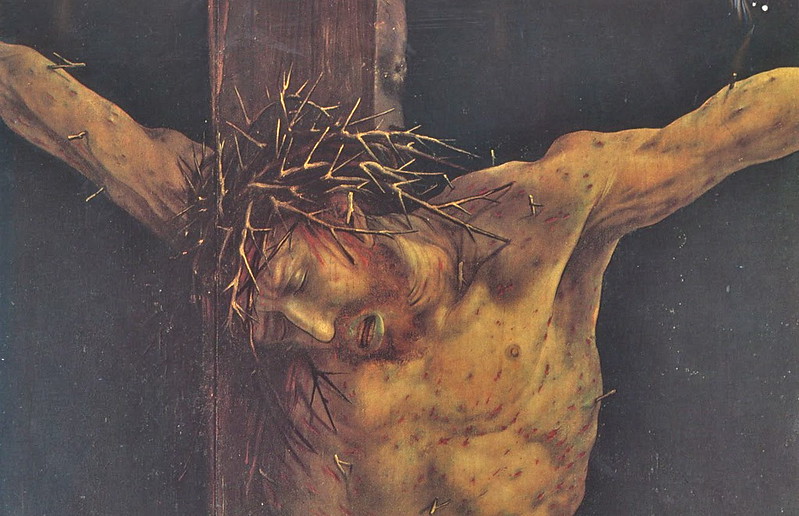
    When we say “Jesus died for our sins,” what does that mean? It’s undeniably an essential confession of Christian faith, but how does it work? This much I’m sure of, it’s not reducible to just one thing. I’ve just finished preaching eight sermons on “The Crucified God” and I know I’ve barely scratched the surface of what the cross means. To try to reduce the death of Jesus to a single meaning is an impoverished approach to the mystery of the cross. I’m especially talking about those tidy explanations of the cross known as “atonement theories.” I find most of them inadequate; others I find repellent. Particularly abhorrent are those theories that portray the Father of Jesus as a pagan deity who can only be placated by the barbarism of child sacrifice. The god who is mollified by throwing a virgin into a volcano or by nailing his son to a tree is not the Abba of Jesus!

    Neither is the death of Jesus a kind of quid pro quo by which God gains the necessary capital to forgive sinners. No! Jesus does not save us from God; Jesus reveals God! Jesus does not provide God with the capacity to forgive; Jesus reveals God as forgiving love. An “economic model” of the cross just won’t work. It’s not as if God is saying, “Look, I’d love to forgive you, but I’ve got to pay off Justice first, and, you know how she is, she’s a tough goddess, she requires due payment.” This understanding of the cross begs the question of who exactly is in charge — the Father of Jesus or some abstract ideal called “Justice”?
    Read more

  • Sympathy for the Devil…or Pilate

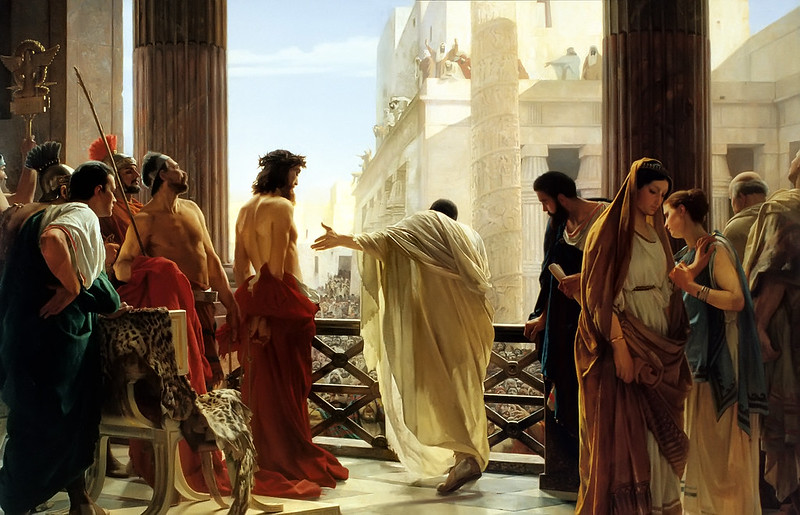
    Ecce Homo by Antonio Ciseri c. 1880

    Sympathy for the Devil…or Pilate
    Brian Zahnd

    Please allow me to introduce myself
    I’m a man of wealth and taste
    I’ve been around for a long, long year
    Stole many a man’s soul and faith
    And I was ‘round when Jesus Christ
    Had his moment of doubt and pain
    Made damn sure that Pilate
    Washed his hands and sealed his fate
    Pleased to meet you
    Hope you guess my name
    But what’s puzzling you
    Is the nature of my game

    –The Rolling Stones, Sympathy for the Devil

    In his fascinating novel, The Master and Margarita, Russian writer Mikhail Bulgakov creates an imaginary conversation between the Roman governor Pontius Pilate and the Galilean prophet Yeshua. When asked about his views on government, Bulgakov’s Yeshua says, “All power is a form of violence over people.” The peasant preacher of Bulgakov’s novel goes on to contrast the governments of power and violence with the peaceable kingdom of truth and justice. In response Pontius Pilate rages, “There never has been, nor yet shall be a greater or more perfect government in this world than the rule of the emperor Tiberius!” When Pilate asks Yeshua if he believes this kingdom of truth will come, Yeshua answers with conviction, “It will.” Pilate cannot stand for this. In a memorable passage Bulgakov’s Pilate rails against the possibility of the kingdom of God ever coming and supplanting Caesar’s empire.

    “It will never come!” Pilate suddenly shouted. Many years ago in the Valley of the Virgins Pilate had shouted in that same voice to his horsemen: “Cut them down! Cut them down!” And again he raised his parade-ground voice, “Criminal! Criminal! Criminal! Do you imagine, you miserable creature, that a Roman Procurator could release a man who has said what you have said to me? I don’t believe in your ideas!”

    In The Master and Margarita, Pontius Pilate seems to have little personal animosity toward the wandering Galilean preacher, but Pilate hates his ideas. In the end what forces the Procurator to condemn Yeshua to crucifixion is the preacher’s revolutionary ideas about power, truth, and violence. Like Pilate we too wrestle with the conflict we have between Jesus and his unsettling ideas. We often want to separate Jesus from his ideas.

    This bifurcation between Jesus and his political ideas has a history — it can be traced back to the early fourth century when Christianity first attained favored status in the Roman Empire. In October of 312 the Roman general Constantine came to power after winning a decisive battle in which he used Christian symbols as a fetish, placing them as talismans upon the weapons of war. (The incongruence is absolutely stunning!) Having emerged victorious in a Roman civil war and securing his position as emperor, Constantine attributed his military victory to the Christian god. In short order the wheels were set in motion for Christianity to become the state religion of the Roman Empire. The kingdom of God had been eclipsed by Christian empire.

    Almost overnight the church found itself in a chaplaincy role to the empire and on a trajectory that would lead to the catastrophe of a deeply compromised Christianity. The catastrophe of church as vassal to the state would find its most grotesque expression in the medieval crusades when under the banner of the cross Christians killed in the name of Christ. The crusades are perhaps the most egregious example of how distorted Christianity can become when we separate Christ from his ideas. Read more