Brian Zahnd is the founder and lead pastor of Word of Life Church, a Christian congregation located in the heartland of America in St. Joseph, Missouri. More...
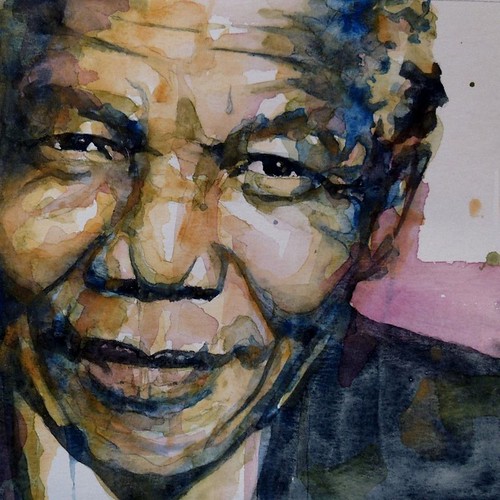
Genesis comes to a close with the story of a prisoner who becomes president and gives a nation a future based on forgiveness. But it’s not a story which must be relegated to ancient history. These things still happen. Injustices still occur and occasionally great souls still rise up to lead people out of the dead-end of retaliation into a future only reconciliation can create. The story of a prisoner who becomes president and gives his people a future based on forgiveness is the story of the Hebrew patriarch Joseph. It’s also the story of Nelson Mandela. Read more
Now let’s step back and think for a moment about where we stand as a people and a planet. It’s easy to imagine that the world doesn’t really change — that it simply marches around the maypole of violence trampling the victims into the mud same as it ever has. But as true as that may be, something has changed. We are post-something. If nothing else we are post 1945 when the Enlightenment dream of attainable utopia went up in smoke — literal smoke! — from the chimneys of Auschwitz and a mushroom cloud over Hiroshima.
After 1945 we lost our blind faith in the inevitability of human progress. A threshold was crossed and something important changed when humanity gained possession of what previously only God possessed: the capacity for complete annihilation. In yielding to the temptation to harness the fundamental physics of the universe for the purpose of building city-destroying bombs have we again heard the serpent whisper, “You will be like God”? Read more
I get that question a lot. People who have read my books or heard my sermons will often “confront” me with that question. There seems to be a hint of scandal implied in the question, like asking, “you’re not a pornographer are you?” This strikes me as a bit strange. I suppose the hint of scandal comes from the assumption that pacifism is a sort of cousin to cowardice. This also strikes me as strange. To endorse the dominant view that the employment of violence is compatible with Christianity requires no courage at all — that’s just following the crowd. But to differ from the dominant view on the sanctity of state-sponsored violence may require an uncommon reservoir of moral conviction. Pacifism is not a popular position in America, and especially not among patriotic evangelicals who have ardently sought to amalgamate the American state and the Christian faith into one hybrid entity. Still I know what you’re wondering: what’s my answer to the loaded question about pacifism?
First of all, I don’t like labels. Kierkegaard was right when he said, “when you label me, you negate me.” Just call someone a pacifist and you can dismiss them with a wave of your hand. Labels are often a way to avoid thinking. “Oh, he’s one of those.” Case closed. Mind closed. That being said, I have no problem with Christians who adopt the label of pacifist — if nothing else they provide an alternative witness to that of the Christian militarist whose numbers are legion.
But I actually don’t claim the label of pacifist, and for this reason: pacifism is a political position on violence; it’s a position one could adopt apart from Jesus Christ — as for example the great writer and humanist Kurt Vonnegut did. But I am not a political pacifist. What I am is a Christian. And as a Christian we can talk about how Christ informs humanity on the subject of violence. Read more
“The Eucharist becomes the meal of unity binding Christians through time and space to be one body, one Christ, for the world. That we have been made one makes it impossible, therefore, for Christians to contemplate killing other Christians with whom we share this meal. Such killing is not murder, it is suicide.”
—Stanley Hauerwas, Commentary on Matthew, pg. 219
This may explain the death of Christianity in Western Europe following the two world wars.
It was mass suicide.
Or Mass suicide. Selah. Read more
By the killing idea I mean the idea of the modern killing spree. This idea, in the sense I mean it, seems to be a relatively new idea. I’m talking about the phenomenon where one or two individuals enter a school, a theater, a mall, a church, a military installation, or some other public space and randomly kill as many people as possible with the aid of modern firearms. This is a phenomenon that is now a regular occurrence in American life. It has become an idea. Something one can do. A possible course of action. An option. I don’t know if this idea occurred to people in earlier contemporary times, but it seems to have been infrequently acted upon if it did. But now the idea is out there. As an idea it has become a viable option. It is now on the menu of possible ways to respond to frustration over this or that. This idea coupled with the availability of modern firearms allows one or two individuals to wage a very brief and highly violent war upon unsuspecting innocents for the sake of an ideology, or as an expression of rage, or as a way of throwing a final lethal tantrum as one exits this life. It’s an idea. Or you could call it a demon. Anyway, it’s out there.
But what I find baffling is how tolerant it appears American society is of this idea. Or at least American legislative bodies. Oh, we don’t like it, but we are determined tolerate it. We don’t seem to have an alternative idea to curb this killing idea that doesn’t impinge upon what is thought of as “freedom” or some “right.” So the killing idea is tolerated. Read more
A friend brought these remarks of John Piper to my attention and asked me to respond. I’ve already posted a blog on the topic of God and Genocide, but here are a few thoughts.
I understand that the disciples of John Calvin feel obligated to defend their ism at all costs, but my, what a cost it is when it requires impugning the character of God! God is revealed in Jesus, not genocide. The perfect image of God is Christ, not Calvin’s ism.
What I see here is the distortion of God to supreme and capricious Will in order to make a certain theological system work. As if the landmark verses of the New Testament read…
In the beginning was the Will, and the Will was with God, and the Will was God.
Now abide these three: faith, hope, and will, and the greatest of these is will.
God is will.
Once you reduce all that exists or occurs to God’s will, you have moved out of the Judeo-Christian understanding of God into Voluntarism or even Pantheism. Was Nietzsche right? Is everything ultimately about the Will to Power? In the kind of absolute determinism that John Piper espouses there is no authentic being, no genuine freedom, only the sheer will of God. Which begs a question: Is human drama (and everything else) nothing more than a movie playing in God’s head? Is what we know as life nothing more than God’s dream…or nightmare
Or perhaps it begs a more provocative question…
When the suicide bomber (to use Piper’s example) shouts Allahu Akbar! (God is great!) and detonates his bomb, does John Piper say, “You’ve got a point there”?
“How I wish that you of all people would understand the things that make for peace.” —Jesus (Luke 19:42)
Whether or not slavery was the direct cause for the first shots fired upon Fort Sumter in April of 1861 is a matter of scholarly debate. What is undeniable is that two and half centuries of slavery was the fuel that caused the American Civil War to ignite into a conflagration that resulted in 623,000 deaths. From its Jamestown beginnings the American colonies and later the United States practiced one of the most brutal forms of slavery the world has ever known. The preservation of an institution that systematically dehumanized millions of people for the sake of economic gain was not a thing that made for peace. Inevitably that kind of cruel exploitation would overflow its cup and unleash death and hell, bringing everything that is the opposite of peace. During the horror of the American Civil War, the “land of the free” became a burning Gehenna. Thirty percent of Southern men of fighting age were slain on battlefields that saw the birth of modern warfare. From now on, war would be totalized and mechanized. The four horseman of the Apocalypse galloped across America leaving a wake of war, disease, famine, and death. Read more
“Fear not, little flock, it is your Father’s good pleasure to give you the kingdom.” –Jesus (Luke 12:32)
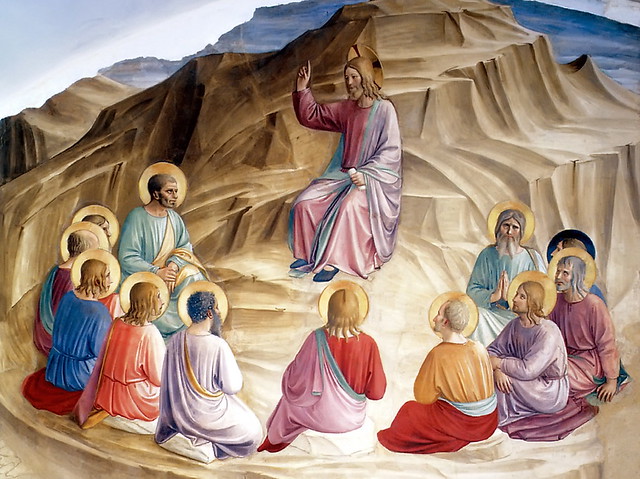
The kingdom of God is what it’s all about. The reign and rule of God. The government and politics of heaven. God’s alternative structure for human society. This kingdom is how God saves the world from all that has gone wrong. Idolatry and injustice. Pride, greed, and lust. Poverty and disease, oppression and war. And ultimately, death itself. All of these human ills are what we are saved from through the reign of Christ. And get this…
It’s all a gift!
We cannot build the kingdom of God, much less fight for it.
We can only perceive the kingdom by faith and receive it as a gift.
How the kingdom of God comes is what the kingdom of God is.
If it comes by hierarchies building it or by armies fighting for it—
It’s not the kingdom of God.
The means are the ends in the process of becoming.
It’s All A Gift
In the midst of the human catastrophe — human civilization gone wrong from the very start, where Cain kills Abel and builds the first city — God has acted. Imagine a vast sheet — a sheet as vast as the world itself. This is human civilization. Now imagine God penetrating that vast sheet with a single pinpoint. This is the Incarnation. From this infinitesimal point — the birth of a peasant child in out-of-the-way corner of the world — God entered human civilization…and this changes everything! From that single life the kingdom of God comes. Read more
How Did Jesus Understand His Own Death? Brian Zahnd
A question for Good Friday:
How did Jesus understand his own death?
What meaning did Jesus give to his crucifixion?
Did Jesus have a “theology of the cross”?
Jesus repeatedly predicted his own death by crucifixion to his inner-circle of disciples, but did Jesus ever speak about what it meant?
Yes.
In Jerusalem a few days before Good Friday Jesus said this in reference to his impending crucifixion:
Now is the judgment of the world.
Now will the ruler of the world be cast out.
And when I am lifted up from the earth—
I will draw all people to myself. –John 12:31, 32
Jesus says his crucifixion (seen in the light of resurrection) does three things…
1. Judges the world.
2. Reorganizes humanity.
3. Drives out the satan. Read more