• Scot McKnight’s Foreword to “A Farewell To Mars”
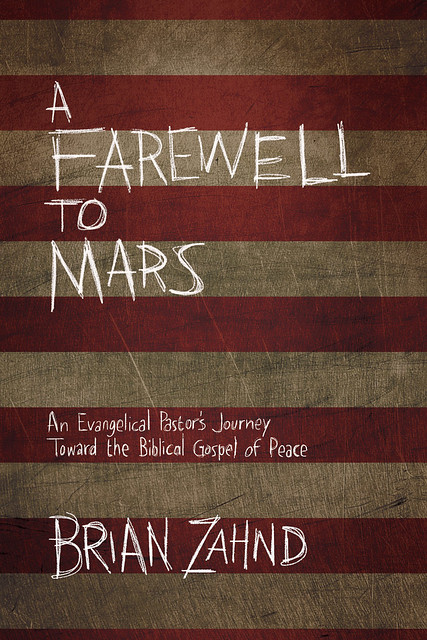
    Mars

    I have a new book coming out in June. A Farewell To Mars (David C. Cook). I’m pretty excited about it. I plunged my pen into my heart and wrote from deep within. It will probably stir a bit of controversy. So be it. What matters is that I’ve told my own story honestly.

    Scot McKnight, New Testament scholar, professor of New Testament at Northern Seminary, and author of several important books such as The Jesus Creed, The Blue Parakeet, and The King Jesus Gospel has written the foreword to A Farewell To Mars. Perhaps you would not think too uncharitably of me if I shared it with you.

    BZ
    _______________________________________________________________

    Though some may contest the point, and I’ve heard them for years, there is something profoundly unsettling to watch those who follow Jesus, who is the Prince of Peace, use weapons of warfare to kill others and think they are somehow following Jesus. At the simplest level of evangelicalism, and by that I mean anyone who affirms salvation in Christ alone, it impossible for me to comprehend how a Christian can kill a non-Christian who is thereby prevented from turning to Christ just as it is also beyond me how any Christian can kill another Christian at the orders of State military leaders. In both instance the Christian renders to Caesar what is due only to Christ.

    As Brian Zahnd says in this aesthetic and courageous book, too often the church – and individual Christians are therefore complicit – has become chaplain to the State. It’s divinely-ordained and Christ-shaped role is thereby denied, it has become idolatrous and has betrayed the Prince of Peace. Our responsibility is not to chaplain the State but to call the State to repentance and to surrender to the King who is Lord. Our responsibility is to be an alternative to the State. Christians would do far more good for our country by learning not to look to DC for solutions but to the glorious Son of God, who loved us and who gave himself for us and in so giving himself gave us a whole new way of life, one not shaped by the power of force but the force of the gospel.

    Leaders like Brian Zahnd are quietly becoming more numerous, not because they’ve turned Euro on us but because they’ve turned once again to the Gospels and to the New Testament to find an alternative political vision for our world. They’ve eschewed pragmatics and compromise for a full-throated commitment to the kingdom vision of Jesus, which by the way is necessarily political, but an alternative politic. This alternative political world, what Stanley Hauerwas calls a “peaceable kingdom,” refuses to flash the sword of Caesar or Constantine, Germany or the USA, and it instead flashes the cross as the way to live. The cross is the symbol of the politics of Jesus, and it is beginning to burn its way into the heart of so many in the church in the USA. We need it.
    Read more
  • Peri and Her Books

    DSC00476_2

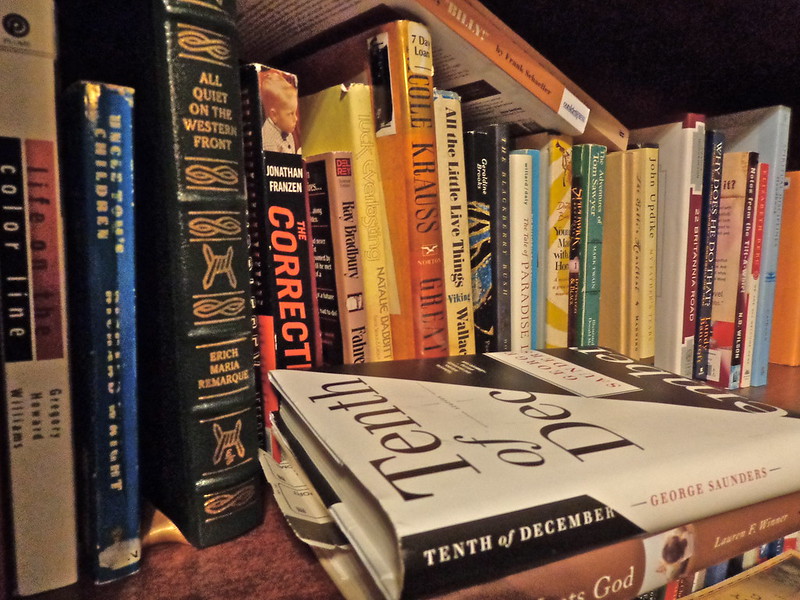
    Peri is a reader. I am too. Our house is adorned and littered with books. They’re everywhere. On shelves, tables, desks, the floor. Everywhere you look…books. This is a good thing. Last year Peri read 52 books and…well, I’ll let her tell you about it. Here’s Peri:

    At the beginning of 2013, I got out a brand new journal and began to record the books I finished throughout the year. I didn’t intend to read a book a week, but at 11:30 pm on New Year’s Eve, through bleary eyes, I finished and recorded the last one. And it wasn’t a “book a week” — some took a LONG time to read, and some were quick, but over the course of a year, I finished 52.

    I enjoyed keeping the list, and it helped me to be more disciplined in my reading. I always start a lot more books than I finish, but I finished more this year because of the list.

    I’ve had numerous people tell me that I inspired them to get back to reading. Reading books does take some inspiration, some desire, some motivation. Spending an hour skimming the internet is easier than concentrating on a book. There are important and worthwhile things to read on the internet, but I am a richer person for reading books.

    Many people have asked me to share my list. I personally love hearing what other people are reading and a good deal of what I do read online is book reviews! I won’t list all 52, but I went through and picked ten — not necessarily the “best”, but ones I did very much enjoy and would recommend widely, some of which are pretty obscure and not likely to be discovered or read without a recommendation.
    Read more

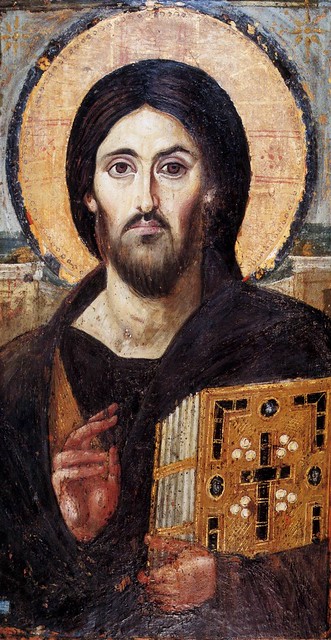
  • Scripture as Witness to the Word of God

    christsinai
    Scripture as Witness to the Word of God
    Brian Zahnd

    To begin with a few axiomatic thoughts on Christ and the Bible…

    The Bible is the word of God that bears witness to the Word of God — Jesus Christ.

    The Logos-Word became flesh — not a book.

    Jesus is God. The Bible is not.

    The Bible did not create the Heavens and Earth — the Word (Christ) did.

    We worship Jesus; we do not worship the Bible.

    The Bible is not a member of the Trinity.

    The Bible is not God. Jesus is God.

    The Bible is not perfect. (There are parts of it we now regard as obsolete; e.g. Levitical codes.)

    Christ is the perfection of God as a human being.

    What the Bible does infallibly is point us to Jesus Christ.

    There is one mediator between God and man…and it’s not the Bible.

    The Bible is the inspired witness to the true Word of God who is Jesus Christ.

    Now consider this…

    The first Sunday after Christmas the Gospel reading was John 1:1-18. As I heard the Gospel read it occurred to me that the role John the Baptist played as the divinely sent witness to the Light is precisely how we should view Scripture in relation to Christ. Allow me to reproduce the reading, but I will substitute John the Baptist with Holy Scripture.
    Read more

  • BZ’s Top Five Albums of 2013

    2007-05-25-albums

    BZ’s Top Five Albums of 2013

    Without music, life would be a mistake.
    -Nietzsche

    I love music. Neurotically so. I don’t love what I’m “supposed” to love, I love what I love.
    Since I was thirteen people have been telling me to turn it down. Mostly I don’t.

    I’m listening to Neil Young, I gotta turn up the sound
    Someone’s always yelling, turn it down

    -Bob Dylan, Highlands

    So with little explanation and no apology here are my top five albums of 2013…

    BZ

    (The artwork is 2500 albums.)

    Read more

  • Plato’s Cave: A Christmas Story

    the-cave

    Plato’s Cave: A Christmas Story
    Brian Zahnd

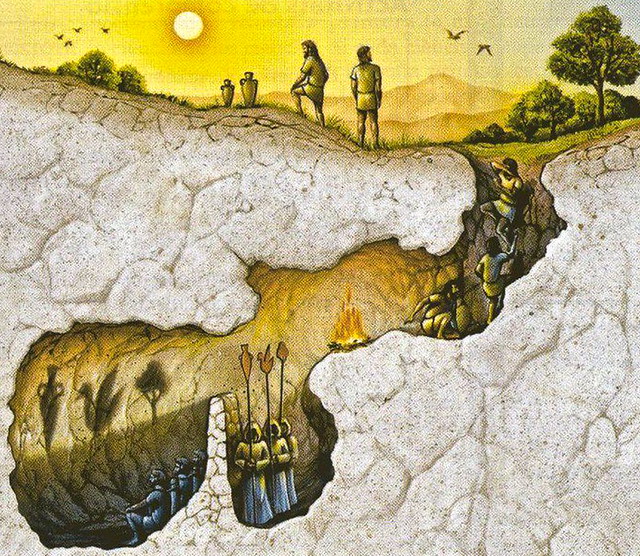
    Four hundred years before the birth of Jesus, history’s greatest philosopher gave the world an enduring allegory. I’m talking about Plato and his famous allegory of the cave. Plato said we are like prisoners chained in a deep cave lit only by dim torches, so that we exist in darkness watching shadows on the wall. We are imprisoned in deep untruth. What we need is someone to free us from our chains, to lead us out of the dark and into the day. In simplified form that’s the allegory Plato gave to explain the human predicament four hundred years before Caesar Augustus decided to take a census and thereby set in motion events that we remember every December.

    You know the story. Joseph and Mary are compelled by imperial degree to travel from Nazareth to their ancestral home in Bethlehem — a little hilltop village five miles south of Jerusalem. A town that would have been utterly inconsequential if it had not been for a bit of historical trivia: a thousand years earlier Bethlehem was the birthplace of David, Israel’s greatest king. To further endow tiny Bethlehem with significance, the prophet Micah in his poems of hope dreamed of the day when an even greater king would be born in Bethlehem — a king whose reign of peace would cover the earth and lead to the abolishment of war. (See Micah 4:1-5; 5:2-5)

    A thousand years after David. Seven centuries after Micah.

    Mary and Joseph. Bethlehem. No room in the inn. Ever resourceful Joseph finds shelter among the livestock. It’s far from ideal. Mary goes into labor. (It must have seemed like the worst timing. But it wasn’t.) Jesus is born. Wrapped in swaddling clothes. Laid in a manger. A feeding trough. Which is how we know Jesus was born among the livestock.

    But here is where our traditional nativity scenes may mislead us. Livestock weren’t sheltered in barns, but in caves. Caves! That’s right, Jesus was born in a…cave!

    Hold on to that thought.
    Read more

  • The Magi and I

    display_image.php

    This is from last Christmas, but it still speaks to me and for me…

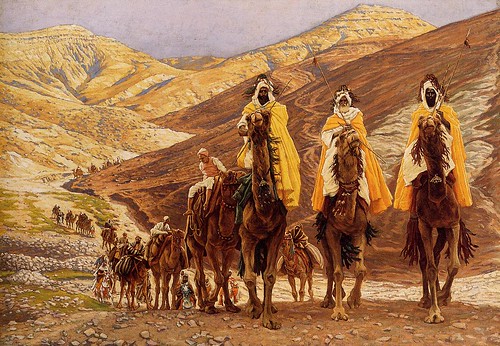
    T.S. Eliot’s poem Journey of the Magi with my quasi-interpretation of it. Which is more than an interpretation — it’s also a kind of autobiographical confession; for I too have had a hard time of it. And like Eliot’s Magi I would do it all over again.
    Read more

  • West of Shinar

    NewJerusalem

    West of Shinar
    by Blindman at the Gate

    God said, “Let there be.”
    Existence. Life. Awareness.
    Good, very good.
    A man called Mankind.
    A woman called Mother-of-All.
    They bore and wore the Imago Deo.
    Walked in the Garden with God.

    Then something went wrong.
    Paradise lost.
    Moved to an apartment east of Eden.
    They had babies.
    Called them Cain and Abel.
    Farmer and Shepherd.
    But the landed gentry murdered the nomadic herdsman.
    The killer lied to God (and himself) about what he had done.
    “I didn’t murder my brother — I just killed an enemy. It had to be done.”
    Read more

  • Merry Christmas! War is Abolished!

    photo(63)_2

    Merry Christmas! War is Abolished!
    by Brian Zahnd

    Isaiah had a dream, a God-inspired dream.
    Isaiah was a poet, a God-intoxicated poet.
    He had a Messianic dream that he turned into a prophetic poem.
    It goes like this—

    In days to come
    the mountain of the LORD’s house
    shall be established as the highest of the mountains,
    and shall be raised above the hills;
    all the nations shall stream to it.
    Many peoples shall come and say,
    “Come, let us go up to the mountain of the LORD,
    to the house of the God of Jacob;
    that he may teach us his ways
    and that we may walk in his paths.”
    For out of Zion shall go forth instruction,
    and the word of the LORD from Jerusalem.
    He shall judge between the nations,
    and shall arbitrate for many peoples;
    they shall beat their swords into plowshares,
    and their spears into pruning hooks;
    nation shall not lift up sword against nation,
    neither shall they learn war anymore.

    -Isaiah 2:2–4

    Swords turned into plowshares.
    Spears into pruning hooks.
    Tanks turned into tractors.
    Missile silos into grain silos.
    The study of war abandoned for learning the ways of the Lord.
    Instead of academies where we learn to make war,
    there will be universities where we learn to wage peace.
    The cynic will laugh (for lack of imagination), but this is Isaiah’s vision.

    And every Christmas we borrow another of Isaiah’s poems to celebrate the birth of the child who makes these dreams come true—

    The people who walked in darkness
    have seen a great light;
    those who live in a land of deep darkness—
    on them light has shined…
    For all the boots of the tramping solidiers
    and all the uniforms stained in blood
    shall be burned as fuel for fire.
    For unto us a child is born,
    unto us a son given;
    the government shall be upon his shoulders;
    and he is named
    Wonderful Counselor, Mighty God,
    Everlasting Father, Prince of Peace.
    His government shall grow continually,
    and there shall be endless peace
    for the throne of David and his kingdom.
    He will establish and uphold it
    with justice and with righteousness
    from this time onward and forevermore.

    -Isaiah 9:2, 5–7

    Isaiah in his prophetic poems frames the Messianic hope like this:

    A Prince of Peace will establish a new kind of government, a government characterized by ever-increasing peace. Weapons of war will be transformed into instruments of agriculture. At last the nations will find their way out of the darkness of endless war into the light of God’s enduring peace.

    This is Isaiah’s hope. Christians take Isaiah’s hope and make a daring claim: Jesus is that Prince of Peace! Jesus is the one who makes Isaiah’s dreams come true. From the day of Pentecost to the present this is what Christians have claimed.
    Read more

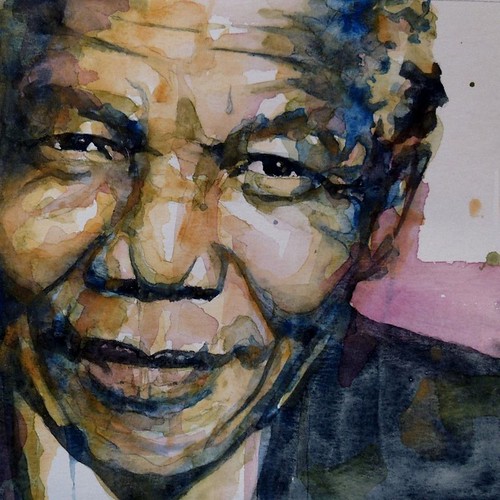
  • Nelson Mandela: From Prisoner to President

    nelson_mandela_by_loveringarts-d5zj89t

    Nelson Mandela
    1918—2013

    Genesis comes to a close with the story of a prisoner who becomes president and gives a nation a future based on forgiveness. But it’s not a story which must be relegated to ancient history. These things still happen. Injustices still occur and occasionally great souls still rise up to lead people out of the dead-end of retaliation into a future only reconciliation can create. The story of a prisoner who becomes president and gives his people a future based on forgiveness is the story of the Hebrew patriarch Joseph. It’s also the story of Nelson Mandela.
    Read more