All posts in Jesus

  • The Book of Revelation
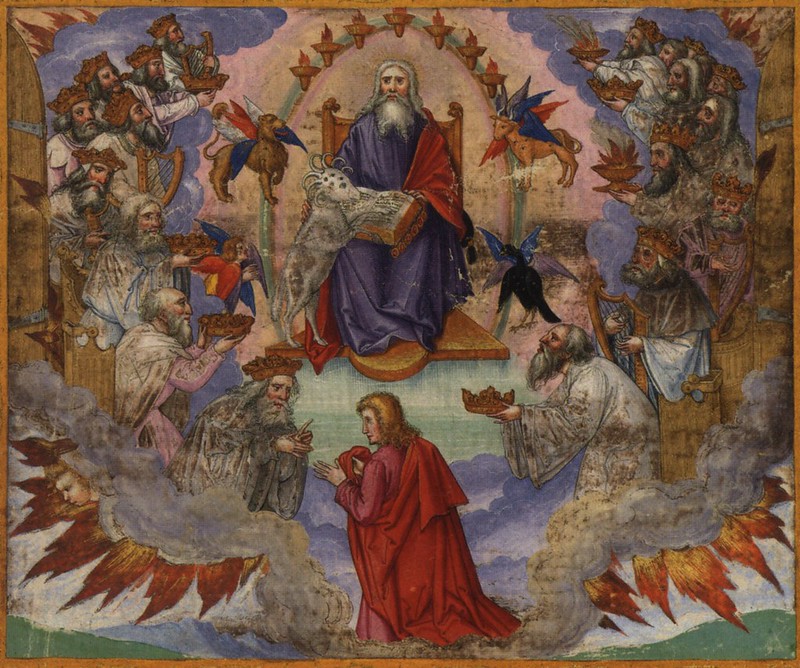
    Ottheinrich_Folio287r_Rev4-5

    This week Group Publishing released the Jesus-Centered Bible — a study Bible in the New Living Translation. I wrote the introductions for Jonah, Matthew, Titus, and Revelation. Here’s the introduction I wrote for the book of Revelation.

    The Book of Revelation
    Brian Zahnd

    As a child growing up in church I didn’t always feel engaged by the sermon. On those occasions I would pull out the pew Bible and begin to read. And I always went to the same place — to the end of the Bible, to the mysterious book of Revelation. I was fascinated with its monsters and battles, its angels and demons, and its visions of heaven and hell that parade across the pages in the final installment of Christian Scripture. Like many others, I assumed I was reading some kind of un-deciphered code about the end times. I thought Revelation was a veiled foretelling of the geopolitical events of the late twentieth century.

    But I was mistaken.
    Read more
  • Nagasaki: The Sufferings of Christ

    Nagasaki

    This is the third in a series of blog posts on the seventieth anniversary of the creation and use of the atomic bomb. The first two are Los Alamos: We Have Become Death and Hiroshima: An Anti-Transfiguration. I have asked Peri to write the final one on Nagasaki.

    Nagasaki: The Sufferings of Christ
    Peri Zahnd

    1945. What a year it was. What it must have been like to have lived in that time — the last days of WWII, watching the evil Third Reich disintegrate, the fall of the Nazi regime, dancing in the streets of America when it was announced the war in Europe was finally over.

    I can’t imagine what it was like to hear in the days and weeks to follow the stories of the concentration camps being liberated, the piles of bodies, the skeletal survivors. Had such horror ever been seen on the earth? I absolutely agree, the world must “never forget” what awful things were done in an attempt to utterly wipe out a people group, the Jews.

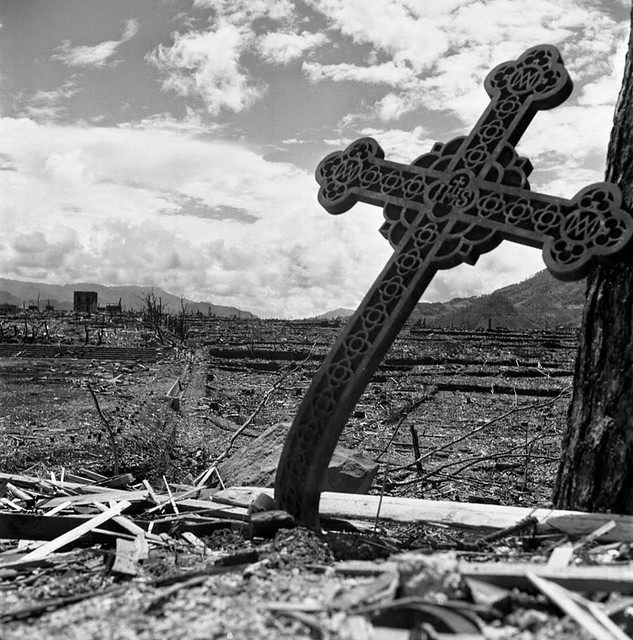
    But the war wasn’t really over. America was also at war with Japan, and the Japanese had not yet surrendered. We were still at war, for a few more months, until August, when two atomic bombs were dropped in the space of four days on two major cities in Japan. I think it is safe to say again that such horror had never been seen on the earth.
    Read more

  • Hiroshima: An Anti-Transfiguration

    Hiroshima

    Hiroshima: An Anti-Transfiguration
    Brian Zahnd

    “And Jesus was transfigured before them, and his face shone like the sun, and his clothes became whiter than light.” –Matthew 17:2

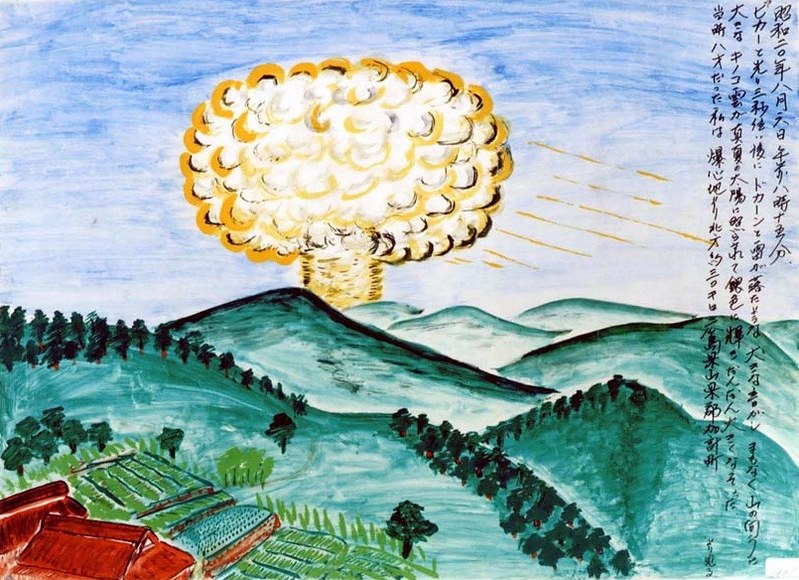
    Seventy years ago today an atomic bomb was dropped on Hiroshima, Japan. Those who experienced it and lived to tell about it, all described it in similar fashion: It began with a flash brighter than the sun. It was August 6, 1945. According to the church calendar it was also the Feast of the Transfiguration.

    The atomic bombing of Hiroshima was the world’s first use of a weapon of mass destruction. In this seaport city of 250,000 people, 100,000 were either killed instantly or doomed to die within a few hours. Another 100,000 were injured. Of this city’s 150 doctors, 65 had been killed and most of the rest were injured. Of the 1,780 nurses, 1,654 were either dead or too badly injured to work. Hiroshima had become the house of the dead and dying. It was Transfiguration Day.

    When Jesus was transfigured on Mount Tabor his face shone like the sun, and when he came down the mountain a little boy was healed — a boy who had been thrown into fire and water by a demon.

    When “Little Boy” (the name given the bomb) shone like the sun over Hiroshima, thousands of little boys and girls were burned in atomic fire and poisoned by radioactive rain. The bombing of Hiroshima is the anti-Transfiguration.

    The Transfiguration was a turning point in Jesus’ ministry. Hiroshima was a turning point in human history.
    Read more

  • Los Alamos: We Have Become Death

    LosAlamos

    Los Alamos: We Have Become Death
    Brian Zahnd

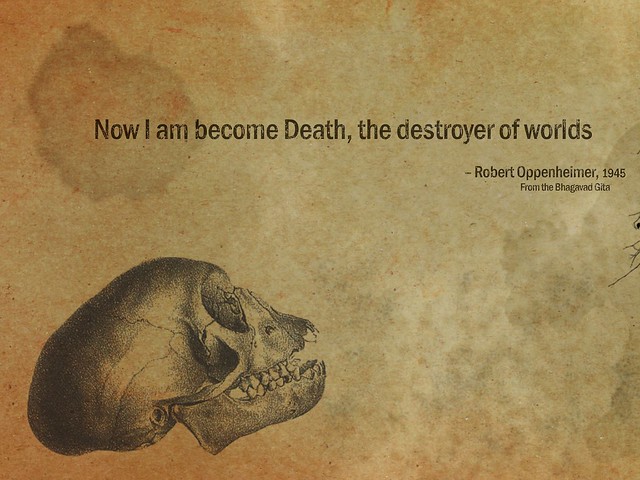
    Seventy summers ago in a New Mexico desert we crossed a dark threshold when we created the capacity for our own annihilation. A generation earlier Albert Einstein had perceived something elemental about the nature of Creation: Energy equals mass times the speed of light squared (E = mc2). As I understand it, matter is “frozen” energy which when released unleashes the power of the sun. That our instinctual impulse upon gaining such knowledge was to build atomic bombs says something sad about us — we are still the sons and daughters of Cain, and now we’re looking for ways to kill Abel a million at a time.

    The first atomic bomb was tested on July 16, 1945. J. Robert Oppenheimer, the director of the Los Alamos Laboratory, gave the test the code name Trinity. Oppenheimer was, of course, a brilliant physicist, but he was also well-read in religious and philosophical texts. He took the code name Trinity from a poem written by John Donne, a sixteenth century Anglican priest and poet.
    Read more

  • George MacDonald’s Spiritual Journey (And Mine Too)

    george-macdonald

    George MacDonald’s Spiritual Journey (And Mine Too)
    Brian Zahnd

    “I have never concealed the fact that I regarded George MacDonald as my master; indeed I fancy I have never written a book in which I did not quote him.” –C.S. Lewis

    “I can testify to a book that has made a difference to my whole existence…and it is by George MacDonald.” –G.K. Chesterton

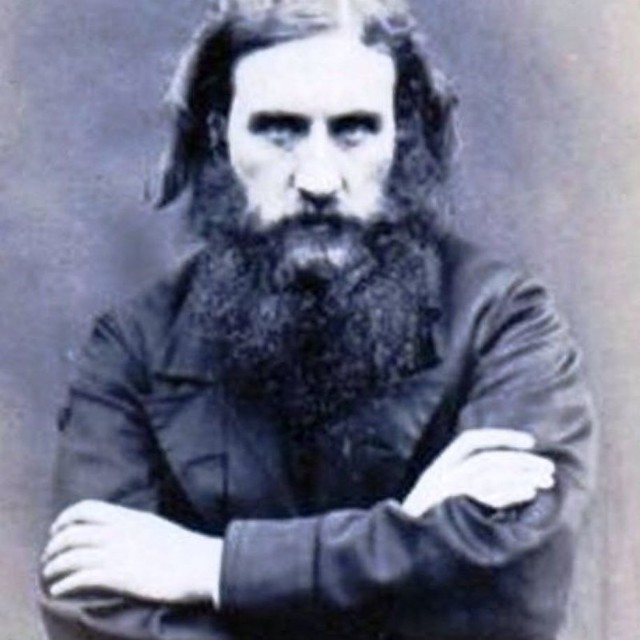
    George MacDonald (
    1824–1905) was a Scottish novelist, poet, preacher, mystic, lecturer, theologian whose writings have had an enormous influence on many Christian thinkers, including C.S. Lewis and G.K. Chesterton. In my own spiritual journey I would list George MacDonald’s Lilith as a top ten influence.

    George MacDonald understood as clearly as anyone that salvation is not so much a conferred status as it is a lifelong journey — a continual pressing into the revelation of God in Christ. But to be a public theologian, thinker, writer and on an ever-evolving spiritual journey, rankles the self-appointed gatekeepers of religious certitude. Thus George MacDonald was regularly (and wrongly) accused of heresy for simply not toeing the line of the Scottish Calvinism predominant in his day.

    In the mid 1860’s George MacDonald received a letter from a troubled reader asking why he had lost the “old faith” and embraced what many regarded as “unorthodox” views. MacDonald’s candid reply is brilliant and beautiful and I would like to share it with you. (Plus, as one who has often been criticized for moving beyond an earlier fundamentalist/charismatic certitude, MacDonald’s defense will aptly suffice as my own.)

    Read more

  • The Day I Met Jesus: A Conversation With Mary DeMuth

    metjesus


    Mary DeMuth and Frank Viola have written a fascinating book — The Day I Met Jesus: The Revealing Diaries of Five Women from the Gospels (Baker Books 2015). Recently I was able to interview Mary about this book and also ask her some questions about the role of women within Christianity and the church. Here is our conversation.

    * * * * * *

    BZ: In The Day I Met Jesus you tell fives stories of women who encountered Jesus. You do this in the form of first person diary entries. I love this imaginative approach. Could you talk about your process of creating the back-stories for these five women?

    MD: Sure, first off, this idea was Frank’s. I’m grateful he pulled me in on this project. As a novelist, I tried to walk around in these women’s sandals, hoping to understand their dreams, the possible plight they were in, and what it must’ve been like to actually meet Jesus in the midst of their stories. I also did research about First Century Jerusalem as well as biblical research about the five women. And then I prayed. Actually I prayed throughout the entire process. What resulted? Gritty, real stories about actual women who were never the same after they encountered Christ.

    BZ: Do you feel that the evangelical church has perhaps under appreciated the power of story?

    MD: I think we’re getting better about this. Things like Donald Miller’s Story conference and the proliferation of YouTube (where we see millions of stories) encourage me. And when I go to church on Sunday I’m seeing more pastors tuck story into their narratives and theology. The human heart and mind better understand truth when wrapped in a story.
    Read more

  • Sinners In the Hands of a Loving God

    rembrandt-return-of-the-prodigal-son11

    Sinners In the Hands of a Loving God
    Brian Zahnd

    Oh! Ephraim is my dear, dear son,
    My child in whom I take pleasure!
    Every time I mention his name,
    My heart bursts with longing for him!
    Everything in me cries out for him.
    Softly and tenderly I wait for him.

    –Jeremiah (Jeremiah 31:20)

    The God that holds you over the pit of hell, much as one holds a spider or some loathsome insect over the fire, abhors you, and is dreadfully provoked. His wrath towards you burns like fire; he looks upon you as worthy of nothing else but to be cast into the fire. He is of purer eyes than to bear you in his sight; you are ten thousand times as abominable in his eyes as the most hateful, venomous serpent is in ours.
    –Jonathan Edwards, Sinners In the Hands of an Angry God

    Two pieces of literature. The prophetic poetry of Jeremiah and the revivalist preaching of Jonathan Edwards. I know them both well. First let’s look at Jeremiah.

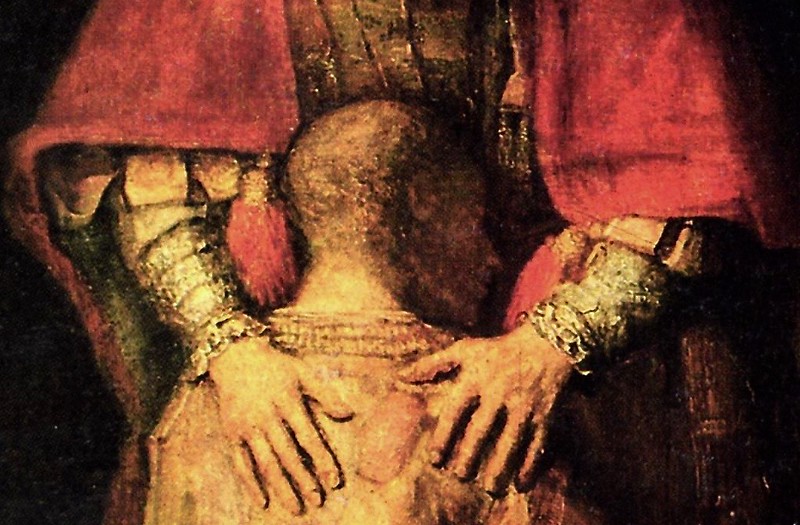
    In this beautiful passage Jeremiah channels God’s love for Ephraim. Who is Ephraim? Ephraim is Israel in the 7th century BC. More importantly, Ephraim is Israel in its worst spiritual and moral condition. Ephraim is idolatrous, adulterous, backslidden, covenant-breaking, sinful Israel. But Ephraim is still the child of God and Jeremiah reveals God’s unconditional love for sinful Ephraim.

    Centuries ahead of the full revelation of God that will come with Jesus, Jeremiah reveals the heart of God toward sinners. Toward me. Toward you. At your worst, at your most sinful, at your furthest remove from God and his will, God’s attitude toward you remains one of unwavering love. Why? God is love.

    But many Christians struggle with a deeply embedded concept (theology) of an angry, vindictive, retributive god. Somewhere along the way they picked up a Sinner’s In the Hands of an Angry God paradigm. And it has left them deeply damaged.
    Read more

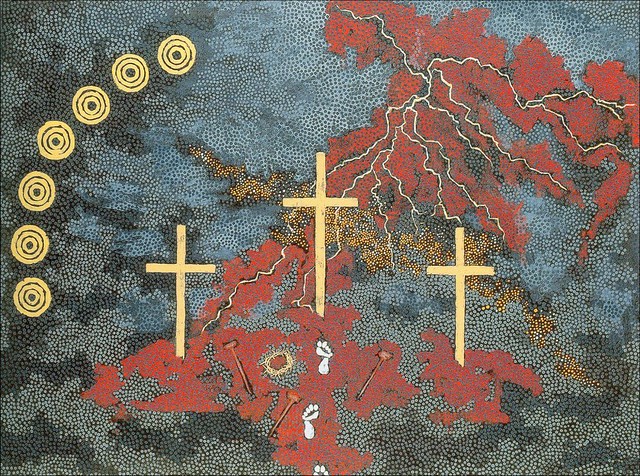
  • Bethlehem, Branson, and Baltimore

    CliffordPossumTjapaltjarri

    Bethlehem, Branson, and Baltimore
    Brian Zahnd

    Last week I was with a Palestinian Christian from Bethlehem. He talked about his grandfather — a peaceable follower of Jesus who was senselessly killed by an Israeli sniper. He also talked about his grandmother who refused to allow the family to fall into the dark abyss of hate. He talked about the decades of injustice and the daily indignities suffered by the Palestinian people. He talked about how Jesus is found among the oppressed. But he also said Jesus told him this: “Stop using me to justify hating your enemies.” He went on to say, “I live under Israeli military occupation and Jesus calls me to do one thing: Love my enemy.” Wise words. Wise words that didn’t come cheap and don’t ring hollow.

    This week I’ve been in Branson speaking at a retreat for Nazarene pastors — a beautiful gathering of thoughtful women and men who are engaged in the demanding task of leading congregations in the way of Jesus. It was a privilege to speak to these pastors. Next door to us in the convention hall was an end-time-doom-and-gloom preacher hawking blood moons and sporting banners festooned with American flags. I see a good deal of this sort of thing. Flags and crosses all mixed up. Crosses on flags. Flags on crosses. American flags flying in superiority over Christian crosses on church lawns. Flags mounted on top of churches where crosses ought to be. One gets the feeling that the idea is that flag and cross are interchangeable — quite nearly the same thing. But I beg to differ. Allow me to reproduce a passage from one of my books:
    Read more

  • A More Christlike God

    MCG cover facebook

    A More Christlike God
    Brian Zahnd

    What is God like? What an enormous question. For those of us who believe that God is somehow at the foundation of existence, meaning, and self-understanding, it’s an all-important question. So how shall we answer? Our options are endless. Human inquiry into the divine has produced a vast pantheon of gods — from Ares to Zeus. Of course, the Christian will have an instinct to look to the Bible for the definition of God. I understand this instinct and in one sense it is correct; but it may not yield as clear an answer as we think. Even while speaking of the “God of the Bible” we can cobble together whatever vision of God we choose from its disparate images. That we do this mostly unconsciously doesn’t help matters. Even if we restrict our inquiry into the nature of God to the Bible, we are likely to find just the kind of God that we want to find. If we want a God of peace, he’s there. If we want a God of war, he’s there. If we want a compassionate God, he’s there. If we want a vindictive God, he’s there. If we want an egalitarian God, he’s there. If we want an ethnocentric God, he’s there. If we want a God demanding blood sacrifice, he’s there. If we want a God abolishing blood sacrifice, he’s there. Sometimes the Bible is like a Rorschach test — it reveals more about the reader than the eternal I AM.
    Read more