• Thinking Tikkun Olam in Istanbul

    IMG_9740

    I’m sitting on a rooftop in Istanbul. I’m thinking. Thinking about the world. Thinking about Jesus. I’m thinking about Jesus as the savior of the world and the Jewish concept of tikkun olam (“to mend the world”).

    The world is broken.
    It needs mending.
    Jesus is the answer.
    Jesus is the savior.
    Jesus is the savior of the world.

    This is the confession of the gospel.
    This is the witness of the apostles and prophets.
    Consistently, repeatedly, scripturally, evangelistically, apostolically.
    Jesus is the savior of the world!
    Liberate it from cliché and dare to conceive it in a real and radical way.
    Believe it in a fresh, invigorating, imaginative way.
    Jesus
    saves
    the
    world
    !!!
    This world!
    (And not some other.)

    OK, but what shall we do with this apostolic faith in Jesus as the savior of the world? Read more

  • So You Say You Want a Prophet?

    wendell_berry1

    So you say you want a prophet? Because you want to know the truth that lies beyond the official script. You want to see beyond the matrix. Good for you! But keep in mind what prophets are. Prophets are seers. They see what we do not. They’ve seen behind the curtain. They’re not fooled by smooth words or slight of hand. The prophet is vital because the prophet can help us recover our imagination. We had an imagination once, as children (children who could enter the kingdom of God); but we grew up and that imagination got conscripted by the so-called “real world.” Yes, we need the help of the prophet to recover our imagination. But remember, the prophet is ever and always controversial. The prophet doesn’t salute the status quo, the prophet offers his withering critique. The prophet dares to speak of other alternatives—alternatives that some will find threatening. The powers-that-be are wary of the prophets and their poetic imaginations…as well they should be. But you still want to find the prophet, don’t you? You want to see beyond the veil, don’t you? You want to hear something other than the “approved statement,” don’t you? That’s what I thought. So ladies and gentlemen, I give you Wendell Berry—the farmer-prophet from Kentucky. (Amos was a farmer-prophet too, wasn’t he?) But keep in mind prophets are not safe. Prophets aren’t ear-ticklers, they’re butt-kickers! So if you can handle a dose of prophetic truth, well, here goes… Read more

  • Come With Me

    visitation0ix

    The knowledge of God’s mystery is Christ.
    –The Apostle Paul

    Our hearts are restless until they find their rest in Thee.
    –Saint Augustine

    I dreamed I saw St. Augustine, alive as you or me.
    –Bob Dylan

    A bit of autobiography, because we are our stories
    And we are known in the telling of our stories…

    It was a Sunday afternoon in June and I was sitting on my porch reading a very old book. The book was The Confessions of Saint Augustine and I was reading it primarily because I was somewhat embarrassed that I never had. I knew Saint Augustine was a towering figure whose influence on the church and Christian thought cannot be overemphasized, so I eventually decided I ought to read his spiritual autobiography. Some have called Confessions the first real autobiography in history and if not the first it is certainly one of the most influential. Written 1,600 years ago, the entire book is a prayer—that is, it is addressed to God in the form of a three hundred page prayer of thanksgiving as Augustine reviews his life from his days as a profligate sinner to his life-altering encounter with Jesus Christ. As I sat with old Saint Augustine on my porch that Sunday afternoon, I had no inkling that the story of a fourth century church father would become a pivotal point in my own spiritual pilgrimage. But because it’s a great story and also because it pertains to what I want to tell you, let me share with you how Augustine became a Christian. Read more

  • Three Books

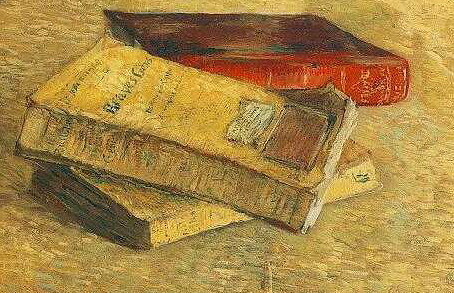
    1887 Still Life with Three Books

    I was asked by a magazine to recommend some books. Here’s what I gave them.

    Three Books I Am Currently Recommending

    jesus-way the-doors-of-the-sea-where-was-god-in-the-tsunami-84929292 Surprised-by-Hope-1

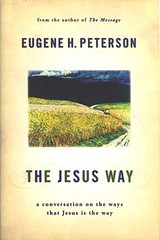
    The Jesus Way by Eugene Peterson
    There isn’t a more important pastoral voice in America than Eugene Peterson. Though he is probably best known for his translation of The Message Bible, Eugene Peterson has authored more than forty books, most of them on the theme of what it means to be a follower of Christ in the contemporary American context. Writing from nearly fifty years of pastoral experience, The Jesus Way is perhaps the best book I’ve read on how to get beyond religious cliché and cultural assumption in considering the Christ we confess and follow. I also highly recommend Eugene Peterson’s just published memoir, The Pastor.

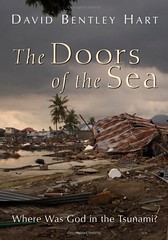
    The Doors of the Sea: Where Was God in the Tsunami? by David Bentley Hart
    David Bentley Hart is one of Christianity’s finest living theologians and apologists; he is a gifted writer as well. The Doors of Sea is an expansion of an essay that originally appeared in The Wall Street Journal in response to the tsunami that claimed a quarter of a million lives in Southeast Asia in December of 2004. In the wake of the tragic Japanese earthquake and tsunami, this little book has renewed relevance. The Doors of the Sea is the best attempt I’ve found in addressing the age old problem of reconciling the goodness of God with the reality of evil and suffering.

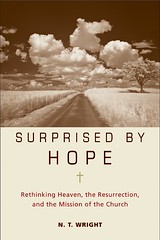
    Surprised by Hope by N.T. Wright
    I have no hesitation in asserting that N.T. Wright is the most important Christian writer, thinker, and theologian of our day. What C.S. Lewis was to a previous generation of serious Christian readers, N.T. Wright is to our generation. I’ve read nearly everything Wright has published (and he is wildly prolific!) and this is Wright at his best. Quite simply, I wish I could get every Christian to read Surprised by Hope! What is it about? It’s about the great Christian hope of resurrection and how a biblical understanding of the hope of the resurrection should inform and influence every aspect of Christian witness and mission.

    If you’re a serious Christian, do yourself a favor and read these three books.

    BZ

    (The art is Still Life With Three Books by Vincent Van Gogh)

  • The Children of Cain

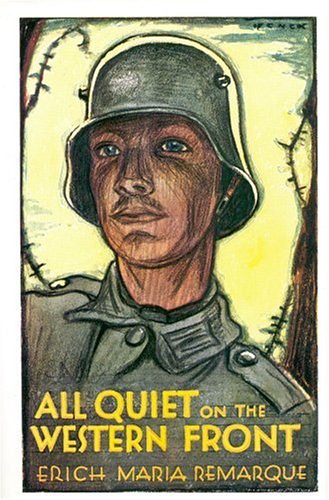
    ALL QUIET ON THE WESTERN FRONT

    This post consists of an excerpt from chapter nine of All Quiet On The Western Front by Erich Maria Remarque.

    Remarque was a German veteran of World War I. (He later became an American citizen.) Remarque published All Quiet On The Western Front in 1929. It sold two and half million copies in the first eighteen months. Some have describe it as the most honest account of war ever written. German soldiers would simply say of Remarque’s book, “So ist es gewsen!” (That’s the way it was!)

    And if you ask me what this post has to do with Holy Week, I will simply answer, much!

    Read it thoughtfully.

    I have entitled this excerpt as…

    The Children of Cain Have a Conversation Concerning the Legacy Bequeathed Them.
    ______________________________

    “It’s queer, when one thinks about it,” goes on Kropp, “we’re here to protect our father land. And the French are over there to protect their fatherland. Now, who’s in the right?
    “Perhaps both, “ say I, without believing it.
    “Yes, well now,” pursues Albert, and I see that he means to drive me into a corner, “but our professors and pastors and newspapers say that we are the only ones that are right, and let’s hope so; — but the French professors and pastors and newspapers say that the right is on their side, what about that?”
    “That I don’t know,” I say, “but whichever way it is there’s war all the same and every month more countries are coming in.” Read more

  • Grape and Grain

    bread_wine

    In the Eucharist God in Christ chooses to make himself present in ordinary elements.

    Grape and Grain.

    But it’s not grape and grain that we find on the Communion table, it’s bread and wine.

    Grape and grain come from God, but bread and wine are the result of human labor.

    Bread and wine come about through a cooperation of the human and the divine.

    For there to be Communion, there must also be wheat-fields and vineyards.

    Bakers and winemakers.

    Here is a man baking bread. Here is a woman making wine.
    Who knows but what this bread or that wine might end up on the Communion table.

    Herein lies a mystery: God may be present in any labor, no matter how common.

    Communion speaks of how all human labor can be seen as sacramental.

    BZ

  • Of Hitler and Lilies

    irises-van-gogh

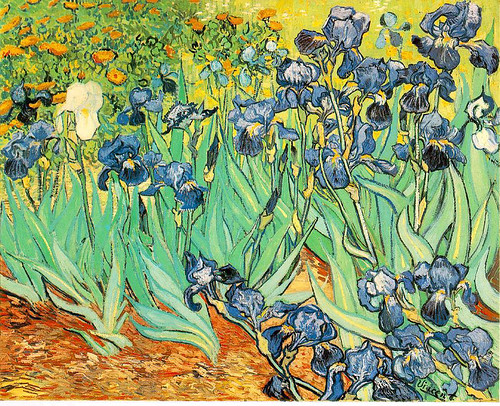
    “Consider the lilies.”
    —Jesus

    Leonard Woolf (1880-1969), the English writer, political theorist and husband of Virginia Woolf, wrote a book entitled Downhill All The Way. Published in 1966, it is an autobiographical account of the years leading up to World War II. Leonard Woolf closes Downhill All The Way with these words: Read more

  • The System vs. The Kingdom

  • Beautiful People

    Beautiful People

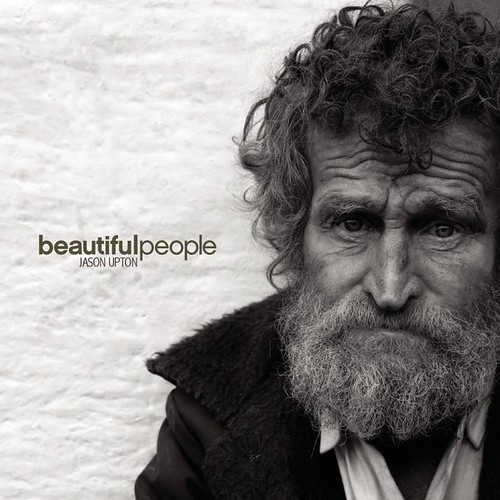
    Beautiful people forgive and forget.
    -Jason Upton

    My friend Jason Upton wrote a song about beautiful people where he told us that beautiful people forgive. I believe he’s right. If you think about it, human beings don’t do anything more beautiful than reconcile through forgiveness. We’re never more God-like, never more true to the Imago Dei, than when we forgive. Beauty and forgiveness dance together. The bottom line is forgiveness is what Christianity is mostly about. It’s why I wrote Unconditional?—a book on the call of Jesus to radical forgiveness. I wasn’t so much motivated to write a book about forgiveness as I was motivated to write about how Western Christianity (especially in the American context) has lost its way and needs to get back on track. Read more